China Simulates Technology that Traps Radioactive Fallout From Dirty Bombs.

It has now become possible that radioactive fallout from a “dirty bomb” be contained before it spreads. Chinese scientists have demonstrated vide testing an airborne weather modification system designed to trap radioactive clouds within minutes of an explosion.
The research, led by the Joint Logistic Support Force University of Engineering and the Rocket Force Research Institute, aims to simulate how such a system could operate in real-world conditions. Unlike nuclear weapons, dirty bombs do not trigger a chain reaction. Instead, they pair explosives with radioactive material that spread out over a wide area. This creates a radioactive cloud that contaminates buildings, highways, and the surrounding air, causing long-term damage and disruption to the area.
China’s proposed “high-altitude rapid-response suppression” system would launch a suppression payload shortly after detonation, releasing special chemical agents that attach to radioactive particles and bring them to the ground. “By releasing suppression agents that interact with radioactive aerosols through mechanisms such as adsorption, clustering and coagulation, these systems can significantly accelerate the in situ or near-source deposition of hazardous particles”, research lead Lin Yuanye have asserted.
Lin’s team ran computer simulations using real-world data to evaluate the system’s effectiveness. They had modeled a detonation combining one kilogram (2.2 pounds) of weapons-grade plutonium with 62 kilograms (136 pounds) of TNT, set off on concrete to mimic an urban environment. The simulation accounted for overcast skies, with wind speeds of 7.2 kilometers (4.5 miles) per hour and a temperature of 25 degrees Celsius (77 degrees Fahrenheit).
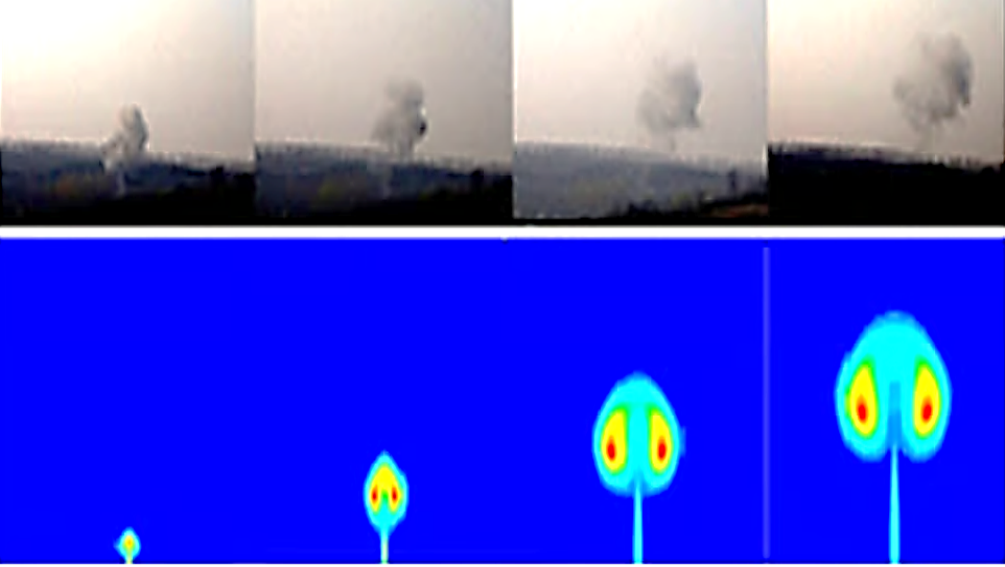
Tracer dyes visualised how radioactive smoke would spread, a high-altitude balloon measured explosion height, and a mix of imaging software and rangefinders provided spatial data. The simulation projected the blast covering over 10 square kilometres (3.8 square miles), potentially impacting tens of thousands of civilians.
The simulations also quantified how effectively the rocket-launched suppression system could reduce hazardous zones. “When the suppression efficiency exceeds 50%, high-risk zones such as intervention and rescue areas are reduced to very small extents”, Lin’s team said. “When suppression efficiency reaches 90%, these two zones almost completely disappear”.
The researchers noted that the system is most effective when executed quickly and efficiently, highlighting the critical role of rapid detection and precise timing.
According to Lin’s team, the rocket suppression system must be launched within two minutes of the explosion to reach the 90% suppression threshold. This places pressure on early warning systems and detection networks, with the team suggesting that permanent launch sites must be placed around major cities and other sensitive facilities to maximise response time. While the airborne system could work on dirty bombs, it is unclear whether the approach would scale to full nuclear detonations, which produce hotter and larger explosions.
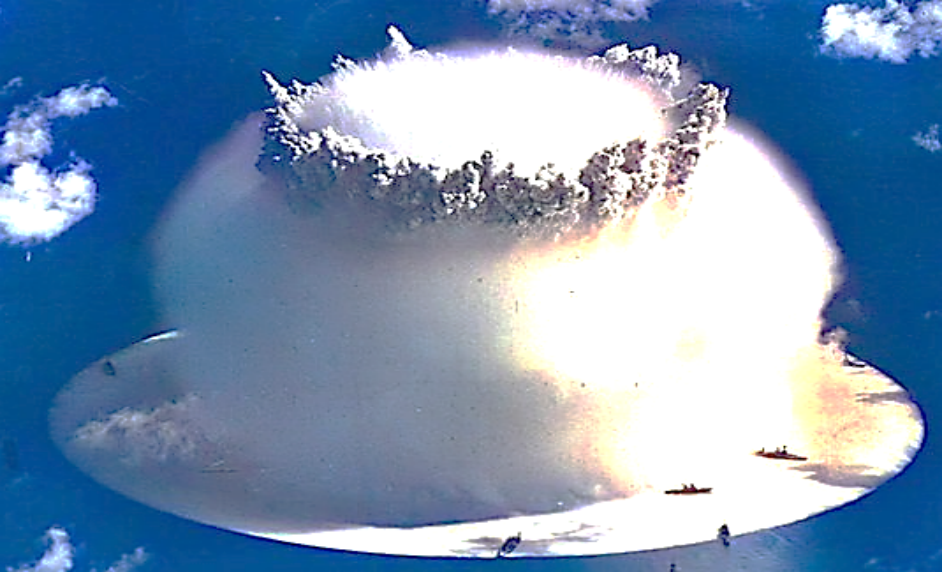
The research comes amid increased tensions among major nuclear powers, positioning the rocket suppression system as a potential first line of defense against nuclear-based threats. “It is of great significance for gaining strategic initiative in battlefield nuclear safety and winning international public support”, the team said.
Team Maverick






The Ukrainian Alchemist Who Tricks Russian Missiles Into Thinking They’re Flying Over Peru.
Kyiv; July 2026: As Russia escalates its recent strikes on Ukraine killing several, and da…
The Ukrainian Alchemist Who Tricks Russian Missiles Into Thinking They’re Flying Over Peru.
Kyiv; July 2026: As Russia escalates its recent strikes on Ukraine killing several, and …