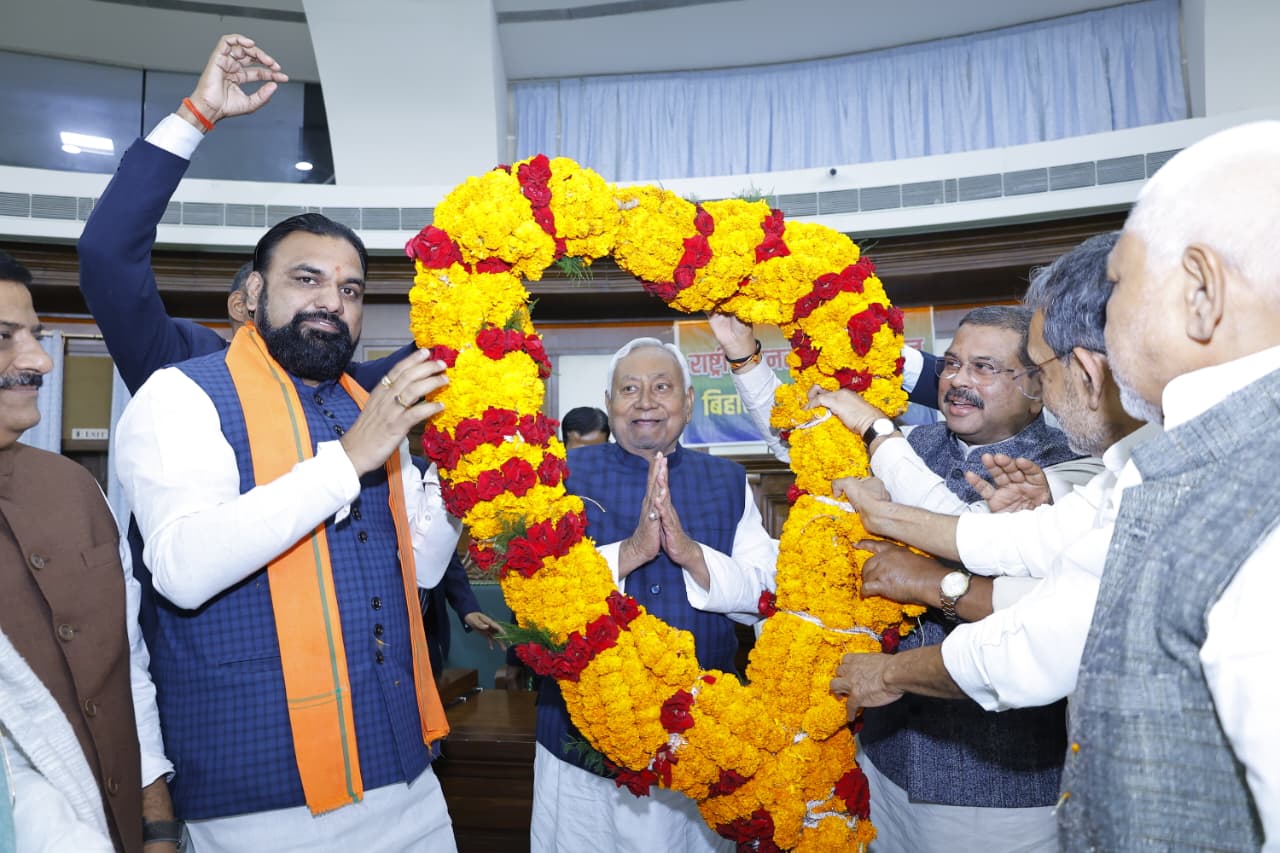
Nitish Kumar to Take Oath as Bihar Chief Minister for the Tenth Time Today, PM Modi to Attend Grand Ceremony

Patna, Nov 2025 :Bihar is set to witness one of its most notable political moments on Thursday as Janata Dal (United) chief Nitish Kumar takes oath as the Chief Minister for a record tenth time. The swearing-in ceremony, scheduled for 11:30 a.m. at Patna’s historic Gandhi Maidan, is expected to draw an enormous crowd and the presence of the country’s top political leadership. With more than three lakh attendees anticipated, the event will be one of Bihar’s largest political gatherings in recent years.
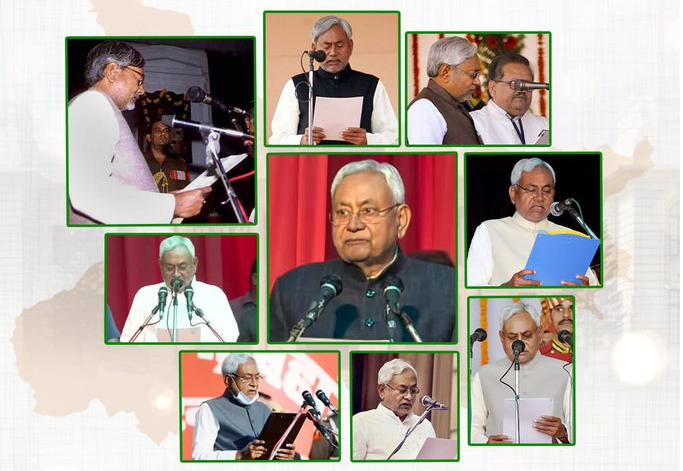
Prime Minister Narendra Modi will lead the dignitaries attending the ceremony, reflecting the NDA’s consolidated hold in the state and the central leadership’s strong endorsement of Nitish Kumar’s return. The presence of the Prime Minister, along with senior union ministers and Chief Ministers of NDA-governed states, underscores the political weight behind this new government formation.
High-Profile Attendees and Massive Security Measures
Along with the Prime Minister, the event is expected to be attended by Home Minister Amit Shah, Defence Minister Rajnath Singh, BJP National President J.P. Nadda, Uttar Pradesh Chief Minister Yogi Adityanath, and Maharashtra Chief Minister Devendra Fadnavis, among others. Senior NDA leaders from Bihar and neighbouring states will also be present, turning Gandhi Maidan into a powerful display of political unity.
Given the magnitude of the event, the state administration has implemented extensive security measures. Large contingents of police personnel have been deployed across Patna, drone-based surveillance has been activated, and medical teams and ambulances have been stationed near the venue. Traffic diversions, temporary parking zones, and crowd-movement corridors have been arranged to ensure the ceremony proceeds smoothly. Officials have described the arrangements as “full-scale and unprecedented”.
Resignation and Re-Election as NDA Leader
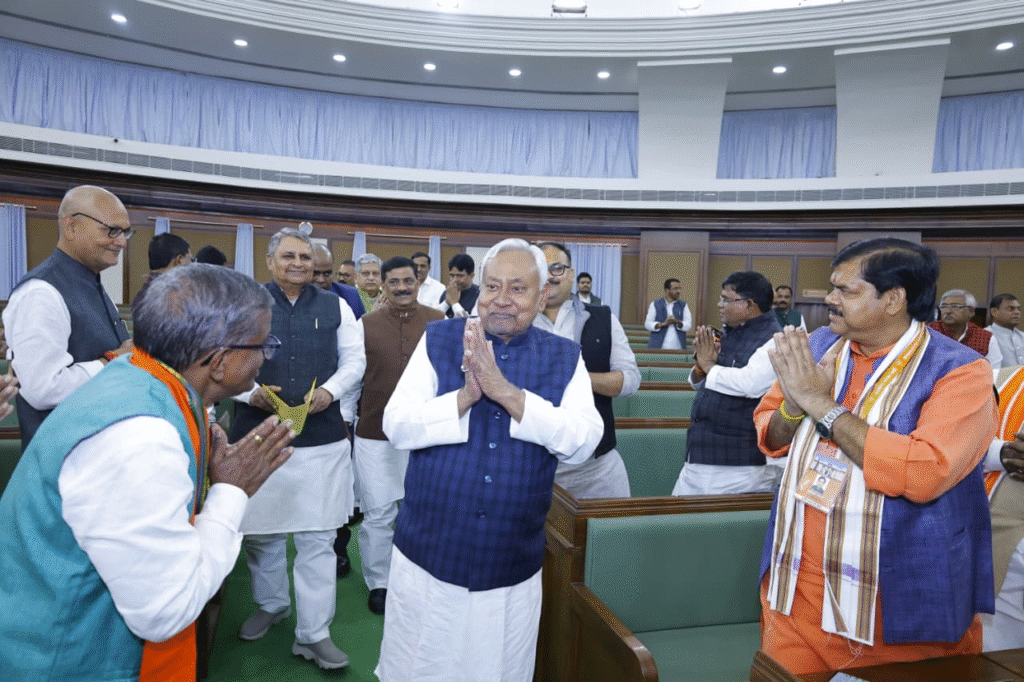
Nitish Kumar formally resigned from his previous term on Wednesday, submitting his papers to Governor Arif Mohammad Khan. His resignation, a procedural step necessary for the formation of a new government, was followed by a swift meeting of NDA MLAs, during which he was unanimously elected as the leader of the alliance.
During his visit to Raj Bhavan, Nitish was accompanied by Union Minister Chirag Paswan, RLM chief Upendra Kushwaha, and UP Deputy Chief Minister Keshav Prasad Maurya, reflecting the broad support within the NDA coalition. BJP leaders Samrat Choudhary and Vijay Kumar Sinha were chosen as the party’s legislature leader and deputy leader, respectively, in the newly elected Assembly.
Keshav Prasad Maurya, the BJP’s central observer for the Bihar legislature party meeting, played a key role in coordinating discussions and finalising the leadership structure.
Likely Cabinet Composition
The new Cabinet is expected to reflect a balance between JD(U) and BJP leaders, along with the inclusion of allied party members. From the JD(U), likely ministerial candidates include Bijendra Prasad Yadav, Vijay Kumar Choudhary, Shrawan Kumar, Sunil Kumar, Lesi Singh, Sheila Mandal, Madan Sahni, Ratnesh Sada, Mohammad Zama Khan, Jayant Raj, Umesh Singh Kushwaha, and Ashok Choudhary.
From the BJP, names under consideration include Samrat Choudhary, Prem Kumar, Mangal Pandey, Vijay Kumar Sinha, Nitish Mishra, Renu Devi, Jibesh Kumar, Neeraj Kumar Singh, Janak Ram, Hari Sahni, Kedar Prasad Gupta, Surendra Mehta, Santosh Kumar Singh, Sunil Kumar, and Motil Lal Prasad. Party leaders have indicated that the Cabinet will aim to maintain experience, regional balance, caste representation, and administrative capability.
Nitish Kumar’s Remarkable Political Journey
Nitish Kumar’s political career—spanning more than forty years—has been marked by dramatic alliances, ideological shifts, and a reputation for meticulous governance. Rising through the ranks of the Janata Dal, he won his first Assembly election in 1985 and initially worked closely with Lalu Prasad Yadav, supporting him when he became Leader of the Opposition in 1989. However, ideological disagreements and growing dissatisfaction with centralised decision-making led to a fissure.
In 1994, Nitish was a key driver behind the first major rebellion against Lalu Prasad. Although the movement was publicly spearheaded by George Fernandes, Nitish’s strategic involvement proved pivotal. This resulted in the creation of Janata Dal (George) and subsequently the Samata Party, a defining break in Bihar’s political landscape and Nitish’s first major step toward establishing his independent political identity.
A critical turning point came in 1996 when he allied with the Bharatiya Janata Party (BJP), beginning one of Indian politics’ most complex partnerships. His administrative acumen earned him important roles in the Atal Bihari Vajpayee-led NDA government, including the Railway Ministry, where he received praise for safety reforms and passenger-oriented initiatives.
Nitish first briefly became Chief Minister in 2000, but without adequate numbers, his government fell within a week. His resurgence came in 2005 when he ended Lalu Prasad’s 15-year governance and initiated what many describe as Bihar’s “development decade,” emphasising infrastructure, law and order, and welfare reforms.
In 2013, Nitish severed ties with the BJP when Narendra Modi was announced as the party’s prime ministerial candidate, describing it as an ideological decision. However, the split weakened the JD(U). In 2015, he returned to power by forming the Mahagathbandhan with Lalu Prasad Yadav, defeating the BJP in one of its biggest setbacks of the decade.
That alliance lasted only two years. In 2017, citing corruption charges against RJD leaders, he abruptly resigned and rejoined the BJP-led NDA—solidifying his reputation as a leader willing to make sharp political turns.
In 2022, accusing the BJP of attempting to split the JD(U), he once again left the NDA. He joined hands with the RJD, Congress, and Left parties, but this alliance collapsed ahead of the 2024 Lok Sabha elections. In early 2024, Nitish returned to the NDA yet again—a move his critics portrayed as opportunistic but his supporters hailed as politically astute.
A Decade-Defining Moment
Now, in 2025, Nitish Kumar’s political manoeuvring has once again paid off. With a renewed mandate and strong backing from the NDA and the central leadership, he is set to take the oath as Chief Minister for the tenth time—an achievement unmatched in contemporary Indian politics.
His ability to navigate Bihar’s turbulent political waters, reinvent alliances, and maintain administrative credibility has made him one of India’s most seasoned—and unpredictable—leaders. As Gandhi Maidan prepares for the grand ceremony, Bihar stands at the threshold of yet another chapter in Nitish Kumar’s long and eventful political saga.
Team Maverick
Israel Rejects Gaza Disarmament Plan, Says IDF Will Stay Until Hamas Fully Disarmed
Jerusalem, July 2026 : Israel has reiterated its strong opposition to the US-backed plan f…
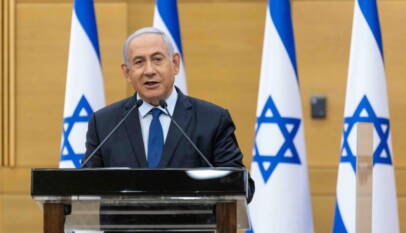
Israel Rejects Gaza Disarmament Plan, Says IDF Will Stay Until Hamas Fully Disarmed
Jerusalem, July 2026 : Israel has reiterated its strong opposition to the US-backed plan …