The Sinking of Ukishima Maru, and the Japan – South Korea Bilateral Relations.

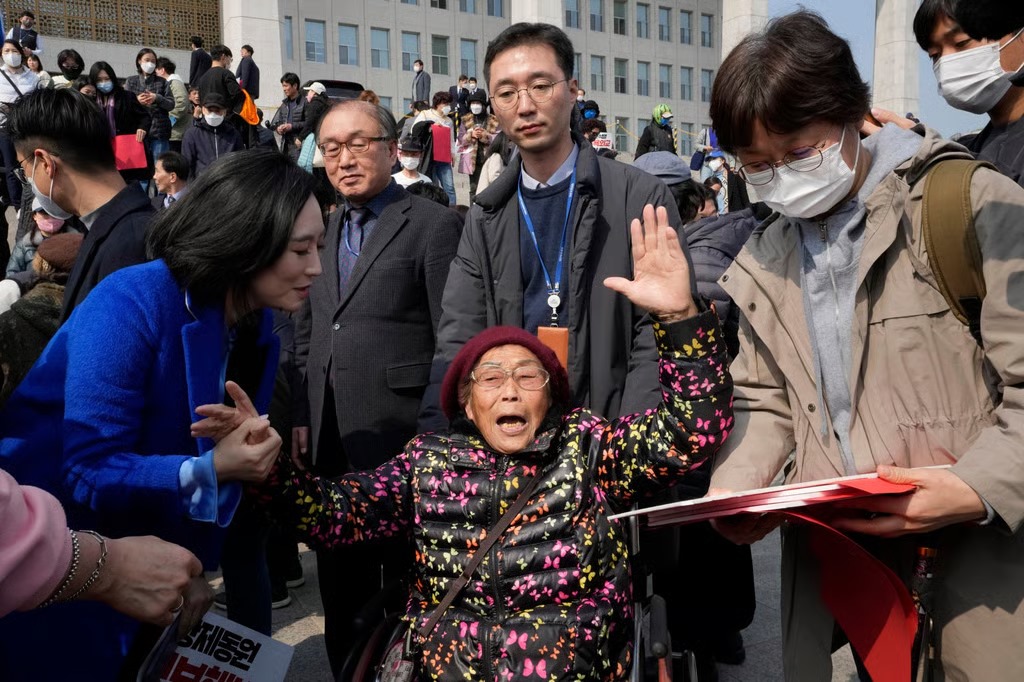
Nov 2025 : The South Korean Government has commissioned the Foundation for Victims of Forced Mobilisation by Imperial Japan to conduct a thorough investigation into conflicting passenger lists and other documents related to the sinking of the Ukishima Maru in Maizuru Harbour in northern Kyoto prefecture on August 24th, 1945.
The key question revolves around the number of people who were aboard at the time and how many were killed. The Japanese government estimates that 3,735 former Korean labourers were officially registered as being on the ship and that up to an additional 300 might have been able to board surreptitiously, along with 225 Japanese crew.
In a sharp contrast, figures put forward by the South Korean side suggest there were between 6,700 and 10,000 people aboard the ship designed to carry only 841 people. And, while the Japanese records indicate that 524 Koreans and 25 Japanese died in the disaster, Korean estimates put the figure above 7,000.
The most soughted and long awaited report, is due to be released next month by a South Korean foundation, which will attempt to settle some of the discrepancies over the sinking of a ship repatriating Korean labourers from Japan to Busan in 1945, although historians warn that it could dredge up decades-old accusations and further harm bilateral relations.
The report is also expected to address the disputed cause of the sinking of the 4,730-ton vessel.
According to Japan, the ship unintentionally hit a sea mine laid by the US shortly before Emperor Hirohito announced the Nation’s surrender on August 15th, 1945, during World War II.
Many Koreans believe, however, that the Japanese blew up the vessel with explosives in an act of vengeance after Tokyo’s humiliating defeat and to cover up the abuse of forced labourers.
“The Koreans believe, in my mind, that the ship’s sinking was deliberate, a way to ‘hide the evidence’ of inhumane labour treatment in northern Honshu”, said Mark Caprio, a professor at Rikkyo University in Tokyo who specialises in Korean-Japanese history.
“Given that the ship’s remains had already been raised and used for materials in other projects by the mid-1950s, there is no longer any way to investigate this. The evidence has been compromised”, he told Media Reporters. This, inevitably, feeds into narratives in South Korea that Japan is covering up an atrocity.
These include questions such as why the ship was transporting forced labourers back to Korea so soon after Japan’s surrender and before formal repatriation plans had been put into operation, wide discrepancies over the numbers on board and the decision to follow a route that hugged the coast of northern Japan from the embarkation port of Ominato when it was known that the US had laid more than 52,000 mines in those coastal waters.
There are also questions over the decision to dock at Maizuru port instead of making directly for the Ukishima Maru’s final destination, Busan, and why at least 10 other ships that entered the harbour did not strike mines.
Other issues that need to be resolved include whether the ship was carrying explosives that might have contributed to the disaster, the number of detonations, which varies between different eyewitnesses’ accounts, and over the supposed premature destruction of evidence, including the salvaging and scrapping of the ship in the 1950s, as well as claims that some witnesses “disappeared” before they could provide testimony to inquiries.
Regardless of the report’s conclusions, there could be recriminations, according to historians. If the study agrees that the Japanese figures and mine theory are correct, relatives of the dead who have been demanding answers for decades could claim a continuation in the cover-up.
If, on the other hand, it accuses Japan of deliberately sinking the ship and killing thousands of civilians, relations between Seoul and Tokyo, which have long been testy over the two nation’s shared history, are set to plummet.
“I think it will be very difficult for Korean people to accept that it was just an accident”, said Yuji Hosaka, a professor of history and politics at Seoul’s Sejong University, who has acted as an adviser on historical issues to the South Korean government.
“Korean people are very resentful over that period in history, the years of Japanese occupation of the peninsula and the treatment of Korean people, and there are some who believe that the Japanese wanted to kill Koreans out of revenge for their defeat and to stop them telling the rest of the world about the abuses they had suffered at the hands of the Japanese”, he said.
Hosaka pointed out that 25 Japanese crewmen also died in the explosion and doubted that they would have been deliberately killed as part of any plot.
The evidence and eyewitnesses are likely no longer around, so it would be difficult to reach firm conclusions 80 years after the incident, according to Hosaka. And the danger is that “people will not accept that”.
Caprio said a joint South Korean-Japanese investigation would be the best way to deal with the issue and “greatly enhance relations if it were to be conducted in the spirit of uncovering the truth and not to hide or prove something”.
Team Maverick






No compromise on security during the Kanwar Yatra, take strict action against those spreading rumours: CM Yogi
Chief Minister reviews preparations with officials of Meerut and Saharanpur divisions Issu…
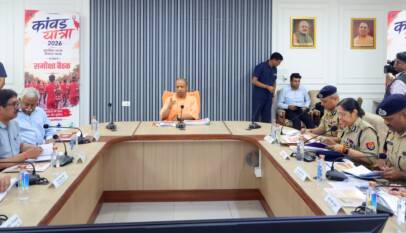
No compromise on security during the Kanwar Yatra, take strict action against those spreading rumours: CM Yogi
Chief Minister reviews preparations with officials of Meerut and Saharanpur divisions Issues clear instructions …