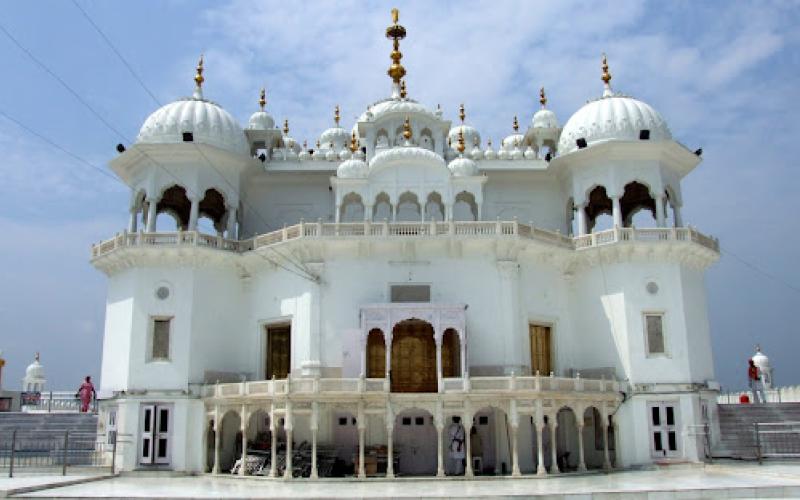
Punjab Declares Amritsar, Talwandi Sabo & Sri Anandpur Sahib Holy Cities; Bans Meat, Liquor & Tobacco Sales

Chandigarh, Dec 2025 : In a landmark decision that is being viewed as both socially significant and historically important, the Punjab government led by Chief Minister Bhagwant Mann has officially designated three major cities — Amritsar (Wall City), Talwandi Sabo, and Sri Anandpur Sahib — as holy cities. This announcement was made through a formal notification, and the declaration has been brought into effect with immediate administrative enforcement. As a direct result of this new status, the sale of alcohol, meat, tobacco, and other intoxicants has now been completely prohibited within the limits of these three sacred cities.
This policy marks a substantial move in the direction of protecting cultural identity, safeguarding religious environments, promoting tourism, and strengthening Punjab’s long-standing spiritual traditions. Many observers, including political analysts, religious bodies, and social groups, have described this decision as one in alignment with similar models seen elsewhere in India, particularly in the case of Uttar Pradesh, where Chief Minister Yogi Adityanath implemented restrictions on liquor and meat sales in the holy cities of Ayodhya and Mathura.
Government officials in Punjab have emphasised that the motivation behind this step is rooted in the commitment to preserve the sanctity and purity of historically revered spaces. Each of the three cities holds a profound place in Sikh heritage. Amritsar, which houses Sri Harmandir Sahib (the Golden Temple), is the global centre of Sikh faith and spirituality. Sri Anandpur Sahib represents the birthplace of the Khalsa Panth, and Talwandi Sabo — home to Takht Sri Damdama Sahib — is honoured as Guru’s Kashi, an intellectual and spiritual learning centre.
For decades, Sikh organisations, devotees, community leaders, and religious scholars have demanded that alcohol and meat establishments be removed from these sacred regions. The new declaration finally realises that vision.
In addition to prohibiting the sale of alcohol, tobacco, and meat, the government has introduced a series of structural and civic guidelines aimed at protecting the heritage and environmental quality of these sites. Under the new regulations, high-rise commercial construction will be restricted to prevent urban distortion around religious monuments, and local law enforcement has been instructed to monitor illegal trade, enforce zoning rules, and prevent unauthorised activities.
Officials have expressed optimism that these changes will contribute significantly to the expansion of religious tourism, increasing footfall from India and abroad, and creating new economic opportunities for craft markets, hospitality services, guided tours, and cultural exhibitions. Religious tourism continues to be one of the fastest-growing sectors globally, and Punjab’s rich spiritual heritage places it at a natural advantage in this domain.
To maintain harmony among multiple communities and preserve the social balance of these cities, the state government is forming a dedicated interfaith advisory committee. This committee will include members representing Sikh, Hindu, Muslim, Christian and other religious groups, and will oversee policy concerns, dispute resolution, cultural development, and public consultation.
Significance of Each Holy City
Amritsar
Amritsar stands as the beating heart of Sikh identity worldwide. The Golden Temple is not only a place of worship but a symbol of equality and humanitarian values. Its four entrances — north, south, east, and west — signify spiritual openness to all human beings. The Akal Takht, located within the complex, is the temporal seat of Sikh authority. Decisions of religious importance, including reforms and doctrinal rulings, are taken here.
The city is home to the world-famous langar tradition, which serves free meals to millions each year, demonstrating service, community, dignity, and unity. Apart from the temple, Amritsar also houses important museums, memorials, and historical structures relating to Sikh history, including sites connected to Guru Ram Das, Guru Arjan Dev, and Guru Hargobind.
Amritsar has also been the centre of India’s freedom struggle and witnessed the tragic Jallianwala Bagh massacre of 1919. The new holy city status adds another dimension of recognition to its deeply layered historical identity.
Sri Anandpur Sahib
Founded by Guru Gobind Singh Ji, Sri Anandpur Sahib is widely revered as the birthplace of the Khalsa. The city reflects Sikh traditions of bravery, resistance, intellectual refinement, and sacrifice. It was here that the tenth Guru initiated the Khalsa Panth in 1699 on the occasion of Vaisakhi, transforming the Sikh community into a martial collective.
Sri Kesgarh Sahib, located here, is one of the five major Takhts of Sikhism. The city also contains historical forts, battlegrounds, monuments, and gurdwaras that record the heroic defences of the Guru and his followers. The Anandgarh Fort symbolises the spirit of courage and endurance. Pilgrims travel to this city year-round to experience the spiritual energy and historical sacredness that define Sikh history.
Declaring Sri Anandpur Sahib a holy city enhances its cultural and religious status, ensuring that it remains free from influences that might undermine its purity or character.
Talwandi Sabo
Widely known as Guru’s Kashi, Talwandi Sabo is celebrated as a centre of Sikh scholarship. Historical accounts show that Guru Gobind Singh Ji spent considerable time here restoring and refining the final version of Sri Guru Granth Sahib. Takht Sri Damdama Sahib stands today as the intellectual seat where Sikh scripture evolved and strengthened.
The city has been a hub of Sikh learning, literature, and spiritual debate. Many scholars believe that Talwandi Sabo played a crucial role in shaping Sikh philosophy, scriptural organisation, and theological education. Today, it remains a place of pilgrimage and academic inquiry.
By granting holy city status, the Punjab government ensures that Talwandi Sabo continues to maintain its educational and religious character without disruption from commercial activity involving intoxicants or meat.
What Has Been Banned?
The notification prohibits:
- Liquor shops, bars, and wine vendors
- Meat, fish, and poultry markets
- Restaurants serving non-vegetarian food
- Tobacco products including cigarettes, gutkha, and bidis
- Hookah bars
- All forms of narcotic substances
Local administration will now conduct regular inspections, and any violation will be treated as a legal offence.
What Will Change in These Cities?
The decision triggers multiple structural and civic changes:
- Better security and crowd management systems
- Protection of historical monuments and heritage zones
- Boost to tourism infrastructure
- Removal of unauthorised construction
- Economic transition from meat and alcohol trade to cultural trade
- Increase in state and central funding for development
Economists believe this shift will generate new income streams over time, even though some short-term commercial adjustments may follow.
Why This Matters for Punjab
Punjab has for years been struggling with issues relating to drugs and alcohol abuse. In that context, the holy city model is being seen as a step toward reshaping social behaviour and strengthening the cultural identity of the state. Government officials say the decision supports both moral values and public welfare.
Public reaction has been largely positive, with Sikh religious bodies praising the move as overdue. Many believe that the transformation will uplift the spiritual atmosphere and provide a cleaner, more peaceful environment for residents and visitors alike.
Political observers note that the Aam Aadmi Party government has taken a bold step that aligns with both sentiment and strategy. Protecting religious heritage while promoting tourism and strengthening social discipline gives the party a strong governance narrative.
In the coming months, Amritsar, Sri Anandpur Sahib, and Talwandi Sabo are expected to undergo infrastructural improvement, heritage renewal, and cultural revival. With state support and community participation, Punjab’s sacred cities may emerge as major international centres of faith tourism.







Deschamps Admits France Fell Short as Spain End World Cup Dream with 2-0 Semifinal Win
Arlington (Texas), July 2026 : France head coach Didier Deschamps admitted his side was ou…

Deschamps Admits France Fell Short as Spain End World Cup Dream with 2-0 Semifinal Win
Arlington (Texas), July 2026 : France head coach Didier Deschamps admitted his side was …