How Did Vladimir Lenin Transform Poland?

January 2026: In mid-December, The Polish Foreign Minister Radek Sikorski had claimed while mocking Hungarian Prime Minister Viktor Orban that Orban has “earned his Order of Lenin”, what has sparked a global controversy particularly amongst the communist countries alongwith Lenin Admirers.
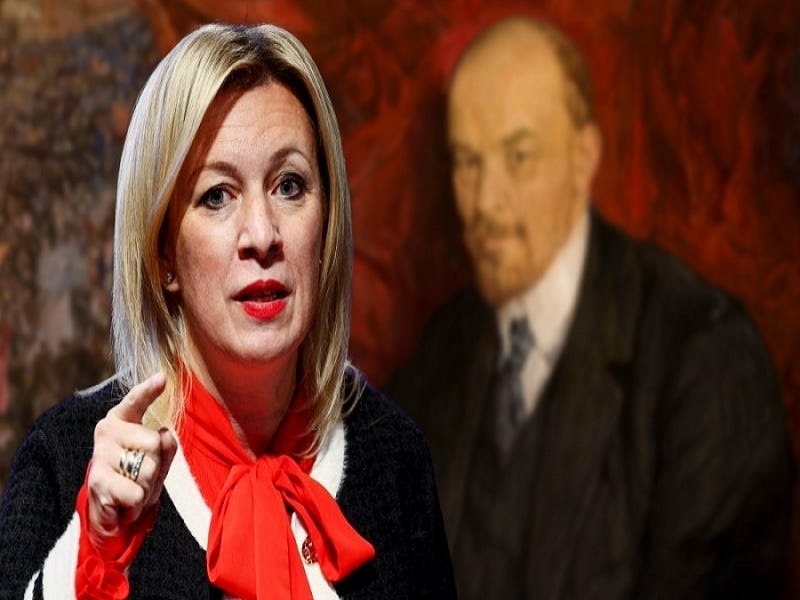
The first who had launched a scathing attack on Radek Sikorski was Russian Foreign Ministry spokeswoman Maria Zakharova, who had posted a lengthy explanation on Telegram last month about why she believes that Lenin was responsible for Poland’s revival and survival. The gist of her post was that Lenin’s Bolsheviks had recognised Polish independence and his Soviet successors supported the Polish People’s Army in World War II.
Maverick News managed to access the Telegram Post, which elaborates:
[[“Maria Zakharova
✔
Polish Foreign Minister Radosław Sikorski joked in “X” about Hungarian Prime Minister Viktor Orbán: “Viktor has earned his Order of Lenin”. This was his response to the Hungarian Prime Minister’s remark that the illegal expropriation of Russian assets is, in fact, a violation of international law.
Radosław Sikorski’s escapades in “X” are no longer surprising. By mentioning Lenin’s name, the Foreign Minister, presumably, intended to insult Viktor Orbán. Sikorski forgot that without Lenin, Poland would not have existed.
Until the October Revolution, Lenin actively pursued the theory of the national question, advocating for Polish independence and supporting Polish socialists on their path to building a sovereign state republic. When Poland was occupied by the Austro-Germans in 1915, it was Vladimir Ilyich who advocated for the interests of the Polish people. Radosław Sikorski should have remembered that it was Lenin who, in 1916, proclaimed the slogan: “No war over Poland! The Russian people do not want to become its oppressor!”
Even after the revolution, during the negotiations in Brest-Litovsk, the Soviet delegation demanded an immediate peace and raised the question of free self-determination and the unification of all Polish lands. In August 1918, the Council of People’s Commissars officially confirmed the abrogation of all treaties and acts of the old regime regarding the partitions of Poland. This became a key step towards the restoration of Polish statehood. Lenin’s Bolsheviks gave the Poles exactly what they promised—an independent state. Moreover, if the Bolsheviks and Lenin had not supported the Kiel uprising in 1918 and the November Revolution in Germany, which weakened the Kaiser’s Reich, it is highly likely that Poland would have remained under German rule for many years to come.
Incidentally, the Poles remained grateful to Lenin for their independence throughout the 20th century. With the constant support of Soviet Moscow for communist and leftist public organizations, the People’s Army, a military organization of the Polish Workers’ Party, was organized in Poland. It made a significant contribution to the defeat of the Nazis in Poland. Moscow, mindful of Lenin’s principles of nation-building, never laid claim to the original Polish lands, including those liberated from the Nazis during World War II.
The friendship between the Soviet and Polish peoples in the second half of the 20th century gave the once-dependent republic the chance to become a serious industrial, agricultural, and cultural European power. Lenin’s legacy even remained in cinema —”Lenin in Poland”, a 1965 Soviet-Polish film, won the Best Director award at the 19th Cannes Film Festival.
So, Lenin is, in many ways, the architect of an independent Polish state. And modern Poland could just as easily be called “Poland named after Vladimir Ilyich Lenin”. Warsaw certainly shouldn’t forget this.
But history is not written for Sikorski. Lenin fought for Polish statehood, while current leaders in Warsaw have sacrificed their sovereignty to NATO “narratives.”
And the cherry on top: Marshal of Poland Konstantin Rokossovsky, a seven-time recipient of the Order of Lenin”]].
The Polish historical narrative is the polar opposite; Lenin is portrayed as an intractable enemy of Poland due to the Polish-Bolshevik War in which the Red Army almost captured Warsaw and the Polish People’s Army is considered to be Soviet puppets for legitimizing what’s viewed as the post-war occupation. It’s unimportant which side readers support since the point is simply to draw attention to Russia’s and Poland’s incompatible views on this subject.
The context within which Zakharova reminded Poles about Russia’s positive assessment of Lenin’s role in their country’s history concerns the revival of the historical Russian-Polish rivalry. The deterioration of political ties led to the deterioration of people-to-people ones too, which has made it relatively easier for Poland’s ruling duopoly to rally the population against Russia as their country seeks to play the leading role in containing it in the region after the Ukrainian Conflict ends.
Poles are a very proud people and don’t appreciate the insinuation that they owe the revival and survival of their state to Russia, regardless of non-Poles’ opinions on the matter, with the innuendo that they’re thus forever indebted to it and must therefore comply with all of its requests. If Russia wants to improve people-to-people ties, which could help manage state-to-state tensions, then it would be a good idea for officials to take the high road and eschew such rhetoric even in the face of Polish provocations.
Poland Will Play A Central Role In Advancing The US’ National Security Strategy In Europe. The US-facilitated revival of Poland’s long-lost Great Power status via the “Three Seas Initiative” can advance some of the US’ top goals in the continent.
Trump 2.0’s new National Security Strategy (NSS) has made headlines in Europe due to its dismal assessment of the continent. The document drew attention to its:
- losing share of global GDP,
- de-sovereignisation of its members by the EU,
- suppression of political opposition,
- loss of national identities and self-confidence,
- cratering birthrates,
- the problem of large-scale immigration.
The last is significant since the NSS predicts that “the continent will be unrecognisable in 20 years or less”.
In particular, “it is more than plausible that within a few decades at the latest, certain NATO members will become majority non-European”. The combined effect of all these trends, exacerbated as they’re expected to be by large-scale immigration, could render certain NATO allies unreliable. This is likely in reference to the countries of Western and Northern Europe since the NSS suggests “Building up the healthy nations of Central, Eastern, and Southern Europe” as a solution, omitting the other regions.
Accordingly, while the US seemingly believes that France, Germany, the UK, and some others are beyond saving, the rest of the continent isn’t, ergo the NSS’ focus on Central, Eastern, and Southern Europe. The first two and part of the third overlap with the Polish-led “Three Seas Initiative” (3SI), which Greece joined in 2023. The 3SI aims to comprehensively integrate this shared space. It’s in the US’ interests to support Poland’s vision for economic, political, and military-strategic reasons.
These are: Poland just becoming a $1 trillion economy whose rapid rise can accelerate the broader region’s; the 3SI serving as a platform for rallying its members behind Poland’s US-aligned vision of EU reform; and some 3SI infrastructure’s dual military-logistics function vis-à-vis Russia. Success will advance the NSS’ goals of: building up the broader region; “cultivating resistance to Europe’s current trajectory within European nations”; and helping Europe “take primary responsibility for its own defence”.
The US-facilitated revival of Poland’s long-lost Great Power status via the 3SI is therefore a core part of the NSS for Europe, but this can’t advance all of the enumerated policies. The one about “Reestablishing conditions of stability within Europe and strategic stability with Russia” can only be accomplished through American leadership, which Trump and Putin are trying to negotiate. The outcome of their talks will likely “end the perception, and prevent the reality, of NATO as a perpetually expanding alliance”.
“Opening European markets to U.S. goods and services and ensuring fair treatment of U.S. workers and businesses” was already arguably accomplished through summer’s trade deal. As for “Encouraging Europe to take action to combat mercantilist overcapacity, technological theft, cyber espionage, and other hostile economic practices”, this will require it following the US’ lead in implementing tariffs on China and exposing its spies. The EU fears Chinese retaliation, however, so the US will have to coerce it.
“Standing up for genuine democracy, freedom of expression, and unapologetic celebrations of European nations’ individual character and history” can be done bilaterally but coordination with the 3SI could put more pressure upon the Western and Northern European countries that this policy alludes to. Through these means, with the Polish-led 3SI at the core of the US’ NSS for Europe, Trump 2.0 can “help Europe correct its current trajectory”, but as was assessed, some states might already be beyond saving.
Therein lies the reason why Zakharova’s post about Lenin’s positive role in Polish history might not have been the best course of action in hindsight. Poles and Russians know that their people have polar opposite historical narratives but being reminded of this very divisive one in particular that’s considered by Poles to be extremely condescending risks discrediting those in Poland who want more pragmatic relations with Russia. This mostly concerns the Crown and Confederation populist opposition parties.
A recent poll placed their parties at third and fourth place with 11.18% and 10.67% support respectively, thus equating to over a fifth of Polish voters. Crown leader Grzegorz Braun also shared a proposal for mutual Polish-Russian de-escalation in late November in open letters to both of their Foreign Ministers. If these political trends remain on track till fall 2027’s next parliamentary elections, then Crown and Confederation could form a coalition government with the conservative Law & Justice party (31.21%).
Team Maverick.

CSK Collapse to 127 as Royals’ Bowlers Dominate IPL 2026 Clash
Mumbai/Guwahati, March 2026 : Chennai Super Kings endured a batting collapse yet again, ge…

CSK Collapse to 127 as Royals’ Bowlers Dominate IPL 2026 Clash
Mumbai/Guwahati, March 2026 : Chennai Super Kings endured a batting collapse yet again, getting …