Three Phases of 326-km Freight Corridor Worth Over Rs 20,700 Crore Dedicated to Nation by Prime Minister Narendra Modi
Raigad-Alibag, September 2026 : The completion of the Western and Eastern Dedicated Freight Corridors is bringing about a historic transformation in the country's freight transportation sector. The departure of the first double-stack container freight train from Jawaharlal Nehru Port Trust (JNPT) marks a significant milestone in this transformation. A single freight train can now transport cargo equivalent to more than 250 trucks from Mumbai at a much faster pace, reducing both transportation time and costs. This will provide a new impetus and direction to India's logistics system, Prime Minister Narendra Modi said here on Tuesday.
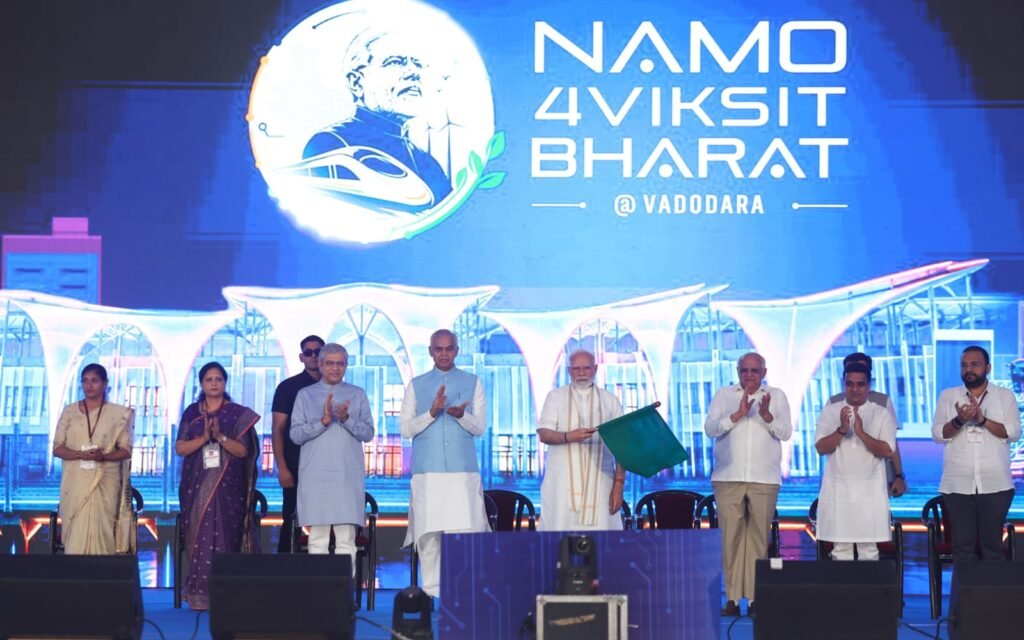
Prime Minister Modi was speaking at the ceremony marking the dedication to the nation of three important phases of the Western Dedicated Freight Corridor, covering 326 km and involving an investment of more than Rs 20,700 crore. He also virtually flagged off a double-stack freight train and dedicated it to the nation.
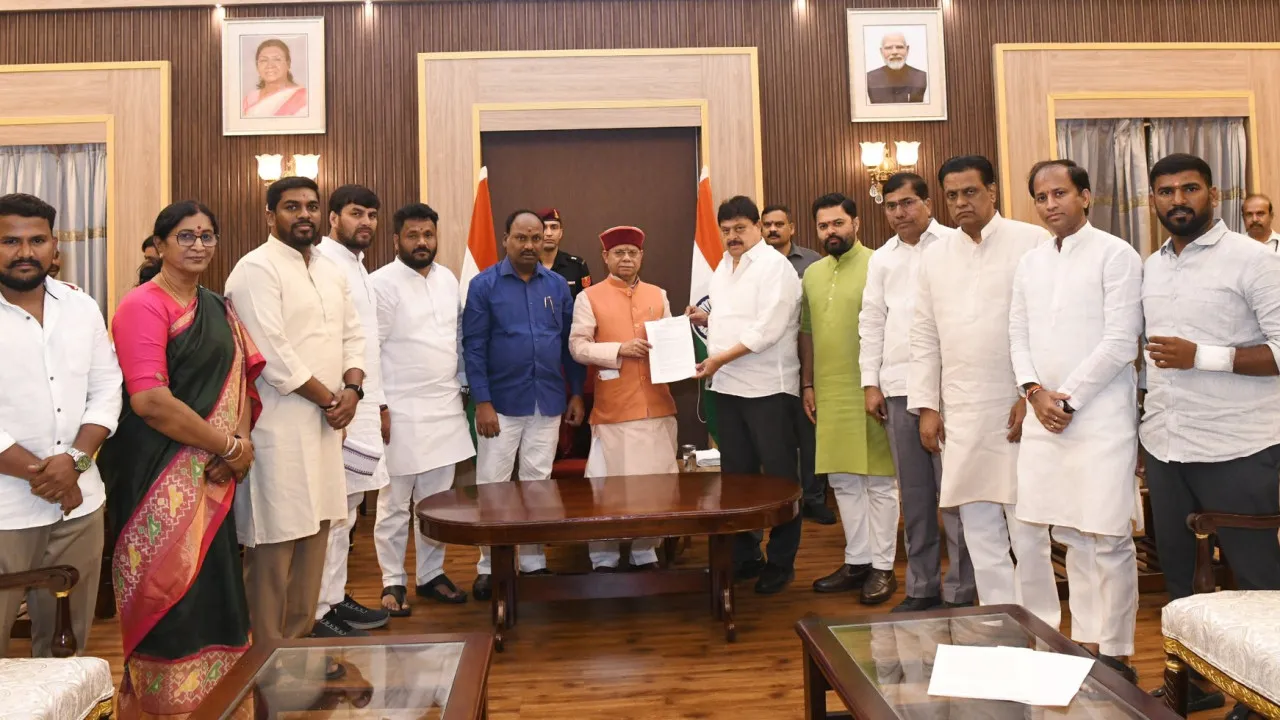
The event at JNPA in Uran was attended by Maharashtra Governor Jishnu Dev Varma, Chief Minister Devendra Fadnavis, Deputy Chief Minister Eknath Shinde, Deputy Chief Minister Sunetra Ajit Pawar, Employment Guarantee Scheme Minister and Raigad district Guardian Minister Bharat Sheth Gogawale, Women and Child Development Minister Aditi Tatkare, MLAs Prashant Thakur and Mahesh Baldi, and senior officials from the state government, railways and Dedicated Freight Corridor Corporation of India Limited (DFCCIL).
Highlighting the rapid expansion of infrastructure since 2014, Modi said the successful completion of the Eastern and Western Dedicated Freight Corridors was transforming India's commercial and logistics ecosystem. The corridors, he said, were becoming a backbone of national trade by enabling faster and more efficient movement of goods.
With passenger and freight train operations separated, more than 430 freight trains can run every day. A journey that earlier took nearly 30 hours by road can now be completed in about 10 to 12 hours by rail. The time required to cover 100 km has also been reduced by more than half. This is resulting in fuel savings, lower transportation costs and environmental benefits, Modi said.
He said the expanded freight network would also provide significant benefits to the agriculture sector. Farmers in eastern and western India can now transport perishable agricultural products to major markets more quickly. Seasonal flowers, vegetables and fruits can reach consumers and markets on time, helping farmers reduce delays and improve market access.
The Prime Minister also highlighted efforts to extend railway connectivity to remote tribal areas of Gujarat, Madhya Pradesh and Maharashtra. He said new railway services would benefit people travelling to places such as Chhota Udepur and Alirajpur. “Areas of India where railways had not reached for decades are now being connected,” he said.
Modi underlined the wider economic impact of infrastructure development, including roads, metro systems, airports and gas pipelines. He referred to the country's historic railway budget of more than Rs 2.75 lakh crore and said infrastructure investment was generating employment opportunities. Construction of houses for the poor, expansion of ports and railway modernisation were also creating opportunities for new industries and businesses in surrounding areas.
Highlighting India's growing industrial capabilities, Modi said the country had manufactured 50,000 modern railway coaches since 2014 and added nearly 2.05 lakh wagons to its railway network. India, he said, had emerged as a major manufacturer of railway coaches, metro coaches and locomotives.
He also highlighted efforts to achieve self-reliance in critical supply chains, citing domestic production of solar photovoltaic modules. Equipment that was previously imported on a large scale is now being manufactured domestically, reducing import expenditure and contributing to the creation of a 200 GW capacity, he said.
On emerging technologies such as data centres and artificial intelligence, Modi stressed the need for a robust power infrastructure. He said international agreements were being pursued for uranium, critical minerals and rare earth elements. If India is to become a global leader in artificial intelligence, he said, it must develop the necessary infrastructure and skilled workforce. AI, he added, is not merely an information technology tool but a fundamental capability for the future, with applications across agriculture, healthcare and robotics.
Completion of Dedicated Freight Corridor Network a Historic Achievement: Governor Jishnu Dev Varma
Governor Jishnu Dev Varma said the Eastern Dedicated Freight Corridor was already operational and the completion of the Western Dedicated Freight Corridor meant that India's entire dedicated freight corridor network had now been completed. He described the achievement as a historic milestone in strengthening the country's transportation and logistics infrastructure under the visionary leadership of Prime Minister Narendra Modi.
The availability of dedicated freight routes will allow passenger trains operating on existing railway lines to run faster and more efficiently, he said. The shift of freight transportation from roads to railways would also reduce road congestion, lower logistics costs and improve the efficiency of the country's supply chain.
The corridor passes through approximately 178 route kilometres across Raigad, Thane and Palghar districts, with an investment of more than Rs 10,000 crore, including land acquisition costs, for the Maharashtra portion of the project. Varma expressed confidence that the project would provide a new direction to development in the state.
JNPT to Become India’s First Port with Capacity of Over One Million TEUs by 2030: CM Fadnavis
Chief Minister Devendra Fadnavis said the operationalisation of the Western Dedicated Freight Corridor connecting JNPT with a vast hinterland would significantly strengthen Maharashtra's logistics capabilities. The corridor is expected to substantially increase cargo movement through JNPT, which handles around 55 per cent of the country's container traffic.
JNPT handled approximately 3.827 million TEUs between April and August, and the completion and full-scale operation of the dedicated freight corridor is expected to accelerate cargo movement further.
Fadnavis expressed confidence that by 2030, JNPT would become the country's first port with a capacity exceeding one million TEUs.
He said the JNPT-New Umbergaon section of the Western Dedicated Freight Corridor, extending from Dadri in Uttar Pradesh to JNPT, was a crucial link that was being operationalised. The approximately 1,500-km corridor connects northern India with the western part of the country, allowing the logistics benefits of major western coast ports such as JNPT to reach a large part of the hinterland.
The Maharashtra section involves an investment of around Rs 10,000 crore, with approximately 178 km of the corridor passing through the state, Fadnavis said.
Reducing logistics costs is essential for India to become an integral part of global supply chains. The Chief Minister said logistics costs had declined under Prime Minister Modi's leadership and would fall further once the dedicated freight corridor operates at full capacity. This would enhance India's global competitiveness and generate employment opportunities.
Fadnavis also said the expansion of JNPT was being complemented by the development of Vadhavan Port, which would further enhance Maharashtra's maritime capacity. Strong rail freight connectivity to ports such as JNPT and Vadhavan would help Maharashtra emerge as an important maritime power and global logistics hub, he added.
DFCCIL Managing Director Praveen Kumar outlined the key features of the Western Dedicated Freight Corridor, engineering challenges encountered during construction, its capacity and the benefits of its direct connectivity with JNPT. Consul General of Japan in Mumbai Sato Hitomi highlighted the importance of India-Japan cooperation in the development of the project.