New Delhi, Aug 2026 : The United States has welcomed India's decision to acquire the Javelin anti-tank guided missile system, describing the agreement as an important milestone in the growing defence partnership between the two countries and signalling the possibility of future co-production in India.
US Ambassador to India Sergio Gor said the agreement could create new opportunities for closer collaboration between American and Indian defence companies, including potential co-production of the advanced missile system in the future.
“The United States welcomes the Indian Army’s signing of a Letter of Offer and Acceptance (LOA) for the purchase of the Javelin anti-tank guided missile system through the US Foreign Military Sales process,” the US Embassy in India said in a statement.
The embassy said the agreement reflected the enduring relationship between the US and Indian armed forces and could pave the way for further industrial cooperation.
“This agreement reflects a defence partnership that is growing deeper, more capable, and more consequential,” Gor was quoted as saying.
The US ambassador also highlighted the agreement on social media, calling India's planned acquisition of the Javelin system “BIG news”. He said the deal represented a significant step forward in bilateral defence ties and could open the door to co-production opportunities.
Gor noted that the agreement comes against the backdrop of growing strategic engagement between the two countries and said cooperation between India and the US had reached unprecedented levels.
The US Embassy said the Javelin agreement demonstrated Washington's strong support for the Indian Army while creating opportunities for the defence industries of both nations to work more closely.
“We see tremendous potential for future cooperation that strengthens the defence industrial bases of both countries,” the embassy quoted Gor as saying.
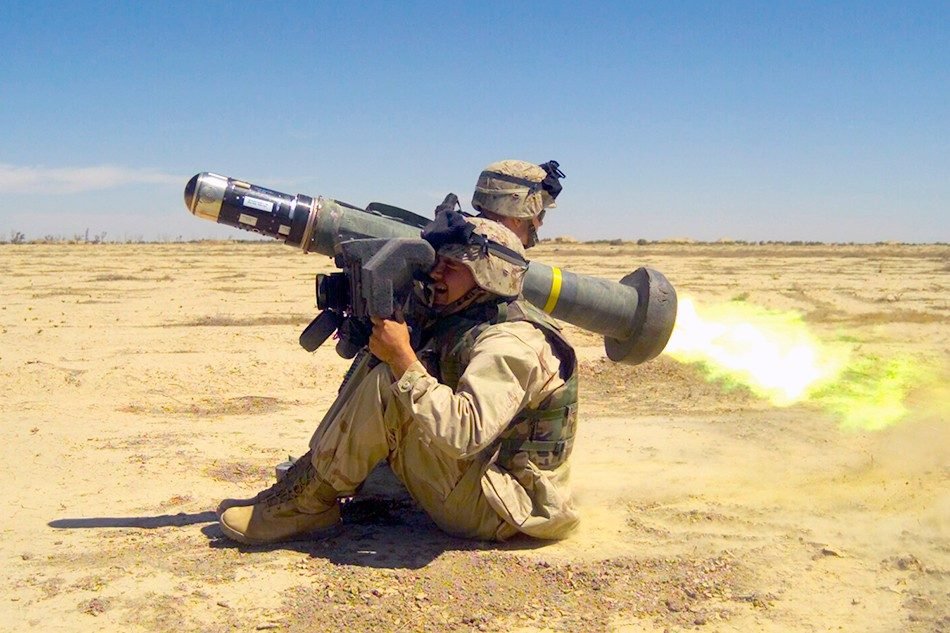
With the signing of the LOA, India formally becomes a customer of the Javelin missile system, an advanced medium-range, man-portable, fire-and-forget anti-tank guided weapon. The system is operated by the US Army, US Marine Corps and several international military forces.
The Javelin is jointly developed by Lockheed Martin and RTX and is designed primarily to engage armoured vehicles and other battlefield targets, including fortified positions.
One of the system's key features is its automatic guidance capability. After the operator locks on to a target and launches the missile, the weapon can track the target independently, allowing the soldier to immediately seek cover or reposition to avoid retaliatory fire.
The system uses a distinctive top-attack capability, in which the missile follows an arched trajectory before striking the target from above. This allows it to engage areas of armoured vehicles that are generally more vulnerable than their frontal protection.
The operator identifies and selects the target through the system's command launch unit. Once the target is locked before launch, the missile is fired and guided towards its intended target without requiring continuous control from the operator.
Another feature is its soft-launch capability, which allows the missile to be fired from confined locations. This gives troops the flexibility to operate the system from buildings, bunkers and other enclosed positions where conventional missile systems may face greater limitations.
The acquisition is significant not only from an operational perspective but also for India's broader defence industrial strategy. The possibility of future co-production could potentially provide Indian companies with greater access to advanced defence manufacturing capabilities, supply chains and technology partnerships.
The US Embassy described the signing as a landmark development that further strengthens the US-India Major Defence Partnership. It said the agreement demonstrates the depth of ongoing American support for the Indian Army while creating a foundation for discussions on mutually beneficial co-production arrangements.
For India, the Javelin acquisition adds another advanced anti-armour capability to its military inventory while potentially opening avenues for deeper industrial cooperation with American defence companies.
The agreement comes as New Delhi and Washington continue to expand cooperation across defence manufacturing, technology, interoperability and strategic security. The focus on co-production also aligns with India's broader objective of developing domestic defence manufacturing capabilities and reducing dependence on imports.
The Javelin deal, therefore, could prove to be more than a conventional arms purchase, with the two countries now exploring opportunities to translate the acquisition into deeper defence-industrial collaboration and greater manufacturing cooperation in India.