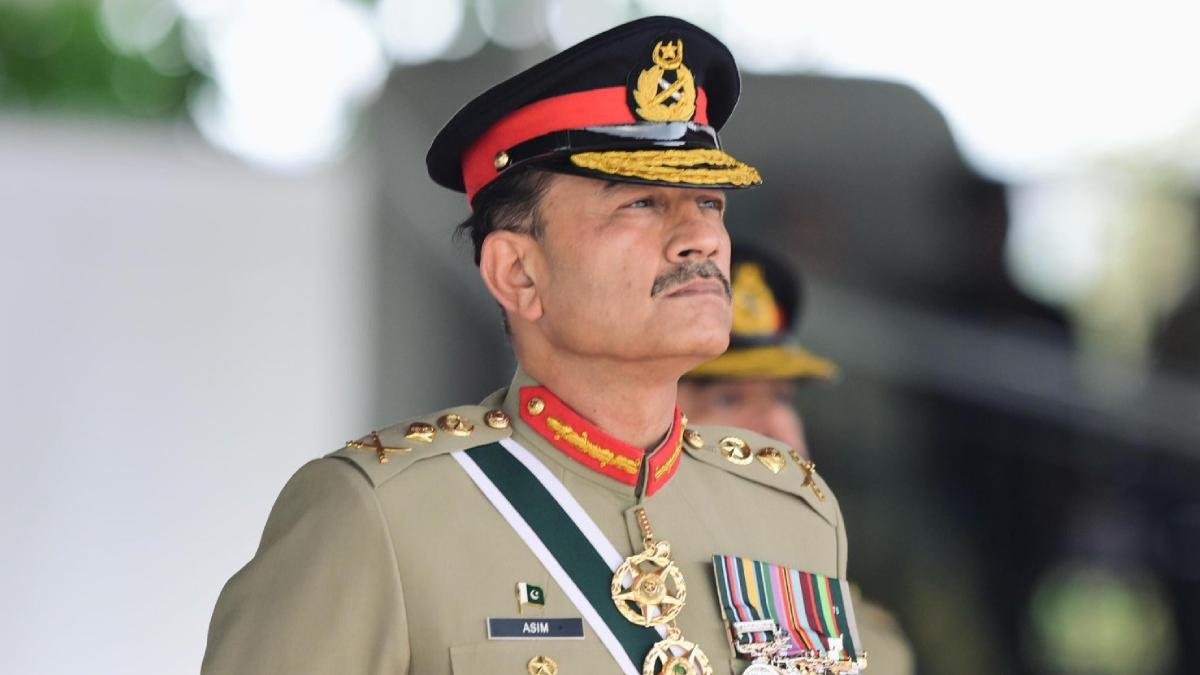
Islamabad, Aug 2026 : Pakistan is witnessing significant developments on both the political and military fronts as public discontent continues to grow in Pakistan-occupied Jammu and Kashmir (PoK). The National Assembly’s approval of a new defence law is expected to further strengthen the authority of Army Chief General Asim Munir, giving him a more prominent role in military operations, national security and strategic defence affairs.
Under the new defence framework, the position of Chief of Defence Forces (CDF) has been given enhanced powers. The changes are being viewed as an important restructuring of Pakistan’s military command architecture and could have wider implications for the balance between the country’s civilian political leadership and its powerful military establishment.
General Asim Munir, who already holds considerable influence within Pakistan’s security establishment, is expected to assume a broader role under the revised arrangement. The enhanced authority of the CDF is likely to provide greater coordination over military operations and strategic defence planning.
The developments come at a time when Pakistan is also facing growing public dissatisfaction in PoK. Residents in several parts of the region have been raising concerns over inflation, administrative difficulties, lack of basic facilities, political rights and other local issues.
Protests, shutdowns and other forms of public mobilisation have reportedly emerged in different areas, with demonstrators questioning policies adopted by the Pakistan government and the security establishment. Protesters have alleged that their longstanding concerns have not received adequate attention from authorities.
The growing discontent presents an additional challenge for Islamabad, particularly as the government seeks to maintain administrative control and prevent local grievances from developing into a broader political movement. Authorities, meanwhile, have maintained that maintaining law and order remains a key priority.
Analysts have long noted the central role played by Pakistan’s military in the country’s political and security affairs. The expansion of powers associated with the CDF could further consolidate the military’s influence over national security and defence policymaking.
The latest developments therefore carry significance beyond the military establishment. An increasingly powerful defence command structure could influence decision-making on matters ranging from internal security to strategic policy and relations with neighbouring countries.
At the same time, continued public mobilisation in PoK could test the government's ability to balance security considerations with demands for greater political representation, economic relief and administrative reforms.
Pakistan now faces a complex situation in which efforts to strengthen its military command structure are unfolding alongside growing dissatisfaction among sections of the population. How Islamabad responds to the concerns emerging from PoK, while managing the expanding role of the military in national affairs, could have important consequences for the country's political landscape in the months ahead.
(Disclaimer :The content of this article is sourced from a news agency and has not been edited by the Mavericknews30 team.)