Aug 2026 : India’s fighter aircraft modernisation programme is often discussed through the lens of major acquisitions such as the Rafale and the indigenous Tejas Mk-1A. Both programmes are important and will significantly strengthen the Indian Air Force (IAF). However, when the numbers are examined alongside the planned retirement of older aircraft, a major gap remains.
The central issue is simple: the Rafale and Tejas Mk-1A alone are unlikely to take the IAF to its authorised strength of 42 fighter squadrons. This is where the Tejas Mk-2 assumes particular importance. Rather than being an optional addition, the medium-weight fighter is intended to fill a capability and numerical gap created by the retirement of several legacy aircraft.
The IAF has an authorised requirement of 42 fighter squadrons, a figure that has long been associated with the ability to prepare for a potential two-front contingency involving China and Pakistan. In recent years, however, the force has operated with substantially fewer squadrons. The retirement of the final MiG-21 squadrons in 2025 brought the curtain down on more than six decades of service, but also highlighted the broader challenge facing the IAF: new aircraft are entering service while older fleets are simultaneously being withdrawn.
Current estimates place the IAF’s operational fighter strength at around 29 to 31 squadrons. Even using the upper end of that range, there is a substantial gap between the existing force and the authorised target.
Rafale and Tejas Mk-1A Add Numbers, But Not Enough
India currently operates 36 Rafale fighter aircraft, deployed in two squadrons. In February 2026, the Defence Acquisition Council cleared the long-pending proposal for 114 additional Rafale aircraft under the Multi-Role Fighter Aircraft programme.
The proposed acquisition, estimated at around ₹3.25 lakh crore, is expected to include significant indigenous production, with the majority of the aircraft likely to be manufactured in India under the Make in India framework.
At approximately 18 aircraft per squadron, 114 Rafales could provide the equivalent of around six squadrons. The aircraft would considerably enhance India's high-end air combat capabilities, particularly in areas such as long-range engagement, precision strike and networked warfare.
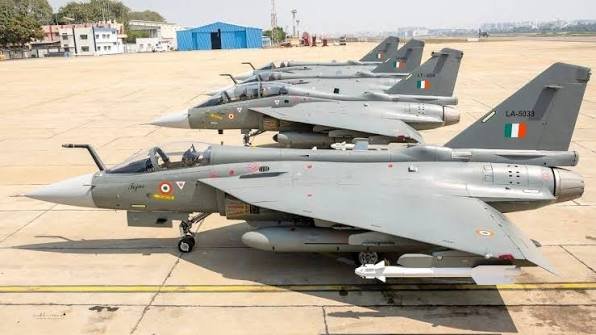
At the same time, the indigenous Tejas Mk-1A programme has expanded. The IAF has orders for 180 Mk-1A aircraft through two contracts. The first order covered 83 aircraft, while a subsequent contract added another 97.
At an approximate squadron strength of 18 aircraft, 180 Tejas Mk-1As represent roughly ten squadrons.
On paper, therefore, the Rafale and Tejas Mk-1A programmes together represent around 16 squadrons of aircraft. That appears substantial until the retirement of existing fleets is taken into account.
The Retirement Problem
The IAF is simultaneously preparing to retire several ageing fighter fleets.
The Jaguar fleet, which comprises around six squadrons, is expected to be progressively phased out from the latter half of the 2020s into the early 2030s. The MiG-29 and Mirage 2000 fleets, each comprising approximately three squadrons, are also expected to begin leaving service as their airframes approach the limits of their structural and fatigue lives.
Together, these three fleets account for approximately 12 squadrons.
This creates the fundamental problem with simply adding up new aircraft. If around 16 squadrons enter the force while approximately 12 legacy squadrons disappear, the net increase is only around four squadrons, potentially rising to five or six depending on the final induction and retirement schedules.
Starting from approximately 30 squadrons, that could leave the IAF with roughly 34 to 36 squadrons.
That would represent an improvement, but it would still leave the service well below the authorised target of 42.
Why the Tejas Mk-2 Matters
This is the point at which the Tejas Mk-2 becomes particularly important.
The aircraft, also referred to as the Medium Weight Fighter, is being developed as a larger and more capable indigenous fighter than the Tejas Mk-1A. Its intended role also makes it especially relevant to the IAF’s squadron-strength problem.
The Mk-2 is designed to eventually replace aircraft belonging to the medium-weight segment of the IAF’s fleet, including the Mirage 2000, Jaguar and MiG-29. These are precisely the aircraft whose retirement will create a major numerical gap over the coming decade.
The IAF has been associated with an initial requirement of around 120 Mk-2 aircraft, which would translate into approximately six squadrons. Earlier requirements have been discussed at considerably higher levels, potentially involving around 210 aircraft or more, depending on future decisions.
The first flight and production schedule for the Mk-2 will be critical. Development and testing need to progress rapidly if the aircraft is to begin entering operational service in the early 2030s, when the retirement of legacy aircraft will become increasingly significant.
Rafale and Mk-2 Serve Different Purposes
An important distinction is often lost in discussions about whether India needs both the Rafale and Tejas Mk-2.
The two aircraft are not simply interchangeable alternatives.
The Rafale represents a high-end combat capability and significantly enhances the upper tier of India's fighter fleet. It brings advanced sensors, weapons, electronic warfare capabilities and multirole performance.
The Mk-2, meanwhile, is intended to provide a larger indigenous medium-weight fighter force that can maintain squadron numbers while gradually replacing ageing aircraft.
In other words, the Rafale strengthens the quality and capability of the force, while the Mk-2 is essential to maintaining the quantity and broad structure of the force.
Replacing the Mk-2 requirement with additional Rafales would also have implications for cost, industrial capacity and fleet composition. A balanced air force requires a combination of high-end fighters and sufficiently large numbers of capable aircraft available for a wide range of missions.
The Timing Challenge
The biggest concern is not merely how many aircraft India eventually acquires, but when they arrive.
The IAF is entering a period in which new aircraft will have to compensate for multiple legacy fleets reaching retirement age. The Tejas Mk-1A production ramp is expected to provide a steady flow of light fighters, while the additional Rafale programme could substantially strengthen the force.
However, the Jaguars, MiG-29s and Mirage 2000s cannot remain in service indefinitely.
This creates a potential capability gap during the transition period. If the Mk-2 is delayed significantly, the IAF could find itself adding new aircraft while simultaneously losing large numbers of older ones.
The result would be that the force remains below its sanctioned strength for longer.
The challenge is compounded by the fact that fighter production is a long-term industrial process. Developing an aircraft, completing testing, establishing production lines, training pilots and ground crews, and building up operational squadrons cannot happen overnight.
Therefore, decisions made today will directly determine the IAF’s squadron strength a decade from now.
Indigenous Fighter Production Is Another Strategic Objective
The Mk-2 programme also has importance beyond the immediate squadron calculation.
India has been attempting to reduce its dependence on imported defence equipment and build a sustainable domestic aerospace industry. A successful Mk-2 programme would provide the country with experience in designing, manufacturing and supporting a modern medium-weight fighter at scale.
It could also create a wider ecosystem involving private companies, component manufacturers, avionics suppliers, engine-related industries and maintenance organisations.
For the IAF, an indigenous fighter would offer the additional advantage of greater control over upgrades, weapons integration and long-term maintenance.
The Numbers Point to a Clear Requirement
The squadron arithmetic therefore provides a strong argument for continuing the Mk-2 programme.
If the IAF has around 30 operational squadrons today and the Rafale and Mk-1A programmes provide the equivalent of approximately 16 squadrons, while around 12 squadrons of older Jaguars, MiG-29s and Mirage 2000s retire, the resulting force could still be only around 34 to 36 squadrons.
That remains significantly below the authorised 42.
The Mk-2 can help close that gap while also replacing ageing medium-weight fighters.
Even an initial fleet of around 120 Mk-2 aircraft would represent approximately six squadrons. A larger future requirement could provide an even greater contribution to restoring the IAF’s strength.
The broader lesson is that India cannot assess its fighter modernisation programme simply by counting new aircraft orders. Every new induction has to be measured against the aircraft that are simultaneously leaving service.
The Rafale is vital. The Tejas Mk-1A is vital. But neither eliminates the requirement for the Tejas Mk-2.
For an IAF seeking to rebuild its fighter strength to 42 squadrons while preparing for a more demanding strategic environment, the Mk-2 is not merely another aircraft programme. It is a key component of the force structure needed to bridge the gap between the present fleet and the future air force.
The challenge now is to ensure that development, testing and production remain on schedule. Delays would not simply affect an individual aircraft programme; they could directly affect the IAF’s ability to restore squadron strength during a period when several legacy fleets are approaching retirement.
The objective, therefore, is not to reach 36 squadrons. It is to move towards 42 and eventually build a force capable of meeting future operational demands. On that arithmetic, the Tejas Mk-2 remains an essential part of India’s air-power modernisation strategy.
(Disclaimer :The content of this article is sourced from a news agency and has not been edited by the Mavericknews30 team.)