Mozambique Enters Into A Strategic Tie Up With China In Exploring Critical Minerals In Insurgency-Hit Cabo Delgado.

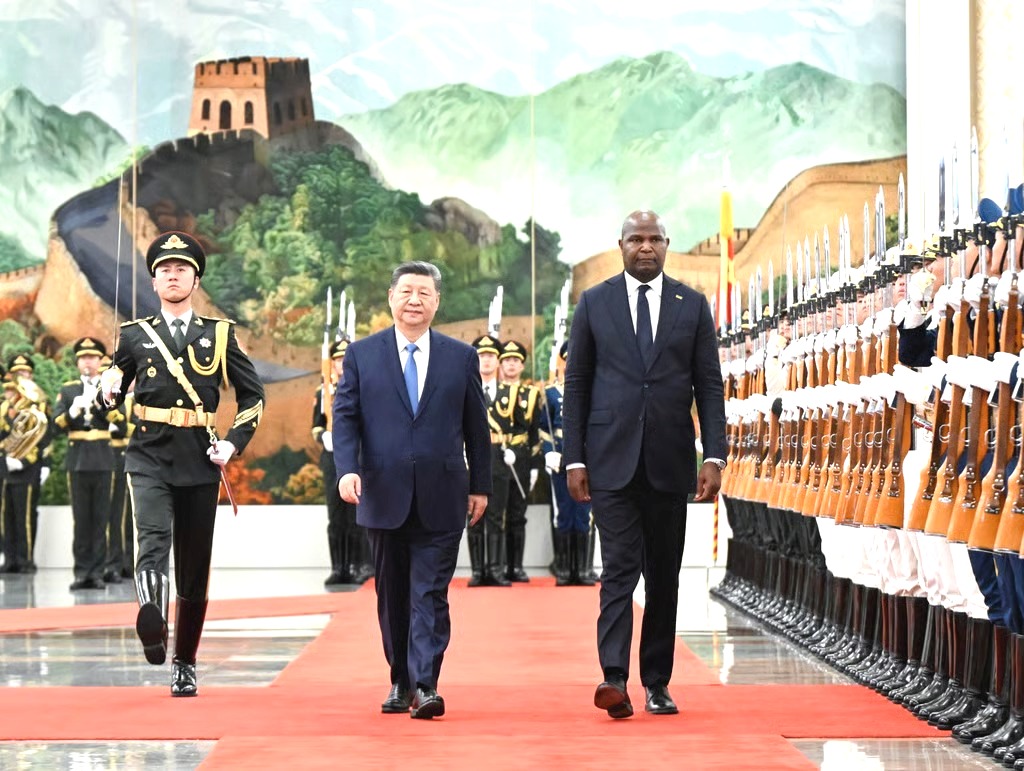
Beijing/Maputo; April 2026: On Tuesday, 21st April 2026, Chinese President Xi Jinping and his Mozambican counterpart Daniel Chapo have signed an agreement in Beijing, wherein both the countries have agreed to explore the vast, untapped deposits of critical minerals buried beneath the African nation’s resource-rich northern provinces, as Mozambique seeks Chinese capital and security expertise to unlock one of the continent’s most coveted, and conflict-ridden resource frontiers.
According to the joint statement, the two countries will deepen cooperation in the geological and mineral sectors by using platforms such as the China-Africa Geoscience Cooperation Centre and the Belt and Road International Geoscience Education and Training Centre.
The geological survey will target high-value deposits of graphite, lithium and rare earth elements essential for the global green energy transition. However, these efforts face persistent security challenges from a violent Islamist insurgency in Cabo Delgado province in the north of the country.
Attacks have displaced over a million people and stalled multibillion-dollar projects in which Chinese state-owned giants hold major interests.
President Xi said China was willing to “explore new paths for cooperation in infrastructure and comprehensive energy and mineral development” with Mozambique, while promoting the “sustainable development of practical cooperation” between the two countries.
Mozambique has emerged as a hotspot for global natural gas production following the discovery, in the first half of the last decade, of more than 05 trillion cubic metres (180 trillion cubic feet) of natural gas reserves in the Rovuma basin, off the country’s northeast coast.
China will also help Maputo in “exploring new paths for integrated development” in energy, minerals and infrastructure. The model goes beyond extraction, aligning rail lines and power networks with mineral development to create industrial corridors.
Under the agreement, China will fund projects designed to establish local processing plants, aiding Mozambique’s shift away from raw material exports towards a domestic industrial base. This commitment extends to the agricultural sector, where China will use its zero-tariff policy and “green channel” to boost imports of Mozambican products while expanding cooperation in seed development, irrigation and logistics. The partnership also extends to security, with Beijing committing to support Mozambique’s fight against terrorism. Under a new memorandum of understanding, the two countries will expand military and law enforcement cooperation, covering personnel training, equipment and technology transfers, and joint exercises.
“China supports Mozambique’s efforts to combat terrorism and achieve domestic peace and stability, and is willing to continue to help Mozambique strengthen its relevant capacity building”, the statement said.
The security pact aims to stabilise regions vital to energy projects, protecting gas fields and mines from the insurgency that has gripped Cabo Delgado since 2017. While the conflict has devastated the local economy, some areas are now seeing the return of residents as security forces begin to secure key industrial hubs.
Chinese state interests have expanded rapidly across the offshore sector alongside Western players such as TotalEnergies. China National Petroleum Corporation is now a major partner in the US$30 billion Rovuma liquefied natural gas project, while China National Offshore Oil Corporation launched a separate hydrocarbon exploration campaign in the Rovuma basin in March.
African countries such as Mozambique are “seeking more benign alternatives” to secure their interests, according to Emmanuel Matambo, research director at the Centre for Africa-China Studies at the University of Johannesburg. “China’s undertaking to help in security while investing in energy does not only have great advantages for Mozambique, it could also reposition China’s global standing”, Matambo said, adding that Mozambique had for years struggled to staunch extremist violence in Cabo Delgado.
“It will help bring back investors, reinstate state control in troubled villages, and enable the return of internally displaced people. This could have a positive impact on the rest of southern Africa”, Matambo added.
David Shinn, a China-Africa expert and professorial lecturer at George Washington University’s Elliott School of International Affairs, said Chapo’s Beijing visit was particularly significant as it marked “the first state visit by a president of Mozambique in 10 years”. He added that the relationship between the two nations was rooted in long-standing ties between their ruling parties, Frelimo and the Communist Party of China.
However, while the agreements reaffirmed China’s commitment to military training and arms sales, there was “no hint” that Beijing intended to provide “kinetic counterterrorism support” – or direct law enforcement in conflict zones like Cabo Delgado, Shinn said.
Whatever we have discussed so far about the far reaching consequences of this trade agreement between Mozambique and China is just a prelude of the much deeper interest embracing Mozambique’s alliance with the Asian Superpower, and it is the “US$ 1.4 billion debt” after unrest in the African country has affected its economy. Moreover, China happens to be Mozambique’s biggest bilateral creditor, holding 14% of the country’s external public debt.
During July last year (2025) Cash-strapped Mozambique was open in approaching China to restructure the US$1.4 billion it owes its biggest bilateral creditor, President Daniel Chapo said. The gas-rich southeast African nation’s economy experienced a contraction for two straight quarters after disputed October elections triggered violent protests that left hundreds died and saw factories and shops burned and looted. “Rescheduling or even forgiveness of the debt we have with our largest bilateral creditor is not an outlandish idea”, he had said, when asked if the nation was considering requesting China to restructure its loans. “Of course, this will always be done within the framework of partnership, within the existing agreement, as we are a serious country that strives to honor its commitments”, the President of Mozambique was candid in asserting.
Suvro Sanyal – Team Maverick.


NETRA MK-2 to Transform India’s Airborne Surveillance with Advanced Indigenous Mission Systems
New Delhi, July 2026 : India is set to significantly enhance its airborne surveillance and…
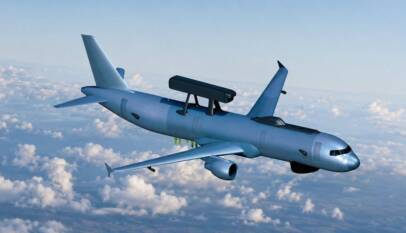
NETRA MK-2 to Transform India’s Airborne Surveillance with Advanced Indigenous Mission Systems
New Delhi, July 2026 : India is set to significantly enhance its airborne surveillance …