No LoP In Assam; Congress Fell Short Of Required Numbers.

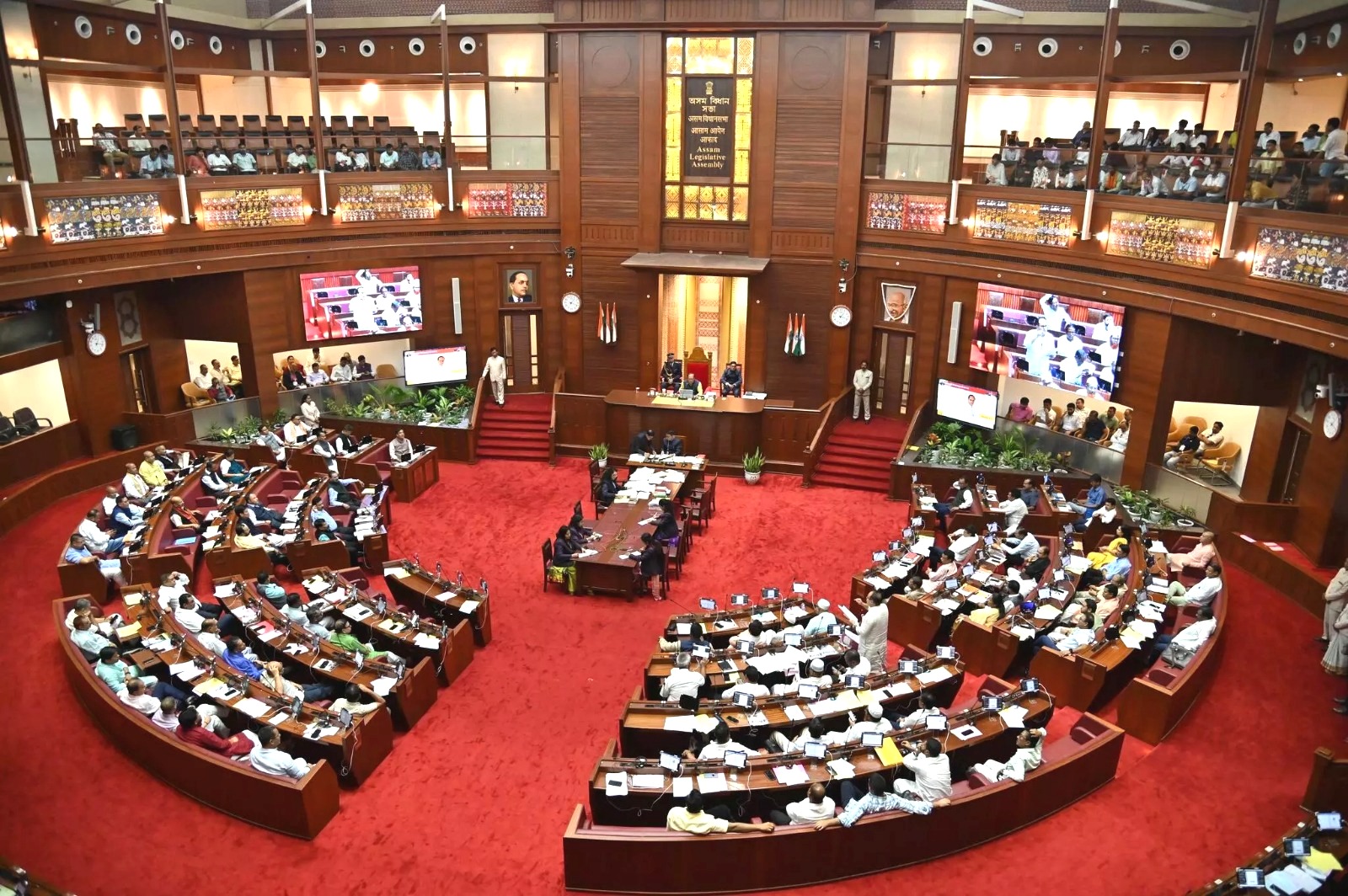
Guwahati; May 2026: As Himanta Biswa Sarma today (12th May 2026) took oath as Assam Chief Minister for a second consecutive term, the scale of the BJP led NDA’s emphatic return to power turned impossible to ignore. The alliance stormed back with a commanding 102 seats in the 126-member Assembly, with the BJP alone securing 82 seats, while the Congress was reduced to just 19, its lowest-ever tally in Assam’s political history.
Yet, even before celebrations over the sweeping mandate had fully settled, a fresh constitutional and political question began reverberating across Assam’s political corridors: who will become the Leader of Opposition in the new Assembly? More importantly, will Assam have one at all this time? Interestingly, Chief Minister Himanta Biswa Sarma had hinted at such a possibility months ago. On February 26th, while speaking about Opposition seat-sharing arithmetic, Sarma had remarked that the Congress might struggle to retain the LoP position if the numbers did not favour the party.
At the time, the statement was viewed largely as a political jab. However, the election results have now transformed that remark into a serious constitutional debate. Following the NDA’s landslide victory, Sarma once again addressed the issue. “To field LoP, a number of maybe 21 or 22 seats are required by an opposition party. Congress has only won 19 seats. Constitutionally, there will be no LoP this time, but parties in the opposition will have their own Leaders or Presidents”, Sarma had said.
The statement immediately triggered debate among political observers, legal experts and constitutional analysts over whether Assam could witness an Assembly functioning without an officially recognised Leader of Opposition. Opposition crisis hits Assam The debate has suddenly pushed what is otherwise a procedural constitutional position to the centre of Assam’s political discourse.
Senior advocate Anisur Rahman explained that under prevailing conventions, a party generally requires one-sixth of the total strength of the Assembly to claim the post of Leader of Opposition (LoP). In Assam’s 126-member Assembly, that translates to 21 seats, two more than the 19 secured by the Congress in the recently concluded elections. “One-sixth of the total seats, that is 21 seats, are required for the single largest opposition party to claim the LoP position in Assam”, Rahman said. Addressing the road ahead as the Congress falls short of the required mark, he added, “Each opposition party will have its own leader or president. The position of the LoP will remain vacant”.
What makes the situation even more significant is its historical dimension. According to Rahman, Assam may be entering completely uncharted territory. “For the first time in the state’s history, Assam may witness the LoP position remaining vacant”, he noted.
Beyond the legal interpretation, however, the larger concern revolves around what the absence of a recognised Leader of Opposition (LoP) could mean for democratic functioning within the Assam Assembly. Political observer and Gauhati University’s Head of the Department of Political Science, Dhruba Pratim Sharma, emphasised that the office of the LoP is not merely symbolic but central to legislative accountability. “The LoP has several roles to play. He or she holds a position equivalent to that of a cabinet minister. The LoP draws a salary of cabinet rank, receives security and health facilities, and is entitled to all the provisions available to a cabinet minister”, Sharma said.
Professor Sharma further underlined the institutional significance of the role in a parliamentary democracy. “The position of the LoP is central to the opposition in the same way that the Prime Minister’s role is central to the government. Although opposition parties may have conflicts of interest among themselves, the LoP is expected to represent their collective voice”, Sharma said.
According to Sharma, the issue is not about alliances but whether a single opposition party independently fulfils the required numerical strength. “Congress may have allies, but when it comes to the LoP position, a single Opposition party must independently hold the required number of seats”, he added. The conversation around the Leader of Opposition (LoP) post has also revived broader discussions on the nature of Opposition politics in Assam since the BJP first came to power in the state in 2016.
Another political observer from Gauhati University’s Department of Political Science, Vikas Tripathi, said the functioning of the Assembly is deeply tied to legislative procedures and numerical strength, but cautioned against interpreting electoral setbacks as the complete disappearance of opposition politics. “The LoP is nominated by the Speaker on the recommendation of the opposition party. The House is always governed by principles and procedures. Numerical marginalisation of the Opposition does imply weakness within the House. However, outside the Assembly, Opposition politics can remain vigorous and depends largely on the organisational strength of the party”, Tripathi said. He added that the legislative dominance of the ruling alliance is likely to intensify further following the BJP-led NDA’s overwhelming mandate. “Since 2016, the opposition has largely remained on the numerical margins. The Assembly has been characterised by the dominance of the government, and that trend may continue. Legislative business such as the passage of bills depends on numerical majority in the House, and now the government has an absolute majority”, Tripathi added.
However, he pointed out that the future political relevance of the Congress and other opposition parties would depend on how effectively they reorganise themselves. “It depends on how Congress reinvigorates itself and how effectively opposition parties coordinate among themselves”, he said. Tripathi also highlighted the historical evolution of the LoP position. “The position of Leader of Opposition became institutionally stronger after 1977, and since then Assam has always had an LoP”, he added.
For legal experts like Anisur Rahman, the concern extends beyond protocol and prestige. He argued that the absence of a recognised Leader of Opposition (LoP) could weaken the institutional mechanism through which public concerns are collectively articulated within the Assembly. Rahman explained that the LoP plays a crucial coordinating role among opposition legislators by strategically distributing issues, interventions and debates during Assembly proceedings. “The LoP can divide the issues that need to be raised by the opposition among its members”, he said.
Then came perhaps the sharpest warning in the ongoing debate, one reflecting a deeper anxiety over democratic balance in the state. “We can say that the current situation endangers democracy in India. Many public issues and concerns raised by the people may not find proper expression in the Assembly due to the absence of an LoP”, Rahman cautioned.
As Assam prepares for another five years under a politically dominant BJP-led government, the focus is no longer only on the government. The larger question now is whether the Assam Assembly can preserve the spirit of democratic scrutiny and institutional accountability without an officially recognised Leader of Opposition.
Team Maverick.



Shivakumar Says Congress United, Assures Women Will Get Cabinet Berth
Bengaluru, Aug 2026 : Karnataka Chief Minister D.K. Shivakumar on Monday sought to dismiss…
Shivakumar Says Congress United, Assures Women Will Get Cabinet Berth
Bengaluru, Aug 2026 : Karnataka Chief Minister D.K. Shivakumar on Monday sought to dismiss …