India’s Informality Paradox: A Quiet Shock Absorber in Turbulent Times

Dr Ravi Kota*
A material scientist once observed that matter is not truly made of matter; what seems solid is mostly empty space structured by forces. Ancient Indian thought expressed a similar insight differently—the visible rests on the unseen. India’s economy works much the same way: its formal edifice of rules and institutions rests on a vast, fluid substratum of informality.
Far from being a flaw, this informality is often the system’s hidden strength. It has repeatedly cushioned shocks and enabled adaptation—from the disruptions of COVID-19 to the ripple effects of tensions in West Asia. To understand India’s economic resilience, one must look beyond the formal façade and reckon with the quiet, adaptive power of its informality.
Over the past decade, India’s economic ambition has been clear: to emerge as a $5 trillion economy and a leading global economic power. That aspiration rests on deeper global integration, higher productivity, and a decisive shift towards formalization. Formal economies widen the tax base, enable scale, expand access to institutional credit, and strengthen state capacity.
Much of India’s policy architecture over the past decade reflects this direction. GST unified fragmented markets. The Insolvency and Bankruptcy Code aimed to improve financial discipline. Digital public infrastructure—from Aadhaar to UPI—has expanded financial inclusion at extraordinary scale. Even demonetization, despite its disruptions, was framed as a push toward formalization.
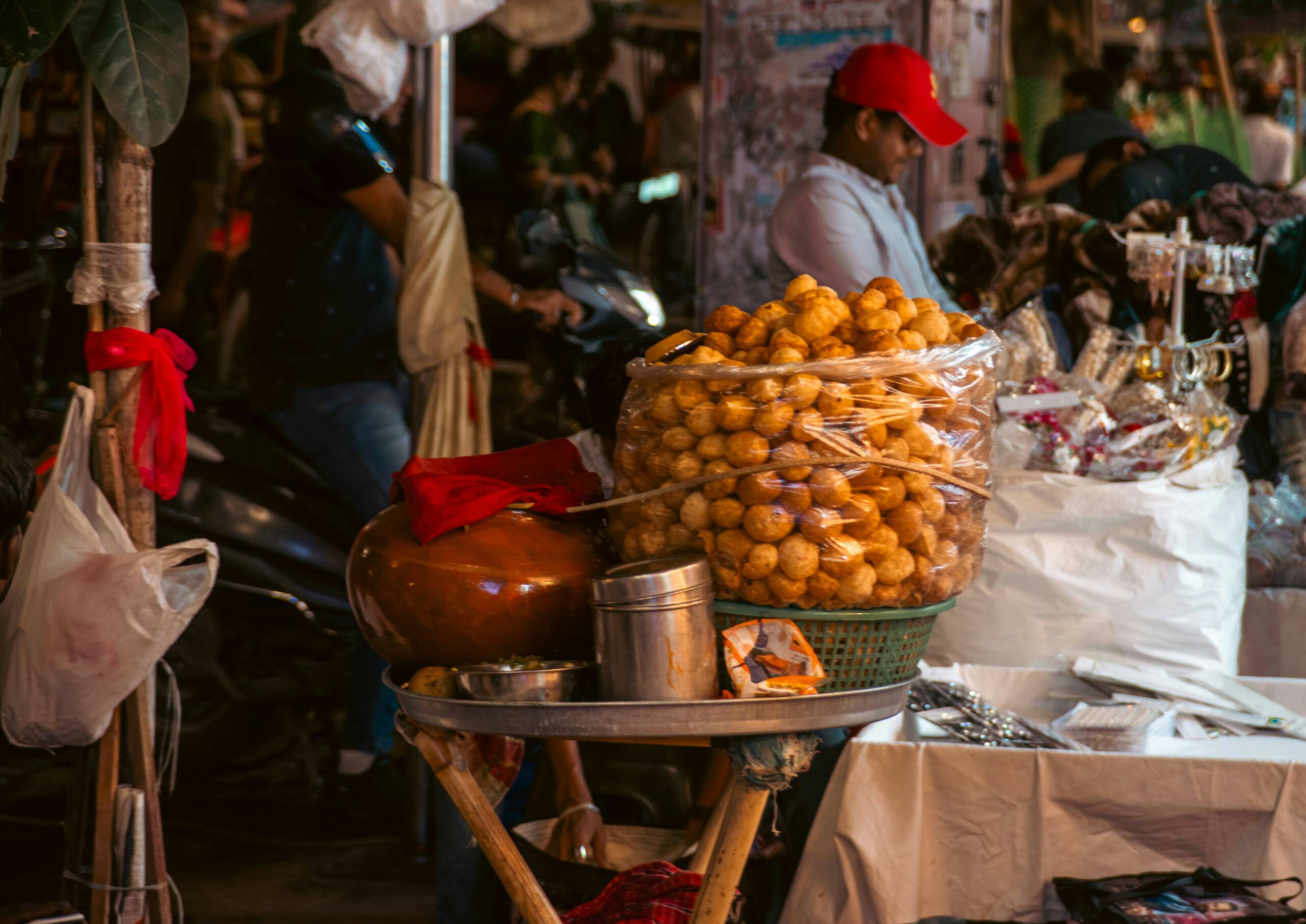
Yet beneath this policy thrust lies a stubborn reality: India remains overwhelmingly informal. Nearly 90 per cent of the workforce operates outside formal contracts, while millions of small and unregistered enterprises continue to drive employment and local commerce. Cash, despite the rise of digital payments, remains deeply embedded in everyday transactions.
For years, this persistence was viewed mainly as evidence of incomplete reform. But recent crises suggest a more complex story.
The COVID-19 pandemic exposed the fragility of highly formalized and tightly integrated global systems. Supply chains fractured, labour markets froze, and consumption collapsed. India too suffered severe disruption. Yet once restrictions eased, economic activity recovered with surprising speed.
Part of that recovery came from policy support—free food distribution, direct benefit transfers, and emergency credit schemes. But another part came from the structure of the economy itself.
India’s informal sector acted as a shock absorber. Workers displaced from urban centres returned to villages and re-entered agriculture, family enterprises, or local labour markets. Informal credit networks sustained consumption where formal finance could not reach quickly enough. Small retailers and local supply chains continued functioning even as global logistics systems faltered.
I saw this fragility firsthand during my tenure in Washington DC in 2020 as Minister (Economic) at the Indian Embassy. At the height of the pandemic, compounded by US–China trade tensions, even basic furniture ordered for my residence took nearly a year to arrive. Products originally manufactured in China were rerouted and repackaged through Vietnam under the new logic of “supply-chain resilience”. The experience was a reminder that highly optimized global systems often appear resilient until disruption hits.
A similar dynamic is visible today amid geopolitical tensions in West Asia. As a major importer of oil and gas, India remains vulnerable to external energy shocks. Yet the impact on domestic demand has been moderated not only by careful fiscal management under Finance Minister Sitharaman and Prime Minister Modi’s active handling of energy and supply-chain flows, but also by the structure of everyday economic life itself.
Large parts of India’s consumption economy remain localized. Small retailers, informal service providers, neighbourhood markets, and regional supply chains dominate economic life beyond metropolitan India. These systems may lack efficiency and scale, but they are often less exposed to global volatility. Their insulation becomes valuable precisely when globally integrated systems come under stress.
This reveals a deeper paradox at the heart of India’s development story. In normal times, informality is correctly viewed as a drag on growth. It suppresses productivity, narrows the tax base, restricts access to formal finance, and leaves millions without social protection. But crises alter the equation. In periods of disruption, informality provides flexibility, adaptability, and decentralized resilience. It prevents shocks from fully transmitting into livelihoods and sustains activity when formal systems stall.
The real question, therefore, is not whether India should formalize—it must. The deeper question is whether complete and rapid formalization is either feasible or desirable in the near term.
India is not moving from informality to formality in a linear way. It is evolving into something more hybrid: a system of “formal informality”.
This is already visible across India. A street vendor accepting UPI payments, a small enterprise linked to a Jan Dhan account, or an informal worker registered on a welfare platform occupies a grey zone: neither fully formal nor entirely excluded. More than 55 crore Jan Dhan accounts today hold deposits exceeding ₹3 lakh crore, while UPI processes over 20 billion transactions a month, touching nearly ₹30 lakh crore in value. These figures reflect the gradual networking of India’s informal economy into formal infrastructure without dismantling its flexibility.
To understand this better, one must look beyond headline GDP numbers and examine the geography of Indian economic life. India’s economy stretches across nearly 6 lakh villages and more than 4,000 towns where economic relationships remain deeply localized and socially embedded.
In these spaces, transactions are often trust-based, supply chains shorter, and enterprises operate with minimal overhead costs. Such systems may constrain scale and productivity, but they also reduce systemic vulnerability. A disruption in global trade does not immediately shut down a local kirana store or a small manufacturing unit serving regional demand.
This decentralized structure creates multiple nodes of economic activity, making the economy less dependent on a few highly integrated systems. In an age of recurring disruptions—pandemics, geopolitical tensions, climate shocks, and supply-chain fragmentation—that redundancy carries value.
None of this means informality should be romanticized. Informal workers still lack job security, health insurance, and retirement protection. Informal enterprises struggle to access capital, invest in technology, or scale sustainably. The challenge, therefore, is to avoid two extremes: forcing premature formalization that destroys livelihoods, or accepting persistent informality that traps millions in vulnerability.
India’s recent policy trajectory suggests a more calibrated path. Digital public infrastructure has enabled informal actors to plug into formal systems incrementally rather than abruptly. This approach preserves flexibility while expanding access.
In a world increasingly defined by shocks, the meaning of economic strength itself is evolving. Efficiency and integration remain important, but so do resilience and adaptability.
Highly formalized economies may achieve greater productivity in stable times, but they are also more tightly coupled to global systems and therefore more vulnerable to cascading disruptions. India’s hybrid structure, by contrast, diffuses risk across millions of smaller actors and localized networks.
This does not make informality superior. It makes it contextually valuable.
What has long been viewed as a weakness may, in fact, be part of India’s quiet architecture of resilience. The task ahead is not to dismantle that architecture entirely, but to shape it carefully into a foundation for both stability and growth.
(Dr Ravi Kota is Chief Secretary, Assam)

Amarnath Yatra Resumes After Six-Day Rain Halt, Pilgrims Hail Safety Arrangements and Renew Their Journey of Faith
Jammu, July 2026 : The annual Shri Amarnath Yatra resumed on Saturday after remaining susp…
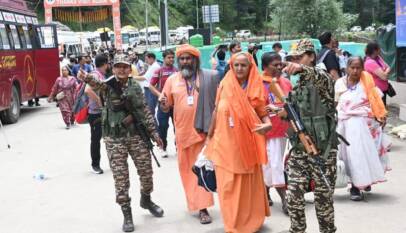
Amarnath Yatra Resumes After Six-Day Rain Halt, Pilgrims Hail Safety Arrangements and Renew Their Journey of Faith
Jammu, July 2026 : The annual Shri Amarnath Yatra resumed on Saturday after remaining …