India’s Cold Water Fisheries Emerging as a Key Pillar of the Blue Economy

India’s cold water fisheries sector is emerging as an important component of the Blue Economy by generating livelihoods, improving nutrition, promoting eco-tourism, and supporting sustainable mountain development. Once limited to traditional fishing in Himalayan streams, the sector has evolved into a modern aquaculture ecosystem supported by scientific farming and advanced infrastructure.
Cold-water fisheries are practiced in high-altitude snow-fed rivers, streams, lakes, and reservoirs with temperatures ranging between 5°C and 25°C, dissolved oxygen above 6 mg/L, and pH levels between 6.5 and 8.0. Species such as rainbow trout, golden mahseer, and snow trout are cultivated using specialized infrastructure including hatcheries, raceways, RAS, biofloc systems, and cold chain facilities. Trout farming is generally practiced above 1,500 metres altitude, while mahseer culture is suitable at relatively lower elevations.
Cold-water fisheries flourish across Jammu & Kashmir, Ladakh, Himachal Pradesh, Uttarakhand, Arunachal Pradesh, Sikkim, Meghalaya, and Nagaland, along with hill districts of West Bengal, Kerala, Karnataka, and Tamil Nadu. Together, these ecosystems cover more than 5.33 lakh sq. km of mountainous terrain. India has identified over 278 cold-water fish species, making the sector important for biodiversity conservation and sustainable mountain development.
Current Status and Production
India’s total fish production reached approximately 197.75 lakh tonnes during 2024–25, with cold-water fisheries contributing nearly 3 percent of inland fish production. National cold-water fish production currently stands at around 7,000 metric tonnes, while trout production alone has increased nearly 1.8 times over the last decade to about 6,000 metric tonnes in 2024–25.
Jammu & Kashmir has emerged as India’s leading trout producing region with around 3,010 MT production in 2024–25, supported by the Kokernag hatchery and over 2,000 private trout units. Himachal Pradesh produced around 1,673 MT trout in 2025–26 with 909 trout farmers and 1,739 trout farming units. Uttarakhand recorded around 710 MT trout production and total fish production of 10,486 MT during 2024–25, supported by nearly 2,500 raceways across districts such as Pithoragarh, Bageshwar, and Chamoli. Ladakh has crossed 50 MT production with 120 raceways and four hatcheries despite its harsh climatic conditions.
North Eastern states including Arunachal Pradesh, Sikkim, Meghalaya, and Nagaland are steadily expanding hatcheries and trout farming, while Kerala, Karnataka, and Tamil Nadu are adopting pilot RAS and biofloc systems in hill regions such as Wayanad, Nilgiris, and Uttara Kannada.
The sector has generated significant livelihood opportunities. Across cold-water states, 23.51 lakh families have received livelihood support, while 33.78 lakh fishers have been covered under insurance schemes. Jammu & Kashmir alone has over 31,000 registered fishers and fish farmers.
Key Investments and Infrastructure Development
The Government of India has made substantial investments in cold-water fisheries infrastructure through flagship schemes and targeted interventions.
Under the Pradhan Mantri Matsya Sampada Yojana (PMMSY) during 2020–26, projects worth ₹21,963.48 crore have been approved nationally, including over ₹5,638.76 crore sanctioned specifically for cold-water states. These investments include 5,663 raceways, 54 trout hatcheries, 13 large RAS units, 16 medium RAS units, 36 small RAS units, nearly 4,600 ponds in Himalayan and North Eastern regions, 293 cold storages, and 8,366 transport vehicles.
State-specific investments include ₹317.25 crore for Uttarakhand, ₹155.48 crore for Himachal Pradesh, ₹149.73 crore for Jammu & Kashmir, and ₹33.49 crore for Ladakh. These projects support raceways, trout hatcheries, biofloc systems, fish feed mills, fish kiosks, ornamental fisheries units, refrigerated transport, and reservoir stocking programmes.
The Fisheries and Aquaculture Infrastructure Development Fund (FIDF) approved projects worth ₹7,761.78 crore during 2018–26 for hatcheries, training centres, and fisheries infrastructure. The Blue Revolution Scheme (2015–20) laid the foundation for scientific trout farming through support for raceways, hatcheries, and reservoir stocking.
Under PM-MKSSY with an outlay of ₹6,000 crore, support is being provided for aquaculture insurance, performance grants to fisheries startups/microenterprises, and value chain efficiency — directly benefiting cold-water fish farmers.
Integrated Aqua Parks established at Anantnag (UT of J&K), Udham Singh Nagar (Uttarakhand), Ziro (Arunachal Pradesh), and Mokokchung (Nagaland) are emerging as modern fisheries hubs equipped with hatcheries, processing facilities, cold chain systems, value addition infrastructure, and marketing support.
Four Cold Water Fisheries Clusters have also been notified at Anantnag (J&K), Pithoragarh (Uttarakhand), Kullu (Himachal Pradesh), and Kargil (UT of Ladakh).
Regional Achievements
Jammu & Kashmir has increased trout production from 298 MT in 2015–16 to 3,010 MT in 2025–26, making it India’s leading trout producing region. Himachal Pradesh pioneered adoption of RAS and achieved captive breeding of golden mahseer.
Uttarakhand has doubled its fish production to 10,486 MT and expanded nearly 2,500 raceways while promoting fisheries branding under “UttaraFish”. Ladakh has demonstrated the viability of aquaculture in high-altitude desert conditions with local trout seed production reaching 30,000 seed in Drass and 80,000 seed in Chochut.
Arunachal Pradesh, Sikkim, Meghalaya, and Nagaland are expanding hatcheries and trout farming through aqua parks and fisheries clusters.
Meanwhile, hill regions of West Bengal, Kerala, Karnataka, and Tamil Nadu are adopting RAS and biofloc technologies to diversify aquaculture and improve water efficiency.
Policy Initiatives and International Collaboration
The development of cold water fisheries has been driven by sustained policy interventions through the Blue Revolution Scheme, PMMSY, PM-MKSSY, FIDF, and extension of Kisan Credit Card facilities to fishers.
The Government has also issued Model Guidelines for Cold Water Fisheries Development, 2026, covering site selection, hatchery standards, disease management, biosecurity, branding, certification, e-trading, and skill development.
The thrust on cold-water fisheries aligns with Hon’ble Prime Minister’s emphasis on expanding startup ecosystems, solar-powered infrastructure, and fast-tracking beneficiary-oriented schemes under the Blue Economy.”
Startups are introducing innovations such as drone-enabled logistics, smart feeding systems, digital traceability platforms, and mobile applications connecting farmers directly with markets. Cooperatives, SHGs, and NGOs are supporting cluster-based production, women’s participation, and collective marketing.
India is also strengthening international collaborations with Norway and Iceland for knowledge exchange in hatchery management, disease control, sustainable aquaculture systems, and export strategies.
Cold-water fisheries in India are no longer a marginal activity confined to remote streams. They have evolved into a strategic component of India’s Blue Economy by combining scientific innovation, environmental sustainability, infrastructure development, and rural entrepreneurship.

Solar Defence Showcases Indigenous ‘Bhargavastra’ Counter-Swarm Drone System to Indian Army
New Delhi, July 2026 : Solar Defence and Aerospace Ltd. (SDAL) on Friday showcased its ind…
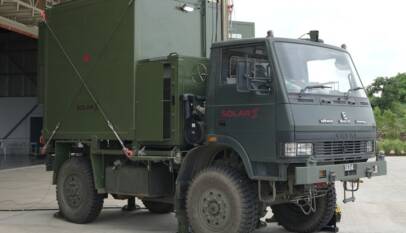
Solar Defence Showcases Indigenous ‘Bhargavastra’ Counter-Swarm Drone System to Indian Army
New Delhi, July 2026 : Solar Defence and Aerospace Ltd. (SDAL) on Friday showcased …