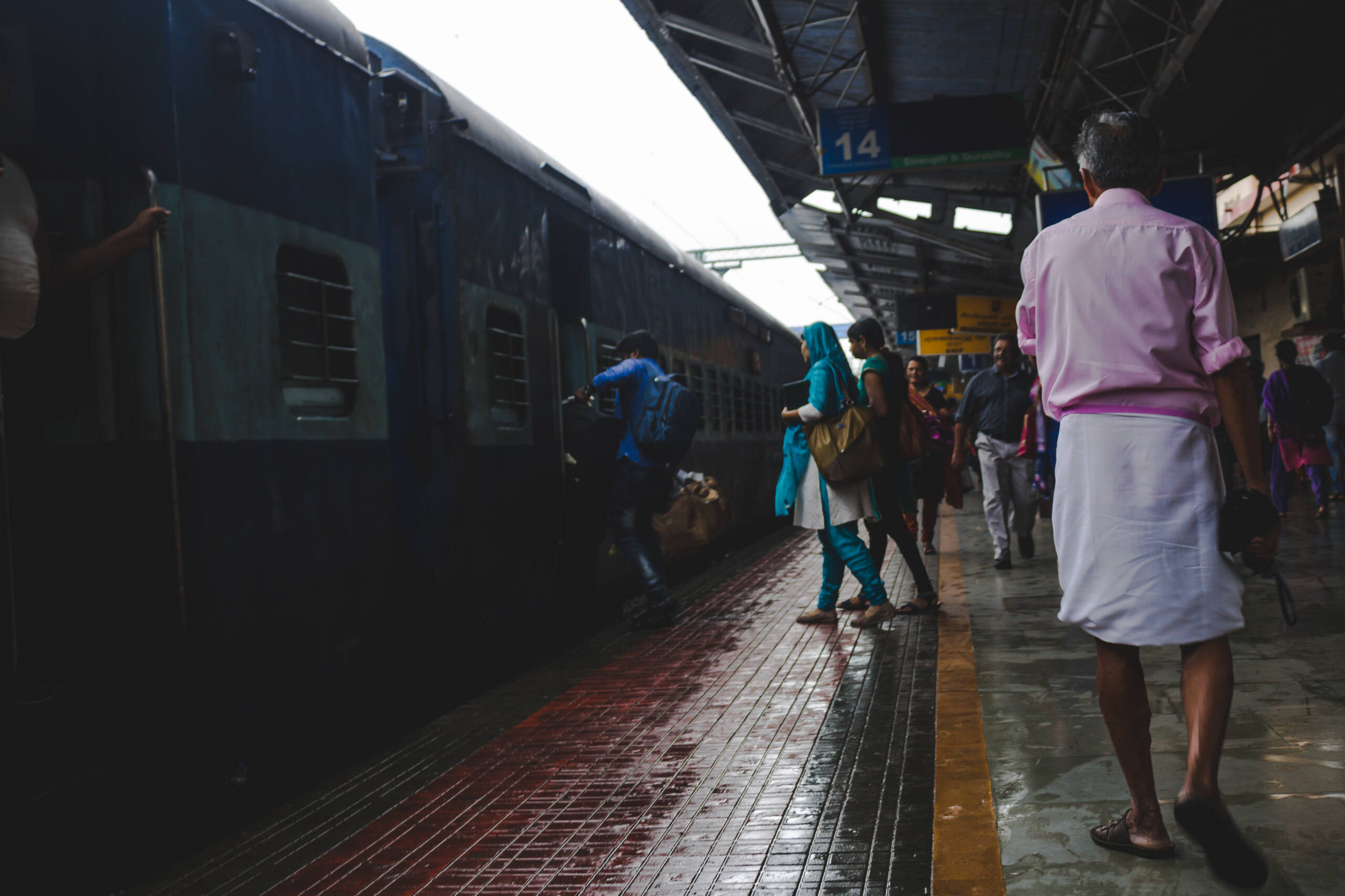
South Coast Railway Zone Begins Operations, Marking a New Era for Andhra Pradesh’s Connectivity and Growth

Amaravati, June 2026 : In a landmark development for Andhra Pradesh, the South Coast Railway (SCoR), India’s 18th railway zone with its headquarters in Visakhapatnam, officially commenced operations on Monday, bringing to fruition a long-standing aspiration of the people of North Coastal Andhra Pradesh. The launch of the new zone is being hailed as a historic milestone that promises to transform transportation, logistics, industrial connectivity and economic development across the region.
The establishment of the South Coast Railway Zone has been a decades-old demand of the people of Andhra Pradesh, particularly those from Uttarandhra, who had consistently sought a dedicated railway administration headquartered in Visakhapatnam. With the zone now becoming operational, many see it as the beginning of a new chapter in the state’s infrastructure and development journey.
The newly created railway zone comprises the Visakhapatnam, Vijayawada, Guntur and Guntakal divisions and has been carved out through the reorganisation of portions of the erstwhile South Central Railway (SCR) and East Coast Railway (ECoR) zones. The truncated Waltair Division of East Coast Railway has been reorganised and renamed as the Visakhapatnam Division.
Spread across Andhra Pradesh and extending into parts of neighbouring Telangana and Tamil Nadu, the South Coast Railway Zone will oversee 385 railway stations and employ nearly 62,000 personnel. The zone is expected to generate annual revenues of around Rs 15,500 crore while handling more than 500 passenger trains and approximately 800 freight trains during peak operational periods.
Railway experts believe that the creation of the new zone will significantly improve railway administration and accelerate infrastructure development in Andhra Pradesh. The zone is expected to facilitate better coordination in planning, execution and monitoring of railway projects while enhancing passenger services and freight movement.
One of the most significant advantages of the South Coast Railway Zone is its strategic connectivity to several major ports along India’s eastern coastline. These include Visakhapatnam Port, Gangavaram Port, Krishnapatnam Port, Kakinada Port and the upcoming Mulapeta Port. Improved rail-port connectivity is expected to strengthen cargo transportation, support industrial growth and promote multimodal logistics in the region.
The Centre had formally notified the establishment of the South Coast Railway Zone through a Gazette notification issued on May 5. However, the demand for a separate railway zone dates back several decades and has witnessed sustained public and political mobilisation over the years.
The announcement of the zone’s operational commencement triggered celebrations across North Coastal Andhra. Political leaders cutting across party affiliations welcomed the development, describing it as a long-overdue recognition of the region’s importance in India’s railway network.
Union Minister for Civil Aviation K. Ram Mohan Naidu, who represents the region and has been a vocal advocate for infrastructure development in Uttarandhra, participated in celebrations held at various railway stations in Srikakulam district. Accompanied by local legislators, he interacted with residents and railway users at events organised on station platforms.
Describing the occasion as emotional and historic, Ram Mohan Naidu said the operationalisation of the South Coast Railway Zone fulfilled a cherished dream of the people of Andhra Pradesh, particularly those from North Coastal Andhra. He noted that the new zone symbolises the beginning of a new era of growth, employment generation and infrastructure expansion.
Sharing his experience of witnessing the newly installed welcome plaque of the South Coast Railway Zone near Ichchapuram, he said the moment represented the culmination of years of aspirations and efforts. To commemorate the occasion, he also planted saplings near the site, symbolising growth and a prosperous future for the region.
State Agriculture Minister K. Atchannaidu echoed similar sentiments, stating that the railway zone would significantly enhance transportation facilities and generate new employment opportunities for the youth of North Andhra. He expressed confidence that improved railway infrastructure would contribute substantially to regional economic development.
The origins of the railway zone can be traced back to the bifurcation of Andhra Pradesh in 2014. At that time, the Congress-led UPA government had promised a separate railway zone for the residuary state with Visakhapatnam as its headquarters. However, progress remained slow for several years.
It was only in 2019 that the Central government formally announced the creation of the South Coast Railway Zone and initiated the preparation of a Detailed Project Report (DPR). Administrative processes gained momentum after the NDA government led by Chief Minister N. Chandrababu Naidu assumed office in Andhra Pradesh in 2024.
A major boost came in January 2025 when Prime Minister Narendra Modi laid the foundation stone for the construction of the permanent South Coast Railway Zonal Headquarters in Visakhapatnam. The project, estimated to cost Rs 149 crore, is expected to provide world-class administrative infrastructure for the new zone. Until the permanent headquarters is completed, operations will be conducted from the Visakhapatnam Metropolitan Region Development Authority (VMRDA) office.
Further institutional strengthening took place in June 2025 with the appointment of Sandeep Mathur as the first General Manager of the South Coast Railway Zone. Subsequently, Railway Minister Ashwini Vaishnaw reviewed the zone’s preparations and operational plans during his visit to Visakhapatnam in April, alongside Chief Minister Chandrababu Naidu.
According to Andhra Pradesh BJP President P.V.N. Madhav, the demand for a separate railway zone has its roots in public movements that began in the 1980s. Recalling his own participation in student-led agitations during his college years, he said generations of activists, BJP workers, public representatives, railway employees’ unions and civil society organisations had collectively campaigned for the cause.
He recalled that several representations were submitted over the years to successive Railway Ministers and Central governments. Among the most notable protests was a massive Rail Roko agitation organised at Visakhapatnam Railway Station on March 20, 2010.
Madhav explained that while most Telugu-speaking regions were included under the South Central Railway when it was formed, the strategically significant Waltair Division continued under railway zones headquartered outside Andhra Pradesh. This, he argued, often resulted in inadequate infrastructure investments, limited employment opportunities, overcrowded services and delays in project execution.
Even after the Waltair Division became part of the East Coast Railway headquartered in Bhubaneswar, concerns regarding Andhra Pradesh’s interests continued to fuel demands for a separate railway zone based in Visakhapatnam.
With the South Coast Railway Zone now operational, stakeholders believe it will drive improvements in logistics, freight movement, industrial connectivity, passenger services and employment generation. More importantly, it is expected to act as a catalyst for the economic transformation of North Coastal Andhra Pradesh and reinforce the state’s contribution to India’s broader growth and development agenda.
As trains begin operating under the banner of the South Coast Railway, the new zone stands not merely as an administrative reorganisation but as a symbol of regional aspirations fulfilled and a foundation for future progress.






A New Threat Posed To Israel-US Joint Air Operations In The Form Of Chinese QW-12 ADM To Iran.
Beijing/Washington DC; August 2026: As per information provided by trusted PLA sources, Ir…

A New Threat Posed To Israel-US Joint Air Operations In The Form Of Chinese QW-12 ADM To Iran.
Beijing/Washington DC; August 2026: As per information provided by trusted PLA sources, Iran is …