Delhi Govt Unveils Proactive Winter Air Quality Management Framework Well in Advance, Giving Citizens and Institutions Adequate Time to Prepare

Potential restrictions and arrangements are being communicated months before winter sets in so that people do not face inconvenience later: Chief Minister Rekha Gupta
Delhi Government notifies Proactive Winter Air Quality Management Framework to safeguard public health and ensure cleaner air
New Delhi, June 2026 : The Delhi Government has notified the Proactive Winter Air Quality Management Framework to tackle air pollution more effectively during the winter months. According to Chief Minister Smt. Rekha Gupta, residents and stakeholders have traditionally been informed about new restrictions and measures only after pollution levels rise in winter or when various restrictions under Graded Response Action Plan (GRAP) come into force. As a result, citizens, industries, commercial establishments, construction agencies, institutions and other stakeholders often do not get sufficient time to prepare, leading to inconvenience. The government has decided to change that approach this year.
The Chief Minister said that several months before the onset of winter, the government is now clearly outlining the measures that may be taken if pollution levels rise between November and February, the arrangements that could be implemented, and what will be expected from different sectors. This will give citizens, Resident Welfare Associations (RWAs), industries, commercial establishments, construction agencies and government departments adequate time to plan ahead and make the necessary preparations.
She noted that Delhi’s air quality has remained severely affected during the period from November to February for several years, with the Air Quality Index (AQI) frequently reaching the ‘Very Poor’ and ‘Severe’ categories. Since these conditions recur every year, the Delhi Government has adopted a strategy based on advance preparedness, timely interventions and better coordination rather than relying solely on emergency responses. The framework has been notified under the Environment (Protection) Act, 1986, and will function as a complementary mechanism to the revised GRAP issued by the Commission for Air Quality Management (CAQM). Its objective is to ensure that all departments and agencies remain continuously prepared during the winter months and that pollution-control measures can be implemented before adverse conditions arise, rather than only after GRAP is invoked.
Measures to Control Vehicular Pollution
The Chief Minister said that under the notified framework, fuel will be provided at all petrol pumps in Delhi only to vehicles possessing a valid Pollution Under Control Certificate (PUCC). In addition, non-BS-VI commercial vehicles registered outside Delhi will not be allowed to enter the city between November 1 and January 31. However, CNG vehicles, electric vehicles, emergency service vehicles and those engaged in government work will be exempt from this restriction.
To improve air quality during winter and discourage excessive use of private vehicles, parking charges at authorised parking facilities will be doubled from November 1 to February 28. A staggered office-timing system will also be introduced to reduce traffic pressure, streamline commuting and strengthen pollution-control efforts. Under this arrangement, government and private offices will operate with a maximum of 50 percent physical attendance, while the remaining employees may work from home. Essential and emergency services will be exempt from these provisions.
Advance Planning for Dust Control and Construction Activities
Chief Minister Rekha Gupta said that while construction and demolition activities are essential for urban development, controlling dust pollution during winter is equally important. Project operators, contractors and citizens have therefore been encouraged to plan their activities in advance so that additional pollution loads are not created during periods of high pollution.
Accordingly, all construction and demolition activities between November 1 and January 31 will be required to comply with prescribed environmental standards and dust-control measures. Additional restrictions may be imposed on such activities between December 10 and January 20, a period when pollution levels are expected to remain particularly high, in the interest of public health and environmental protection. Essential and emergency projects may be exempted. The movement of vehicles carrying construction material may also be regulated during periods of elevated pollution. In addition, anti-smog guns, mist suppression systems and other dust-control measures will be mandatory at large commercial high-rise buildings and major construction sites.
Ban on Open Burning and Focus on Worker Welfare
Chief Minister Rekha Gupta said that preventing the open burning of garbage, leaves and other materials is critical for effective pollution control. All RWAs, institutions, establishments, contractors and agencies will be required to take necessary steps to prevent such activities within their respective areas.
Special attention must be paid to discouraging the common winter practice of security personnel and other workers lighting fires for warmth and suitable alternative heating arrangements should be ensured. She said field surveillance and drone-based monitoring will be further strengthened to detect and prevent incidents of open burning. Those violating the rules will face environmental compensation charges as well as other penal action under applicable laws. The notified guidelines will generally remain in force every year from November 1 to February 28 and will operate alongside GRAP.
Chief Minister Smt. Rekha Gupta said that improving air quality cannot be achieved through government efforts alone. It requires active participation from citizens, RWAs, institutions, commercial establishments and industries. The advance notification of these measures is intended to ensure that all stakeholders have sufficient time to prepare and can contribute meaningfully to pollution-control efforts.
A New Threat Posed To Israel-US Joint Air Operations In The Form Of Chinese QW-12 ADM To Iran.
Beijing/Washington DC; August 2026: As per information provided by trusted PLA sources, Ir…
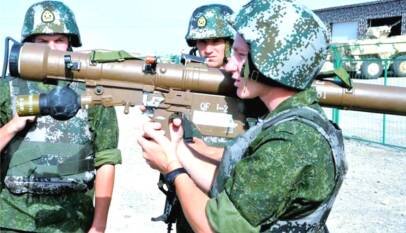
A New Threat Posed To Israel-US Joint Air Operations In The Form Of Chinese QW-12 ADM To Iran.
Beijing/Washington DC; August 2026: As per information provided by trusted PLA sources, Iran is …