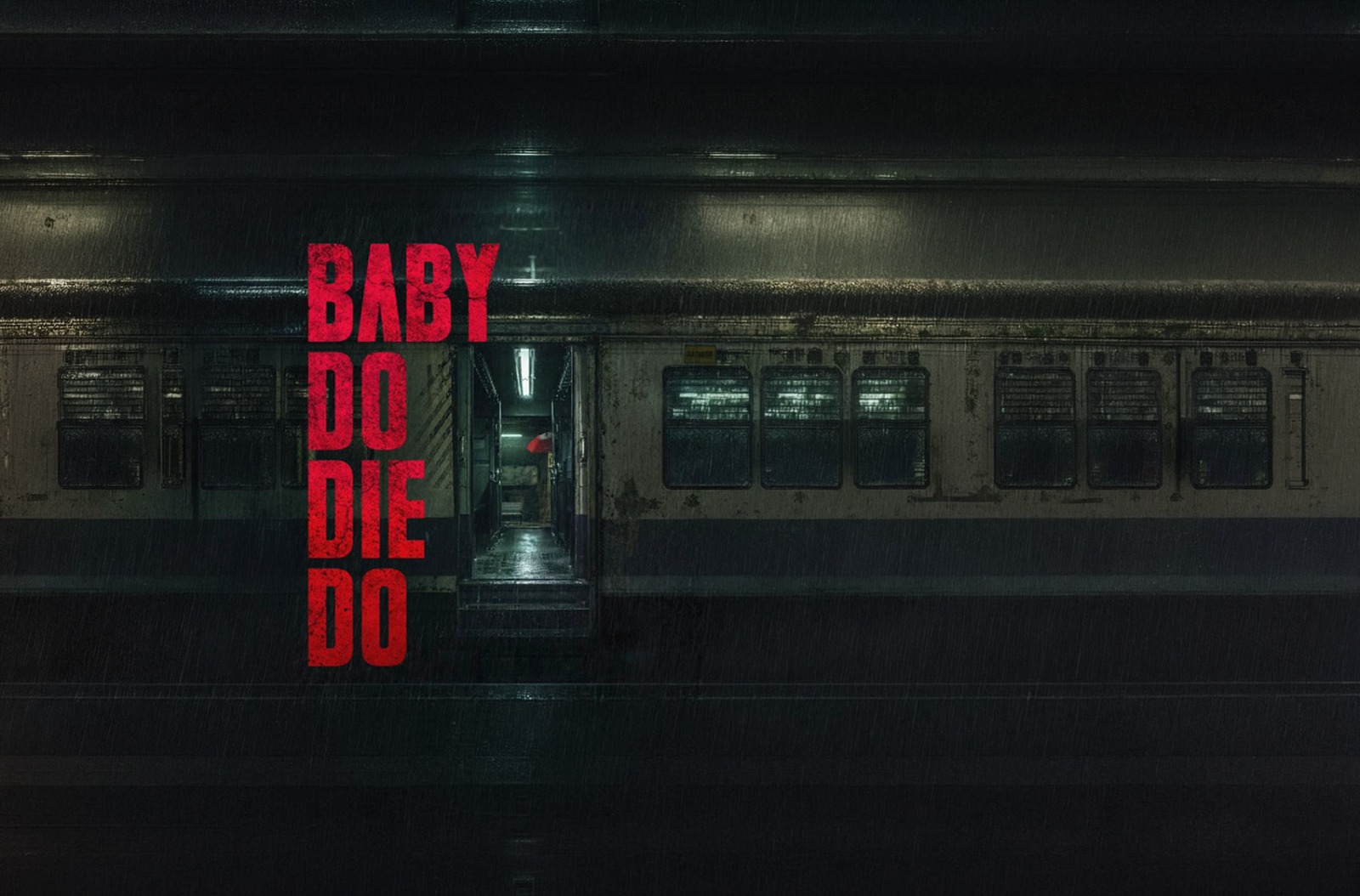
Baby Do Die Do Movie Review: Huma Qureshi Anchors a Stylish Neo-Noir That Turns Mumbai into Its Most Fascinating Character

Rating: ★★★☆☆ (3/5)
Director: Nachiket Samant
Writers: Nachiket Samant, Gaurav Sharma (Story: Jasmeet K. Reen, Parveez Sheikh)
Cast: Huma Qureshi, Sikandar Kher, Rachit Singh, Chunky Pandey, Seema Pahwa, Arun Kushwah, Marudhar Shekhawat, Rupesh Bane
Hyderabad, July 2026 : In an era where crime thrillers often rely on excessive violence, convoluted twists and larger-than-life gangsters, Baby Do Die Do chooses a different route. Director Nachiket Samant delivers a neo-noir drama that is less interested in shocking audiences and more focused on creating an immersive world where mood, atmosphere and character take precedence over spectacle.
At its heart, the film is built on a familiar premise—a contract killer trying to leave behind a violent past—but it distinguishes itself through visual flair, confident storytelling and an evocative portrayal of Mumbai. While the narrative occasionally loses momentum and some plot threads remain underdeveloped, Baby Do Die Do succeeds because it possesses something increasingly rare in mainstream cinema: a distinctive personality.
A Familiar Story Told with Fresh Energy
The story revolves around Baby Karkarmar (Huma Qureshi), a professional assassin who has spent years carrying out contracts with ruthless efficiency. After falling in love with Siddhu (Rachit Singh), she dreams of walking away from her bloody profession and beginning a peaceful life.
However, retirement is never simple in the underworld.
As Baby attempts to leave the criminal world behind, old loyalties, dangerous enemies and buried secrets begin closing in around her. What follows is a cat-and-mouse game involving betrayals, hidden motives, unexpected deaths and shifting alliances.
On paper, the storyline offers very few surprises. Viewers familiar with noir thrillers will recognize many familiar ingredients—a reluctant assassin, corrupt power brokers, emotionally scarred characters and inevitable betrayals.
Yet the film never feels entirely predictable because of the way it presents these familiar elements.
Mumbai Becomes More Than Just a Setting
One of the film’s greatest achievements is its portrayal of Mumbai.
Rather than serving merely as a backdrop, the city becomes an active participant in the narrative.
Rain-soaked streets, crowded railway stations, towering skylines, narrow lanes and ageing buildings all contribute to the emotional landscape of the film. Every location feels lived in, carrying memories and histories that shape the characters occupying them.
Cinematographer Tojo Xavier, making an impressive feature-film debut, captures Mumbai with remarkable sensitivity. His lens avoids postcard beauty, instead embracing the city’s greys, monsoon rains and constant restlessness.
Several sequences linger long after the film ends—not because of action, but because of imagery. A raindrop falling into a sea of umbrellas or abandoned buildings echoing with forgotten lives quietly reinforce the themes of loneliness, memory and survival.
The city breathes alongside its characters.
Stylish Without Losing Its Soul
Visually, Baby Do Die Do is one of the more adventurous Hindi films in recent times.
The opening black-and-white sequence immediately establishes an unusual tone. Split-screen compositions, inventive editing and silent visual storytelling create a graphic novel-like aesthetic that remains engaging throughout much of the first half.
The soundtrack, complemented beautifully by Arjun Iyer’s background score, enhances the mood without overwhelming it. Even romantic moments are staged creatively, avoiding conventional Bollywood clichés.
Importantly, the style rarely feels empty.
Unlike many contemporary thrillers that mistake slow motion for sophistication, Samant uses visual experimentation to deepen emotional engagement rather than distract from weak storytelling.
Huma Qureshi Delivers One of Her Strongest Performances
Huma Qureshi carries the film with admirable confidence.
As Baby, she projects toughness without sacrificing vulnerability. Beneath the calm exterior lies a woman haunted by grief, guilt and unresolved trauma.
The emotional burden she carries gives the character genuine depth. Baby is not simply a killing machine; she is someone desperately searching for peace while struggling to escape her past.
Qureshi balances both aspects impressively, making Baby believable as both an efficient assassin and a deeply wounded individual.
Her chemistry with Rachit Singh feels understated and sincere, providing the emotional anchor that motivates her decisions.
Excellent Supporting Cast
The supporting performances elevate the film considerably.
Sikandar Kher is wonderfully charismatic as Zafar Katkar, bringing humour and unpredictability whenever he appears.
Chunky Pandey delivers one of his better dramatic performances as PK Jain, Baby’s mentor, portraying warmth, loyalty and quiet sadness with convincing restraint.
Seema Pahwa, despite limited screen time, leaves a memorable impression with her lively portrayal of a police officer.
The film also benefits from thoughtful casting, with actors like Marudhar Shekhawat, Rupesh Bane and Arun Kushwah adding authenticity to the world Samant has created.
Where the Film Stumbles
Despite its many strengths, Baby Do Die Do isn’t without flaws.
The screenplay occasionally becomes too enamoured with its own stylistic ambitions.
Some twists arrive conveniently rather than organically, reducing their emotional impact.
Certain supporting storylines, particularly involving Manu and Faizu, feel incomplete and deserved greater narrative attention.
The climax, after so much careful build-up, also feels surprisingly restrained. The emotional payoff never quite reaches the heights suggested by the earlier portions of the film.
There are moments where the film seems determined to be quirky simply for the sake of appearing unconventional.
Fortunately, these shortcomings never completely derail the experience.
A Film with an Identity
Perhaps the greatest compliment one can give Baby Do Die Do is that it never feels manufactured.
In an industry increasingly dominated by franchise formulas and algorithm-driven storytelling, this film possesses a voice of its own.
It may not always succeed, but it constantly attempts something interesting.
Whether through its visual language, unconventional editing, emotionally layered protagonist or richly textured depiction of Mumbai, the film refuses to become generic.
Its imperfections are easier to forgive because they arise from creative ambition rather than creative laziness.
Verdict
Baby Do Die Do is not a perfect thriller, nor does it reinvent the noir genre. But it offers something equally valuable—a filmmaker with a clear vision and the confidence to tell a familiar story in an unconventional way.
Anchored by an excellent performance from Huma Qureshi, supported by strong performances from Sikandar Kher and Chunky Pandey, and elevated by outstanding cinematography and atmospheric world-building, the film emerges as an engaging, if occasionally uneven, crime drama.
It is stylish without being superficial, emotional without becoming melodramatic, and visually inventive without losing sight of its characters.
For viewers seeking a crime thriller driven by atmosphere rather than explosions, Baby Do Die Do proves to be a rewarding watch.
Disclaimer: This review is based on the reviewer’s individual perspective. Audience opinions may vary.
(ADVERTORIAL DISCLAIMER : The content of this article is sourced from a news agency and has not been edited by the Mavericknews30 team.)





Solar Defence Showcases Indigenous ‘Bhargavastra’ Counter-Swarm Drone System to Indian Army
New Delhi, July 2026 : Solar Defence and Aerospace Ltd. (SDAL) on Friday showcased its ind…

Solar Defence Showcases Indigenous ‘Bhargavastra’ Counter-Swarm Drone System to Indian Army
New Delhi, July 2026 : Solar Defence and Aerospace Ltd. (SDAL) on Friday showcased …