India Launches Semiconductor Mission 2.0 with ₹40,000 Crore Budget to Strengthen Tech Ecosystem

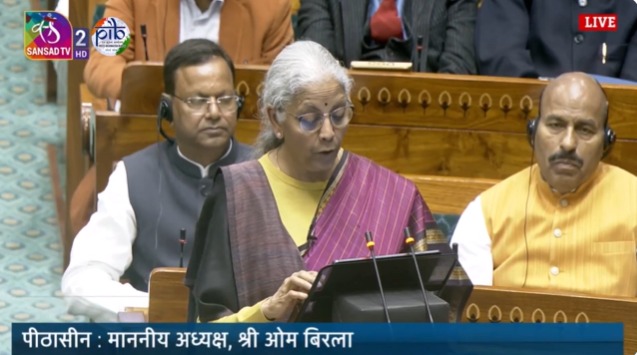
New Delhi February 2026 : Finance Minister Nirmala Sitharaman on Sunday unveiled the India Semiconductor Mission (ISM) 2.0 during the Union Budget 2026-27, allocating a substantial ₹40,000 crore to bolster the country’s semiconductor ecosystem. This next phase builds upon the success of the earlier ISM 1.0 and is designed to enhance domestic capabilities in semiconductor manufacturing, intellectual property development, and supply chain resilience.
Addressing the Parliament, Sitharaman said that ISM 2.0 will focus on manufacturing equipment and materials, designing full-stack Indian IP, and strengthening the semiconductor supply chain. The initiative also aims to establish industry-based research and training centers to nurture cutting-edge technology and a skilled workforce capable of driving India’s semiconductor ambitions forward.
Highlighting previous successes, the Finance Minister referred to the Electronics Components Manufacturing Scheme, launched in April 2025 with a budget of ₹22,919 crore, which has already attracted double the targeted investment. “India’s Semiconductor Mission 1.0 expanded India’s semiconductor sector capabilities. Building on this momentum, we are increasing the budget to ₹40,000 crore to accelerate manufacturing, develop Indian IP, and strengthen the entire supply chain,” she said.
In parallel, the Ministry of Electronics and Information Technology (MeitY) announced a new initiative to expand AI training to 500 universities nationwide, aiming to create a skilled talent pipeline for emerging technologies. The program will provide students with specialized courses and hands-on training, using the semiconductor sector model, where students from 315 universities are already designing chips and contributing to real-world innovation.
Union Minister Ashwini Vaishnaw added that the curriculum is being finalized with industry input to ensure students acquire practical, market-ready skills. This expansion will form a crucial component of AI Mission 2.0, which is expected to roll out in the next five to six months after completing the first phase. The government also plans to announce major research programs at the upcoming AI Summit, focusing on a common compute stack to ensure equitable access to technology across India.
Vaishnaw emphasized the significance of the semiconductor-AI model synergy: “You have seen in the case of semiconductors, where 315 universities have full staff and students are designing chips. Now, we will have a similar model for AI. In addition, we will launch large research programs, which we will announce at the AI Summit. The world is paying attention to our common compute stack and the progress India is making.”
The combined thrust of ISM 2.0 and AI expansion is expected to position India as a global hub for semiconductor manufacturing, AI innovation, and digital technology, fostering industry-academia collaboration and creating a robust ecosystem for future-ready talent.



Saudi Airstrikes on Hodeidah Mark Sharp Escalation in Yemen Conflict Amid Red Sea Tensions
Hodeidah, July 2026 : Saudi Arabia launched a fresh wave of airstrikes on Yemen’s Ho…

Saudi Airstrikes on Hodeidah Mark Sharp Escalation in Yemen Conflict Amid Red Sea Tensions
Hodeidah, July 2026 : Saudi Arabia launched a fresh wave of airstrikes on Yemen’s …