NETRA MK-2 to Transform India’s Airborne Surveillance with Advanced Indigenous Mission Systems

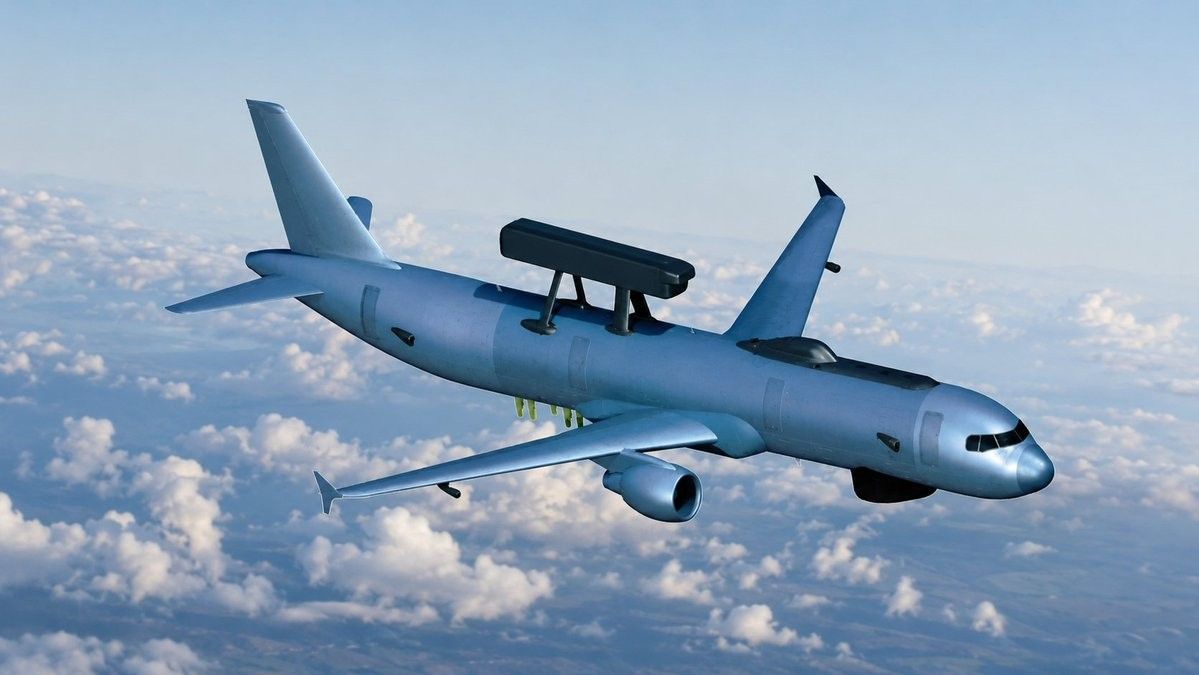
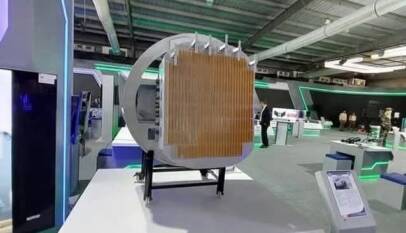
New Delhi, July 2026 : India is set to significantly enhance its airborne surveillance and command-and-control capabilities with the development of the NETRA MK-2 Airborne Early Warning and Control (AEW&C) system, one of the country’s most sophisticated defence platforms. Featuring more than 100 integrated radars, sensors, antennas, electronic warfare suites and communication systems on each aircraft, the NETRA MK-2 will provide the Indian Air Force (IAF) with an unprecedented ability to detect, track and coordinate responses against a wide spectrum of aerial and maritime threats.
The ambitious programme achieved a major milestone this week when the Centre for Airborne Systems (CABS), a laboratory under the Defence Research and Development Organisation (DRDO), signed a contract with Adani Defence Systems and Technologies Limited (ADSTL). Under the agreement, ADSTL has been appointed as the Development-cum-Production Partner for the indigenous mission systems that will power the aircraft.
The partnership extends beyond manufacturing and includes integrated logistics, maintenance, repair and overhaul (MRO), lifecycle support and technical assistance for as long as three decades, ensuring long-term operational readiness of the fleet.
In another important development, CABS also signed an agreement with AI Engineering Services Limited (AIESL) to begin converting six Airbus A321 passenger aircraft into military platforms. These aircraft, acquired by the Indian Air Force from Air India, will first undergo transformation into what are known as “green aircraft.”
The conversion process involves stripping the commercial airliners of all passenger interiors, including seats, overhead storage compartments, galleys and cabin fittings, leaving behind only the primary structural framework and essential wiring. These modified aircraft will serve as the base platforms for installing sophisticated airborne surveillance equipment.
Once the initial conversion work is completed in India, the aircraft will be flown to Airbus facilities in Spain, where the original manufacturer will undertake extensive structural and aerodynamic modifications. These changes include reinforcing the airframe, improving power generation capacity, installing advanced cooling systems and making several design alterations necessary to accommodate the heavy surveillance equipment while maintaining the aircraft’s stability and performance.
Defence experts note that transforming a commercial airliner into an airborne early warning aircraft is a highly complex engineering exercise that goes far beyond mounting a radar system on the fuselage. Airbus had already signed an agreement with CABS in December last year to support these specialised modifications.
Following completion of the structural work, the aircraft will receive India’s indigenous mission suite—one of the most advanced ever designed domestically. Equipped with over 100 integrated systems, the NETRA MK-2 will be capable of simultaneously detecting, identifying, tracking and managing multiple aerial and maritime targets in real time.
Its powerful 360-degree surveillance capability will enable the aircraft to monitor fighter jets, cruise missiles, drones, helicopters, transport aircraft and surface vessels across hundreds of kilometres. In addition to surveillance, the platform will function as an airborne command-and-control centre, coordinating military operations and significantly enhancing India’s network-centric warfare capabilities.
The first three aircraft are expected to undergo mission-system integration with Airbus providing technical assistance. Thereafter, integration responsibilities will gradually shift to ADSTL and the Adani Group, enabling greater indigenous participation and facilitating technology transfer to Indian industry. This phased approach is expected to strengthen India’s expertise in developing advanced airborne surveillance platforms independently.
Airborne Early Warning and Control aircraft are widely regarded as the “eyes in the sky” because they can detect threats far beyond the range of ground-based radar systems. Operating at high altitudes, they extend the radar horizon and provide early warning of incoming aircraft, missiles and other airborne threats, allowing commanders valuable time to respond.
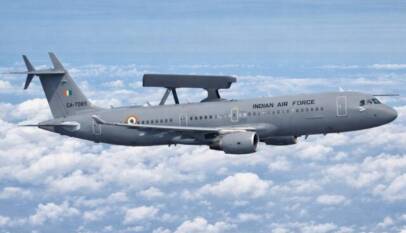
At present, the Indian Air Force operates three Phalcon AWACS mounted on Russian IL-76 aircraft. These platforms offer 360-degree radar coverage with detection ranges of approximately 400 kilometres. In addition, India has three indigenous Netra AEW&C aircraft based on the Embraer platform, one of which is primarily used by CABS for developmental activities. While highly capable, these smaller aircraft have detection ranges of around 200 kilometres and carry fewer mission systems than the larger Phalcon fleet.
To further strengthen its airborne surveillance capability, India is also developing six upgraded Netra Mk1A aircraft on the Embraer platform. These aircraft will feature improved radar technology, enhanced electronic warfare systems and upgraded communication capabilities. The contract for the Mk1A programme is expected to be finalised next year.
However, defence planners view the NETRA MK-2 as a transformational leap. Built on the larger Airbus A321 platform, it combines greater endurance, higher payload capacity and a far more sophisticated indigenous mission suite than previous Indian AEW&C aircraft.
The urgency behind expanding India’s airborne early warning fleet has been reinforced by operational experience. During the 2019 aerial engagement with Pakistan following the Balakot airstrikes, temporary gaps in airborne surveillance coverage highlighted the importance of maintaining continuous radar monitoring during high-intensity operations.
Pakistan currently operates a sizeable AEW&C fleet comprising eight Saab-2000 Erieye aircraft and four Chinese ZDK-03 Karakoram Eagle AWACS, enabling persistent airborne surveillance across its airspace. Although Pakistan originally operated nine Saab platforms, one was reportedly destroyed during Operation Sindoor, it continues to maintain significant airborne surveillance capability.
Indian defence strategists have consistently argued that expanding the AEW&C fleet is essential for ensuring uninterrupted monitoring along both the western and northern borders, supporting long-range air operations and strengthening integrated battlefield management in future conflicts.
With its advanced indigenous mission systems, larger platform and long-term domestic manufacturing ecosystem, the NETRA MK-2 programme is expected to play a pivotal role in bridging India’s critical airborne surveillance capability gap while significantly enhancing the country’s overall air defence and strategic preparedness.





Saudi Airstrikes on Hodeidah Mark Sharp Escalation in Yemen Conflict Amid Red Sea Tensions
Hodeidah, July 2026 : Saudi Arabia launched a fresh wave of airstrikes on Yemen’s Ho…

Saudi Airstrikes on Hodeidah Mark Sharp Escalation in Yemen Conflict Amid Red Sea Tensions
Hodeidah, July 2026 : Saudi Arabia launched a fresh wave of airstrikes on Yemen’s …