Mamata Banerjee Urges Supreme Court to Intervene in Electoral Roll Revision, Says Move Needed to “Save Democracy”

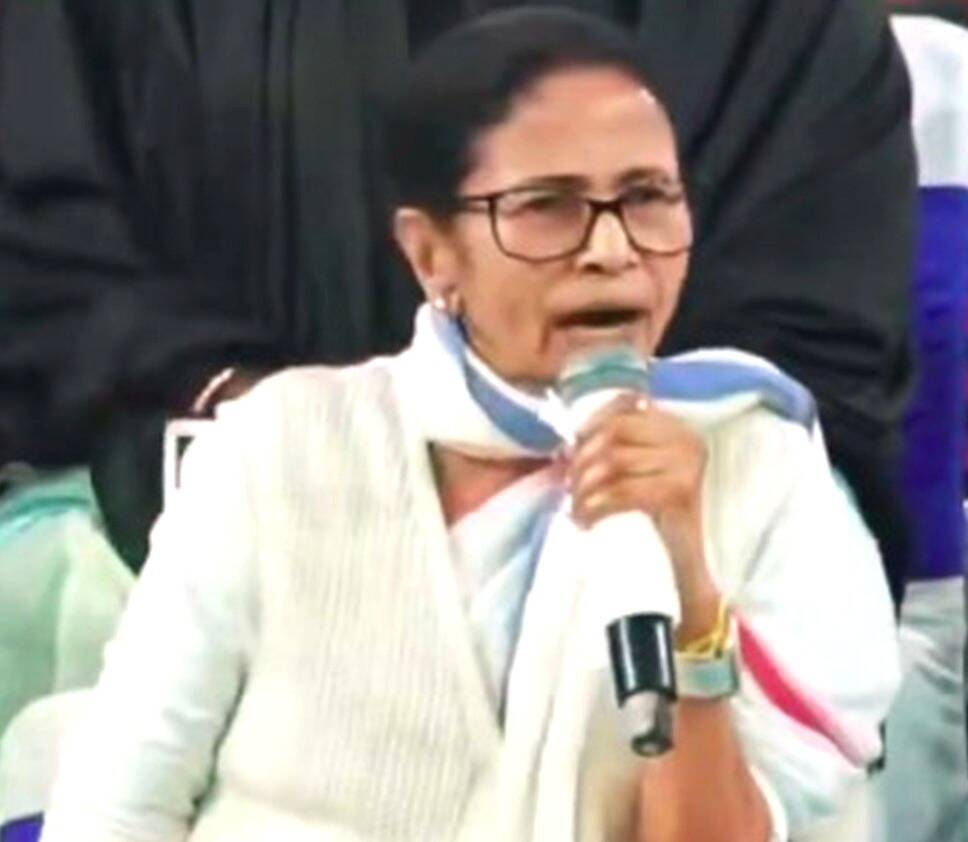
New Delhi, Feb 2026 : West Bengal Chief Minister Mamata Banerjee on Wednesday made an extraordinary personal appeal before the Supreme Court, urging it to intervene in the ongoing Special Intensive Revision (SIR) of the electoral rolls in the state to “save democracy.” Alleging that West Bengal was being selectively targeted, Banerjee claimed that the process was being used to “bulldoze” the rights of ordinary people and could result in large-scale disenfranchisement ahead of elections.
Taking note of her petition and the rare circumstance of a sitting Chief Minister addressing the court, a bench comprising Chief Justice Surya Kant and Justices Joymalya Bagchi and Vipul M. Pancholi observed that the primary objective of any electoral revision must be to ensure that “genuine people’s names should be on the electoral roll.” The bench issued notices to the Election Commission of India (ECI) and the Chief Electoral Officer of West Bengal, seeking their responses by February 9.
During the hearing, Banerjee alleged that West Bengal was being unfairly singled out and questioned why similar standards were not being applied uniformly across the country. “West Bengal is being targeted. They are targeting the state to bulldoze its people,” she told the court. The bench allowed her to support the submissions made by her counsel, senior advocate Shyam Diwan, acknowledging the seriousness of the concerns raised.
Expressing frustration over what she described as a lack of redressal from constitutional authorities, Banerjee said she had written at least six letters to the Election Commission highlighting problems in the revision process. “We are not getting justice anywhere,” she said, appealing directly to the court to step in. At the conclusion of the hearing, she thanked the bench for giving her the opportunity to present her concerns and reiterated her plea to “save democracy.”
The Chief Minister has challenged the SIR process currently underway in West Bengal, arguing that it is being carried out in a hurried and arbitrary manner. Diwan, appearing on her behalf, drew the court’s attention to what he described as an unusually high number of “unmapped” voters and said there was little time left for corrective action, as the revision exercise is scheduled to conclude on February 14.
He further submitted that the Election Commission must upload clear reasons for including names in the so-called “logical discrepancy” list. According to Diwan, as many as 1.36 crore voters have been issued notices after being flagged for logical discrepancies. These discrepancies, based on the 2002 electoral roll, include inconsistencies such as errors in parents’ names or age gaps of less than 15 years or more than 50 years between voters and their parents.
Diwan argued that in several cases, the discrepancies were minor and involved spelling mistakes in names, which could be easily corrected without threatening a voter’s inclusion on the rolls. Chief Justice Surya Kant referred to linguistic nuances, noting that variations in Bengali dialects often lead to spelling differences. The bench observed that while electoral roll revisions also account for factors like migration, the process must ensure that genuine voters are not excluded. “Every problem has a solution, and we must ensure that no innocent person is left out,” the CJI remarked.
Banerjee also accused the Election Commission of refusing to accept Aadhaar cards as valid documentation and instead demanding additional documents from voters. She claimed that during the ongoing revision, several living individuals had been wrongly declared dead, intensifying fears of disenfranchisement.
Responding to these allegations, senior advocate Rakesh Dwivedi, appearing for the Election Commission, countered that the West Bengal government had not extended adequate administrative support for the SIR process. He told the court that the state had provided the services of only around 80 Grade-2 officers, such as Sub-Divisional Magistrates, and had largely deputed lower-ranked personnel, including Anganwadi workers, to oversee the exercise.
Banerjee rejected this contention, asserting that the state government had complied with every request made by the poll panel and provided all necessary manpower and resources. She maintained that the responsibility for procedural lapses lay with the Election Commission and not with the state administration.
The issue of electoral roll revision in West Bengal has already attracted judicial scrutiny. On January 19, the Supreme Court issued a series of directions emphasizing that the SIR process must be transparent and should not cause hardship to voters. With regard to the “logical discrepancy” list, the court directed the Election Commission to prominently display the names at Gram Panchayat buildings and Block offices, where voters could also submit documents and objections.
Earlier, Banerjee had written to the Chief Election Commissioner, urging him to halt what she described as an “arbitrary and erroneous” revision exercise in the poll-bound state. Escalating her criticism, she warned that continuing the SIR in its existing form could disenfranchise a large number of citizens and amount to an “attack on the foundations of democracy.”
In a strongly worded letter dated January 3 to Chief Election Commissioner Gyanesh Kumar, the Chief Minister accused the Election Commission of conducting the exercise “without a plan, without preparation, and without readiness,” leading to serious irregularities, procedural violations, and administrative shortcomings.
With the Supreme Court now seized of the matter and seeking responses from the poll panel, the outcome of Banerjee’s petition is likely to have significant implications, not only for West Bengal’s electoral process but also for broader debates around voter inclusion, transparency, and the role of constitutional institutions in safeguarding democratic rights.
Team Maverick.
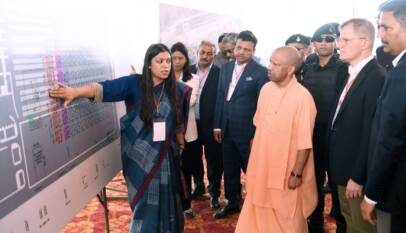
Pope Leo XIV Calls for Peace, Says Suffering of Innocents “Hurts All Humanity”
Vatican, March 2026 : Pope Leo XIV on Sunday expressed deep anguish over ongoing conflicts…
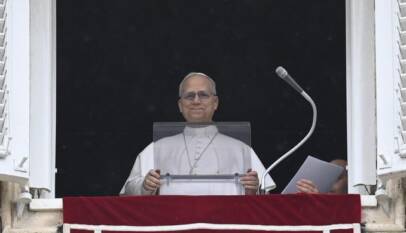
Pope Leo XIV Calls for Peace, Says Suffering of Innocents “Hurts All Humanity”
Vatican, March 2026 : Pope Leo XIV on Sunday expressed deep anguish over ongoing …