Khamenei Calls for National Unity Ahead of Revolution Anniversary Amid US Tensions

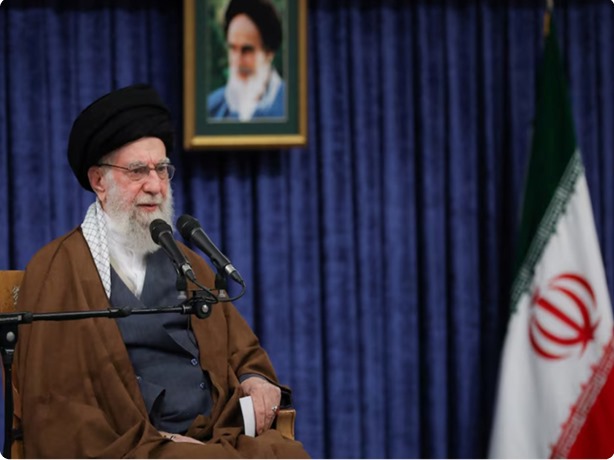
Tehran, Feb 2026 : Iran’s Supreme Leader Ayatollah Ali Khamenei on Monday called on the Iranian people to demonstrate unity and resolve ahead of nationwide commemorations marking the 47th anniversary of the 1979 Islamic Revolution, urging citizens to “disappoint the enemy” at a time of heightened regional and international tensions, particularly with the United States.
In a televised address broadcast across the country, Khamenei stressed that a nation’s true strength lies not merely in military capabilities such as missiles or aircraft, but in collective determination, resilience and resistance. His remarks came as Iran prepares for large-scale rallies on Wednesday to commemorate the revolution that led to the establishment of the Islamic Republic.
“Until the enemy is disappointed, a nation remains exposed to pressure and persecution,” Khamenei said, according to reports carried by Xinhua news agency. Emphasising the symbolic and political importance of the annual marches, he described them as a manifestation of national dignity and unity that compels foreign powers to abandon ambitions of interference in Iran’s internal affairs.
Khamenei expressed hope that this year’s anniversary events would send a strong message not only to adversaries but also to the broader international community. He said the scale and spirit of public participation should prompt “other nations, governments and powers to show modesty and respect toward the Iranian people.”
The speech comes against the backdrop of escalating friction between Tehran and Washington. Tensions have been fuelled by a visible US military buildup in the Middle East, alongside continued warnings and threats directed at Iran. At the same time, diplomatic channels remain tentatively open, with indirect nuclear negotiations between Iranian and US representatives taking place in Muscat, Oman, on Friday. Despite the talks, substantial differences persist, leaving the prospects of a comprehensive agreement uncertain.
The 1979 Islamic Revolution marked a turning point in Iran’s modern history. Under the leadership of Ayatollah Ruhollah Khomeini, a broad coalition of clerics, students and secular groups overthrew Shah Mohammad Reza Pahlavi, whose regime was closely aligned with the United States. The revolution transformed Iran from a pro-Western monarchy into an Islamic republic, fundamentally reshaping its domestic governance and foreign policy.
Relations between Iran and the US deteriorated rapidly in the aftermath of the revolution. Diplomatic ties were formally severed in 1980 following the seizure of the US Embassy in Tehran, an event that entrenched decades of hostility between the two countries.
Meanwhile, diplomatic activity continues on parallel tracks. According to SNSC-affiliated Nour News, Ali Larijani, Secretary of Iran’s Supreme National Security Council, is set to lead a high-level delegation to Muscat on Tuesday. During the visit, Larijani is expected to hold discussions with senior Omani officials on regional and international developments, as well as bilateral relations between Iran and Oman.
Oman has long played the role of a discreet mediator between Tehran and Washington, and its involvement has once again come into focus following last week’s indirect nuclear talks. Given the current geopolitical climate, Muscat is widely viewed as a likely venue for future negotiations between the two adversaries.
Speaking at a press conference in Tehran on Sunday, Iranian Foreign Minister Seyed Abbas Araghchi said that the timing and location of the next round of talks would be finalised through consultations with Omani authorities. He indicated that diplomatic engagement remains ongoing, even as pressures continue to mount.
Iranian President Masoud Pezeshkian, also addressing the issue on Sunday, described the recent indirect negotiations with the United States as a “step forward.” His comments came despite Washington’s simultaneous move to tighten economic pressure on Iran through fresh sanctions and tariff-related threats.
The Oman-mediated talks represent the first high-level contact between Tehran and Washington since the Israel-Iran conflict last June, during which the United States carried out strikes on key Iranian nuclear facilities. While Pezeshkian characterised dialogue as part of Iran’s consistent strategy to pursue peaceful solutions, analysts caution that the current engagement reflects careful crisis management rather than any meaningful thaw in relations.
In a post on X, Pezeshkian reaffirmed that Iran’s nuclear programme remains within the “explicit rights” guaranteed under the Nuclear Non-Proliferation Treaty. “The Iranian nation has always responded to respect with respect,” he wrote, adding that Iran “does not tolerate the language of force.”
(The content of this article is sourced from a news agency and has not been edited by the Mavericknews30 team.)




Prashant Kishor to Contest Bankipur Bypoll, Jan Suraaj Eyes Breakthrough in BJP Stronghold
Patna, July 2026 : Election strategist-turned-politician Prashant Kishor will contest the …
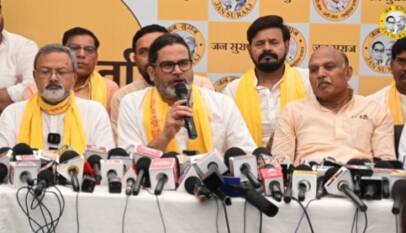
Prashant Kishor to Contest Bankipur Bypoll, Jan Suraaj Eyes Breakthrough in BJP Stronghold
Patna, July 2026 : Election strategist-turned-politician Prashant Kishor will contest the upcoming by-election from …