Maharashtra Cabinet Decisions

Work on 57 irrigation projects in the state to gain momentum
Irrigation capacity of 8 lakh hectares to be created, approval for loans of ₹15,000 crore
In the Cabinet meeting, approval was given to take a loan of ₹15,000 crore from NABARD to complete 57 incomplete irrigation projects in the state and to improve canals and distribution systems. The meeting was chaired by Chief Minister Devendra Fadnavis. Due to this, about 8 lakh hectares of land in the state will come under irrigation.
A decision to take a loan of ₹15,000 crore from financial institutions to complete irrigation projects under construction in the state was taken in the Cabinet meeting held on August 7, 2019. Out of this, in the first phase, a decision to take a loan of ₹7,500 crore from NABARD was taken in the Cabinet meeting held on March 11, 2024. Now, approval has been given to take the remaining ₹7,500 crore loan from NABARD. Accordingly, a consolidated revised approval has been given to take a loan of ₹15,000 crore to complete 57 incomplete irrigation projects in the state and to improve the distribution systems of 193 completed projects. After completion of all irrigation projects, about 8 lakh hectares of land in the state will come under irrigation.
Out of the ₹15,000 crore, ₹8,982 crore 76 lakh has been proposed for completing 57 incomplete irrigation projects, and ₹6,017 crore 24 lakh has been proposed for improvement works of canals and distribution systems of 193 completed irrigation projects. This was also approved in the meeting.
International-standard cricket stadium to be built in Kolhapur
12 hectares 76 ares of land to be given at Vikaswadi
In the Cabinet meeting, approval was given to provide 12 hectares 76 ares of government land free of cost at Mouje Vikaswadi (Taluka Karveer) in Kolhapur district for the construction of an international-standard cricket stadium. The meeting was chaired by Chief Minister Devendra Fadnavis. This land will be given to the School Education and Sports Department without occupancy price and revenue (free of cost) and with possessory rights.
Due to this decision, development of international-standard sports infrastructure in Kolhapur district will get a boost and the way will be cleared for youth to get quality sports facilities.
After this land is received by the School Education and Sports Department, considering government rules, provisions and policies, agreement proceedings will be carried out to make land available to the District Cricket Association, Kolhapur, as required. Use of this land will be mandatory only for the approved purpose. No funds will be provided through the School Education and Sports Department to the District Cricket Association, Kolhapur, for the construction of a playground or international-standard cricket stadium on this land.
Boost to Purandar Airport development, loan of ₹6,000 crore
Establishment of SPV, land acquisition and allied matters to move forward
In order to accelerate the development of Purandar Airport in Pune district, approval was given in the Cabinet meeting to take a loan of ₹6,000 crore for necessary land acquisition. The meeting was chaired by Chief Minister Devendra Fadnavis.
A Special Purpose Vehicle (SPV) has been established for the development of Purandar Airport. This SPV includes Maharashtra Industrial Development Corporation (MIDC), Maharashtra Airport Development Company (MADC), City and Industrial Development Corporation (CIDCO), and other institutions. Consent letters have been received from about 96 percent of farmers in the area for the airport. Accordingly, large-scale land acquisition will now have to be carried out. To raise the necessary funds for this, loans will be taken from various financial institutions. Approval was given in the Cabinet meeting to avail such loans, and also to provide government guarantee for these loans. This will accelerate the land acquisition required for Purandar Airport. The responsibility of repayment of this loan will lie with the participating entities in the SPV, as per their shareholding.
1,000 acres of land at Ratnapuri Mal for industrialisation to MIDC
In the Cabinet meeting, a decision was taken to transfer 1,000 acres of land at Ratnapuri Mal in Indapur taluka of Pune district to the Maharashtra Industrial Development Corporation (MIDC). The meeting was chaired by Chief Minister Devendra Fadnavis. This will create facilities for entrepreneurs in the area as well as investment and employment opportunities.
To ensure availability of sufficient land for growing industrialisation in Pune district and surrounding areas, MIDC had demanded 1,000 acres of land from Ratnapuri Mal of the State Agriculture Corporation. Approval to this demand was given in today’s Cabinet meeting.
Due to this land, availability of land for growing industrialisation in Pune will increase. It was also decided that the Pune District Collector should take appropriate action to make the land of the Agriculture Corporation available to MIDC.
Approval to land acquisition and land allotment policy for Third Mumbai
Planned urbanisation and investment to get momentum in Navi Nagar Development Authority and MMR area
In the Cabinet meeting, approval was given to a comprehensive policy regarding land acquisition and land allotment for all future development projects to be implemented through the “Navi Nagar Development Authority” appointed for the impact area of the Third Mumbai, that is, the Atal Bihari Vajpayee Sewri–Nhava Sheva Atal Setu (Mumbai Trans Harbour Project), as well as through the Mumbai Metropolitan Region Development Authority. The meeting was chaired by Chief Minister Devendra Fadnavis. This decision will give a clear direction to planned urbanisation, industrial investment, logistics, residential-commercial projects and infrastructure development in the Atal Setu impact area.
Under Section 126(1) of the Maharashtra Regional and Town Planning Act, 1966, approval has been given to acquire land either through agreement at a mutually agreed amount or by fixing compensation as per the Right to Fair Compensation and Transparency in Land Acquisition, Rehabilitation and Resettlement Act, 2013. Further, under Section 126(10), provisions have been made to acquire land by giving compensation in the form of Floor Space Index (FSI) or Transferable Development Rights (TDR), or additional FSI/TDR for amenities or construction, instead of cash compensation, as required.
Under this policy, a 22.5 percent land return policy will be implemented. While acquiring privately owned land through negotiation, as per government resolutions dated March 1, 2014 and May 28, 2014 of the Urban Development Department, the policy of giving developed plots to project-affected persons will be implemented. If the area of the plot payable under the 22.5 percent return scheme is less than 40 square metres, cash compensation will be given.
Approval has been given to implement a “pass-through policy” to bring industries into undeveloped areas. Under this policy, the cost of land acquisition compensation and the cost of developing infrastructure will be recovered from plot holders in instalments. The full cost of land acquisition, registration charges and establishment charges will be recovered from plot holders. MMRDA will charge 15 percent establishment charges. Infrastructure in the concerned area will not be provided by MMRDA. Land will be given to eligible project entities on an “as-is-where-is” basis. If increased compensation is required in future, that amount will be recovered from the plot holders. Agreements will be executed between MMRDA and plot holders as per these conditions.
To attract Foreign Direct Investment (FDI), as per MIDC policy, priority land allotment will be given in the Atal Setu impact area to industries bringing in direct foreign investment. It will be mandatory to acquire a minimum of 100 acres of land and to make an investment of at least ₹250 crore per 100 acres, excluding land cost, within four years. Sale or transfer of undeveloped land will not be allowed. Up to 25 percent of the total developed area will be permissible for FDI. Eligibility and criteria will be as per conditions fixed by MMRDA.
Proposals will be invited from land aggregators for land development and for setting up development centres by establishing Special Purpose Vehicles (SPVs) on a partnership basis. As per this policy, MMRDA has been directed to prepare detailed land allotment rules and submit them to the government for approval. Directions have also been given to present a robust revenue model to ensure maximum revenue to the government and MMRDA from infrastructure. This decision will accelerate the development of Third Mumbai and lead to the emergence of new development centres for industrial and urban expansion in the Mumbai Metropolitan Region.
Substantial increase in prize money for winners of State-level Science Exhibition
In the Cabinet meeting, a decision was taken to increase the prize money given to students, teachers and laboratory attendants who receive prizes at the state-level science exhibition. The meeting was chaired by Chief Minister Devendra Fadnavis.
The National Children’s Science Exhibition is organised to promote creativity, imagination and innovation among students in science and mathematics. Equipment of winners from the state-level exhibition is sent to the national exhibition. To encourage students in the state and to ensure maximum inclusion of innovative activities at the national science exhibition, prize money has been increased. The central government currently organises various competitions such as INSPIRE, Buildathon and Hackathon. To increase participation of students from the state in these as well, prize money is being increased.
Prize amounts have been increased for primary students, secondary students, teachers and laboratory attendants. In all groups, prizes will be given in general, tribal and divyang categories. The prize amounts for all groups will be as follows: First – ₹51,000; Second – ₹31,000; Third – ₹21,000; Fourth – ₹11,000; Three consolation prizes – ₹10,000 each.
Use of electronic technology for hearings in the Revenue Department
Approval was given in the Cabinet meeting to amend the Maharashtra Land Revenue Code, 1966, to enable the use of electronic technology for serving notices to parties for hearings related to land disputes in the Revenue Department. The meeting was chaired by Chief Minister Devendra Fadnavis.
A committee under the chairmanship of the Pune Divisional Commissioner was appointed to suggest improvements in various administrative procedures of the Revenue Department. In its report, the committee has recommended using electronic media technology in the provisions of Section 230 of the Maharashtra Land Revenue Code, 1966.
Accordingly, an amendment will be made to include Short Message Service (SMS), WhatsApp messaging service, Telegram channel or electronic mail for serving notices under Section 230(1) of the Maharashtra Land Revenue Act, 1966. With the approval of the Law and Judiciary Department, a draft bill will be presented to the legislature in the next session.
Approval for creation of 11 posts of Additional District Magistrate in the state
To reduce the increasing administrative burden on district administration in the state and to provide revenue-related services to citizens faster and more transparently, approval was given in the Cabinet meeting for the creation of 11 new posts in the cadre of Additional District Magistrate. The meeting was chaired by Chief Minister Devendra Fadnavis.
Currently, Additional District Magistrates handle as many as 39 subjects, including government recoveries, minor mineral control, management of urban and rural lands, implementation of land records and land reform laws, matters related to Gram Panchayat and Registration Acts, appeals under revenue laws, village expansion, land acquisition processes, housing schemes for homeless and landless persons, rehabilitation of project-affected and flood-affected persons, and work related to Zilla Parishads and Panchayat Samitis.
In addition, responsibilities such as allotment of Agricultural Corporation lands, agricultural census, various land sale and approval permissions, crop assessment, anti-encroachment action, updating the Revenue Department’s data bank, and protocol-related duties are also handled by Additional District Magistrates.
In remote and tribal-dominated talukas, the scope of administration is increasing, and due to geographical expansion, population growth, increase in development projects and rise in land-related complaints, there has been tremendous pressure on Additional District Magistrate offices.
In this background, creation of 11 new posts will speed up decision-making at the district level. Pending appeal cases will be disposed of faster. The government believes that citizens will have to make fewer repeated visits to offices. Especially in sensitive matters such as land acquisition, rehabilitation, village expansion and encroachment action, timely decisions will help reduce social tension. This decision is considered important from the perspective of administrative reforms and is part of broader objectives of increasing efficiency of the revenue machinery, decentralising district-level powers and strengthening “citizen-centric administration.”
117 hectares 19 ares of land at Mouje Linga for Coal to Chemical project
Approval was given in the Cabinet meeting to provide 117.19 hectares of land at Mouje Linga (Taluka Kalmeshwar) in Nagpur district for the ambitious “Coal to Chemical (CTL)” industrial project. The meeting was chaired by Chief Minister Devendra Fadnavis. This project will boost industrial development in Vidarbha and create large-scale employment opportunities.
This land will be given on occupancy rights on Class-II tenure as per prevailing market value, subject to necessary terms and conditions decided by the government. The Coal to Chemical (CTL) project will promote coal-based chemical industries, increase industrial investment, and help develop infrastructure, ancillary industries and local employment opportunities in the Nagpur–Vidarbha region. This project will be significant on Vidarbha’s industrial map.
Approval to repair estimate of Pimpalshenda Minor Irrigation Scheme
Administrative approval was given in the Cabinet meeting to the repair estimate of ₹6 crore 60 lakh for the Pimpalshenda Minor Irrigation Scheme at Mouje Pimpalshenda in Murtijapur taluka of Akola district. The meeting was chaired by Chief Minister Devendra Fadnavis. This will provide irrigation to 255 hectares.
This scheme was completed by the Water Resources Department in 1981, and its designed irrigation capacity is 491 hectares. The dam water storage is 2,620 cubic metres. In 2021–22, the scheme was transferred from the Water Resources Department to the Water Conservation Department. Due to long-term use and natural silt accumulation, efficiency has reduced, necessitating repairs.
After repairs, about 40 million cubic metres of water storage will again be available in effective form. Due to this scheme, farmers in the area are expected to receive regular and adequate water supply for irrigation, leading to increased agricultural production. Approval for the repair of the Pimpalshenda Minor Irrigation Scheme will strengthen water security for agriculture in Murtijapur taluka.
‘Majha Gaav, Arogya Sampann Gaav’ campaign to be implemented in the state
Awards ranging from ₹5 lakh to ₹2 crore for Gram Panchayats, emphasis on bringing health improvement
Approval was given in the Cabinet meeting to implement the ‘Majha Gaav, Arogya Sampann Gaav’ campaign in the state. The meeting was chaired by Chief Minister Devendra Fadnavis. The campaign will be implemented every financial year from April 1 to March 31. Gram Panchayats performing quality work under the campaign will be graded as “Healthy Villages” and given incentive awards.
The campaign aims to bring qualitative improvement in health services, provide basic health facilities to every citizen, reduce and eliminate communicable and non-communicable diseases, and improve maternal and child health indicators. The four pillars of the campaign will be lifestyle and dietary change promotion, preventive measures, timely treatment and rehabilitation.
To make villagers healthy and strong, the decision has been taken to start the ‘Majha Gaav, Arogya Sampann Gaav’ campaign. Health sub-centres, primary health centres, rural hospitals and sub-district hospitals will be key components in implementation. Through this campaign, steps will be taken towards social responsibility, public participation, people-centric planning and sustainable health management. Through this medium, effective implementation of Ayushman Bharat, National Health Mission, Poshan Abhiyan, Swachh Bharat Mission and Sustainable Development Goal–3 will be ensured.
Local self-government institutions, district and taluka machinery, primary health centres, sub-centres, health officers, health workers, ASHAs and villagers will actively participate. Based on integrated functioning and transparent evaluation, Gram Panchayats with quality performance will be awarded as “Healthy Villages.”
For implementation and monitoring, five committees will be established: a State Healthy Village Monitoring Committee under the chairmanship of the Health Minister; a State-level Healthy Village Action Committee; District-level Healthy Village Campaign Committees; Taluka-level Committees; and Gram Panchayat-level Action Committees. Gram Panchayat-level committees will prepare village health action plans, including status of health services, problems and improvement measures, health Gram Sabhas, cleanliness campaigns, nutrition awareness, self-assessment tests, health maps and increased citizen participation in programmes. Evaluation will be carried out from village self-assessment to state-level final assessment. Awards will include ₹25 lakh at district level, ₹1 crore at division level and ₹5 crore at state level for first rank; ₹20 lakh, ₹75 lakh and ₹3 crore for second rank; and ₹15 lakh, ₹50 lakh and ₹2 crore for third rank. Sub-health centres will receive ₹5 lakh for first rank at district level and ₹25 lakh at state level; primary health centres will receive ₹10 lakh at district level and ₹50 lakh at state level.
Rural hospitals and sub-district hospitals will receive ₹75 lakh at state level. Panchayat Samitis will receive ₹2 crore, ₹1.5 crore and ₹1.25 crore at state level, while Zilla Parishads will receive ₹5 crore, ₹3 crore and ₹2 crore respectively. An annual provision of ₹80 crore 75 lakh will be made for this.
Land at Mouje Kole Kalyan in Mumbai to MahaTennis Foundation
Joint project for development of sports infrastructure
Approval was given in the Cabinet meeting to make available about 2 acres of land owned by the Mumbai Housing and Area Development Board at Mouje Kole Kalyan (Taluka Andheri) in Mumbai to the MahaTennis Foundation. The meeting was chaired by Chief Minister Devendra Fadnavis.
MahaTennis Foundation had demanded availability of about 2 acres of land reserved for recreation grounds of MHADA to develop tennis in Mumbai city and suburbs. A joint development project with MHADA will be implemented on this land for development of tennis sports infrastructure. Accordingly, the decision was taken to give this land to the MahaTennis Foundation on a joint partnership basis.
Further, as this foundation is non-profit, approval was also given to provide ₹10 crore as equity capital through MHADA to implement this project. This will promote development of tennis in Mumbai city and suburbs.
₹75 crore 13 lakh for sports facilities at Mouje Katfal in Baramati
Under the Baramati District Sports Complex, additional sports facilities are being developed under Phase-3 on 80,000 square metres of land at Mouje Katfal. Approval was given in the Cabinet meeting to the estimate of ₹75 crore 13 lakh for this. The meeting was chaired by Chief Minister Devendra Fadnavis.
Development of additional sports facilities (Phase-3) at Mouje Katfal includes pavilion, swimming pool, skating rink, archery range, basketball ground, etc. Approval has been given to the estimate and to release funds.
Statewide single tender process for foodgrain transportation and handling
Approval was given in the Cabinet meeting to conduct a single, simultaneous tender process across the entire state for foodgrain transportation and foodgrain handling (hamali) under the targeted public distribution system. The meeting was chaired by Chief Minister Devendra Fadnavis. This will strengthen the state’s distribution system and bring uniformity.
Under the public distribution system, separate contracts are currently finalised for transportation of foodgrains and handling in government warehouses. However, the central government has instructed transportation as per routes fixed through route optimisation studies to save costs. Accordingly, foodgrain transportation has begun in the state, with transportation and handling costs fixed by the Centre and shared equally by the Centre and the State. Under the new system, lifting of foodgrains from district and out-of-district warehouses will be required as per available stock.
Therefore, by finalising transportation contracts through a single tender process simultaneously in five circles of the Mumbai–Thane rationing area and 34 districts, uniformity will be brought to the system.
Approval to Public–Private Partnership Policy
Boost to infrastructure development in the state
Approval was given in the Cabinet meeting to the Maharashtra Public–Private Partnership Policy. The meeting was chaired by Chief Minister Devendra Fadnavis. Through this policy, capital and skilled manpower will be available to accelerate infrastructure development in the state, boosting the economy. An administrative framework will be developed to ensure timely completion of infrastructure projects.
In the Cabinet meeting held on October 28, 2025, approval was given to the Developed Maharashtra 2047 Vision Document, which includes 100 initiatives. Infrastructure development is essential to boost the economy. The target is to take the state economy to one trillion dollars by 2029, two trillion dollars by 2035, and five trillion dollars by 2047. Many projects are currently underway, and new projects will be undertaken in the future. However, massive investment and efficient use of resources are required for infrastructure development. Hence, approval has been given to the policy to implement projects through public–private partnership.
Under this policy, approval authority for PPP projects valued above ₹25 crore will lie with the Infrastructure Committee chaired by the Chief Minister, while projects below ₹25 crore will be approved by the Empowered Committee chaired by the Chief Secretary.
To ensure smooth implementation, approval has been given to establish a PPP Cell in the Planning Department and also to establish PPP Cells in various departments as required. Approval has also been given to establish a PPP Cell in the MITRA institution.
Approval was given to create a consolidated Viability Gap Funding of ₹200 crore for PPP projects and to provide funds for projects with prior approval. Ongoing projects will continue as per concession agreements and tender conditions.
Financial assistance to Indrani Cooperative Spinning Mill in Parbhani district
In the Cabinet meeting, a decision was taken to provide government financial assistance to Indrani Cooperative Spinning Mill at Manwath in Parbhani district. The meeting was chaired by Chief Minister Devendra Fadnavis.
A decision regarding selection of Indrani Cooperative Spinning Mill Ltd., Manwath, for government financial assistance was taken on July 23, 2025, in the Cabinet Sub-Committee meeting chaired by the Textile Minister. Accordingly, as the mill falls under Zone 2 as per the Integrated and Sustainable Textile Policy 2023–28, it has been selected for government financial assistance in the ratio of 10:40:50.
Letter of Intent before March 15 for starting new colleges
Approval was given in the Cabinet meeting to amend the Act to issue Letters of Intent by the government for starting new colleges before March 15, 2026. The meeting was chaired by Chief Minister Devendra Fadnavis.
Accordingly, an amendment will be made to the provisions of the Maharashtra Public Universities Act, 2016, to allow issuance of Letters of Intent by the state government on or before March 15, 2026, for starting new colleges for the academic year 2026–27. Approval was also given to issue an ordinance in this regard.


Trump Says Cuba “Will Be Next” to Collapse, Signals Openness to Oil Shipments
Washington, March 2026 — US President Donald Trump on Sunday described Cuba as a failing s…
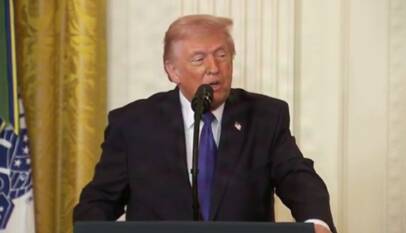
Trump Says Cuba “Will Be Next” to Collapse, Signals Openness to Oil Shipments
Washington, March 2026 — US President Donald Trump on Sunday described Cuba as a …