Reserve Bank Of Norway Have Reiterated Sustained Economic Expansion Despite High Tariffs.

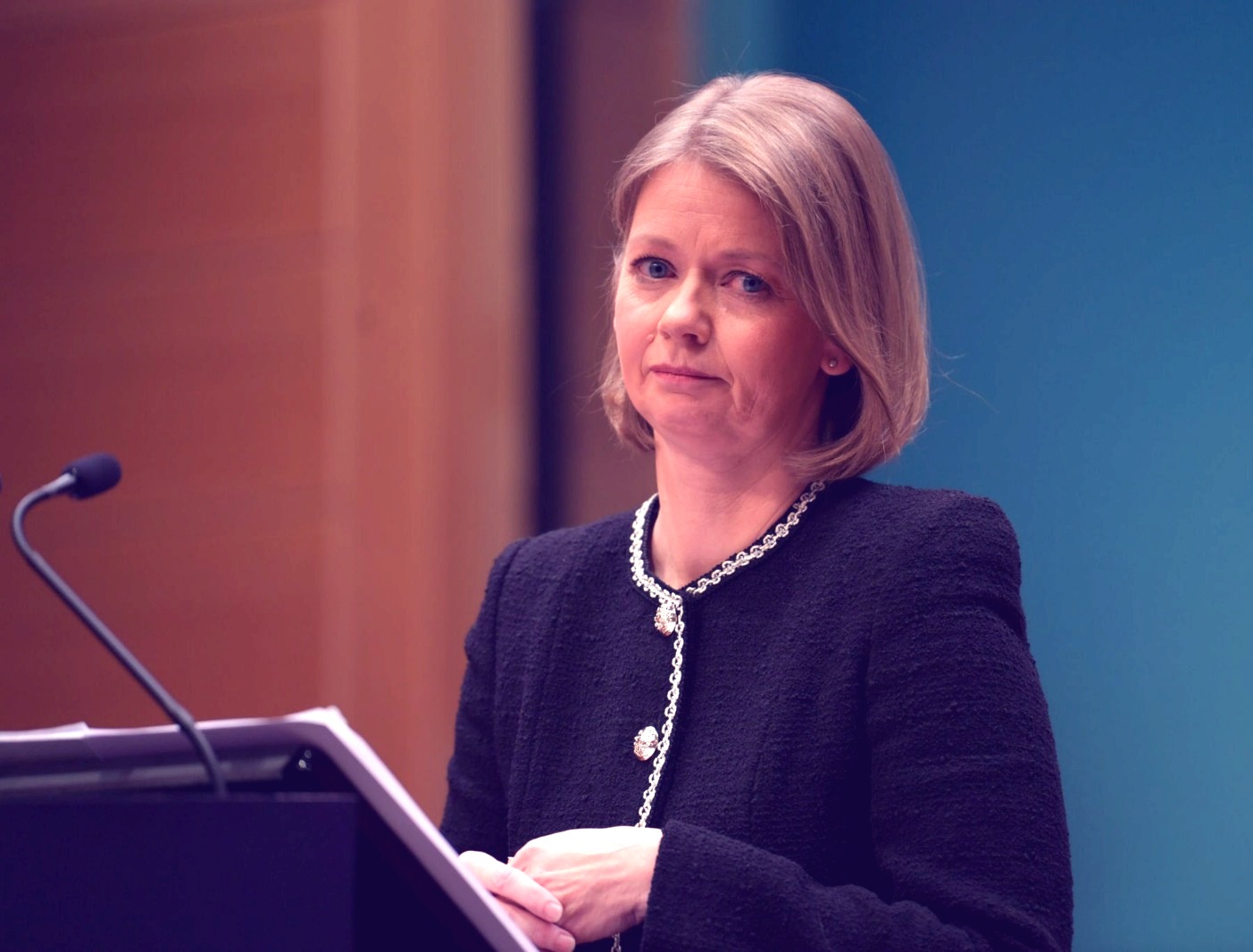
Oslo; February 2026: Governor Ida Wolden Bache of the Reserve Bank Of Norway (Norges Bank) while addressing the Supervisory Council of Norges Bank and invited guests, Oslo, Norway, yesterday on 12th February 2026, has asserted that the Norwegian 1000-krone bill is the most beautiful banknote in the world. The main motif is a wave on the open sea, with a storm blowing. The banknote itself is now in rough weather. It is not alone in that.
A few weeks ago, the Canadian Prime Minister Mark Carney had stressed, “we now live in a world where the most powerful pursue their interests, where economic integration is used as coercion, and where those who are not at the table are on the menu. At the same time, we are on the cusp of a transformation where artificial intelligence could change the world in ways we cannot yet fully imagine”.
With reference to the Canadian Prime Minister, Governor Bache stated, “There is a duality here. There are many reasons for concern, but there is also cause for hope. Technological progress can, for example, enable us to find solutions to problems that have previously been beyond our reach, such as climate challenges or treatments for previously incurable diseases. The question is how we address this duality, in a world where both opportunities and dangers seem greater than before. More than ever, we need institutions that foster stability and predictability. But sitting still is not an alternative. Renewing institutions is essential, so that they are adapted to present day realities. This also applies to Norges Bank and our social mission”.
Earlier in 2025, the Governor had warned, that the global economy could be hit hard by a major trade conflict. Since then, US tariffs have been raised to a level not seen since the interwar period. But the economic downturn has not materialised. There are several reasons for this:
- First, the tariff increases were not as large as they might appear on paper, primarily due to both multiple exemptions and companies’ ability to maneuver around tariff rates.
- Few countries have retaliated against the US tariff increases. In reality, the trade war has primarily been between the US and China, and after a few weeks of very high tariffs before summer last year, they agreed to roll back some trade barriers.
- Chinese exports actually grew faster last year than in the preceding year. Lower Chinese exports to the US were more than offset by increased export sales to other countries.
- Norwegian export companies have pointed to increased competition from Chinese companies. However, the main impression is nevertheless that the US tariff increases and the trade turbulence have not had a major impact on their activity so far.
- Activity in many European countries has been boosted by increased defence spending.
- In the US, artificial intelligence has been a key driver of economic growth. Investment in software, IT equipment and data centres has soared. In addition, AI optimism has driven stock markets higher, and some of the gains have been used for consumption.
- Growth in household consumption has picked up both internationally and in Norway. The increase has been strongest in Norway and reflects an increase in household purchasing power.
- Over the past two years, wages have risen more than prices, and employment has increased. In addition, the interest rate cuts last year helped reduce debt servicing costs somewhat.
The Governor has further said: “the moderate upturn in the Norwegian economy is expected to continue and household purchasing power to increase further. Does this mean that we can now breathe a sigh of relief? It would probably surprise you if I answered an unconditional yes to that question. It is not difficult to envisage scenarios where the world economy is hit harder than we have seen over the past year. When companies do not know what rules, framework conditions and markets they will face tomorrow, investments can be postponed or redirected. The uncertainty extends beyond tariffs. If confidence in important financial institutions were to fail, or if doubts arise as to whether large borrowers will be able to service their debt, the consequences could be substantial. But we are not there now, and there are also other forces at play. Much of it is related to the development of artificial intelligence”.
An epochal shift in technology:
The physicist Inga Strümke put it this way: “This could go to hell. Or it could go really great”. For the readers of Maverick News; [[Inga Strümke is actually a physicist with a doctorate in particle physics, but in recent years she has concentrated on artificial intelligence. The specialty is machine learning, i.e., how to train artificial intelligence and explainable artificial intelligence. The latter area deals with what artificial intelligence has actually understood and where this knowledge comes from]].
On the dark side, we are seeing increasingly autonomous weapon systems, more targeted cyberattacks and more credible disinformation being spread.
On the other hand, AI can help solve a wide range of tasks both faster and better and acts as a catalyst for new ideas and new solutions. We see that AI enables doctors to make faster and more accurate diagnoses and that it advances medical research in the quest for new treatments and medications. We are also hearing that AI can accelerate the development of fusion energy – a technology that, if successful, could provide access to vast amounts of clean energy.
The size of productivity gains from AI, and how fast they will materialise, is highly uncertain. Different researchers and analysts have different answers. Some argue that productivity may even decline rather than increase in the near term.
European Union’s AI Act:
The AI Act divides AI applications into different risk categories:
- Unacceptable risk: This use will be banned in the EU. This includes AI that manipulates human behavior, real-time remote biometric identification, such as facial recognition in public spaces, or helps to give people a behavioral trait that could give them an advantage or disadvantage in society.
- High-risk: These are AI systems that threaten health, safety or fundamental rights, such as those used in healthcare, education, recruitment, critical infrastructure management, law enforcement or the judiciary. These are subject to very strict regulations.
- General-purpose AI (GPAI): This includes programs like Chat GPT. These must meet certain transparency requirements. They must be thoroughly evaluated.
- Limited risk: AI systems that are subject to transparency requirements, including those that generate or manipulate images, audio, or video. Source code models that are free and open with publicly available parameters are generally not regulated.
- Minimal risk: Includes, for example, spell checkers and AI systems for video games or spam filters. Not regulated at EU level.
Studies provide varying estimates of productivity gains from AI – showing different estimates of AI’s potential boost to annual productivity growth in the coming years. The estimates vary between close to zero and just below eight percentage points.
The question is then whether this is a lot or a little. For comparison, the introduction of electricity is estimated to have boosted productivity growth in the US by about 01 percentage point annually in the period 1919 to 1929.
According to an analysis from the International Monetary Fund, Norway is better placed to reap the productivity gains from AI than many other countries. Norway has, for example, many knowledge-intensive service industries where AI can be widely adopted. Norway also has high wage levels that provide incentives to invest in new technology. A corollary to the productivity gains is the possibility that AI will reshape the labour market. This is not just about job displacement, but just as often about demand for new skills and the creation of new jobs.
If AI boosts global productivity, growth opportunities will increase and risk appetite could rise. This could also mean that both the global and domestic interest rate level will be higher over time than would otherwise be the case. In the near term, higher productivity could reduce production costs and dampen inflation. That pulls in the direction of lower interest rates. However, if expectations of higher earnings and wage growth boost investment and consumption without the supply side keeping pace, both wage and price inflation could move up. Interest rates could then increase – also in the near term.
Norges bank Governor further asserted that, “so far, I have mainly talked about the potential impact of AI on productivity, but the gains in productivity do not come about on their own. Some observers refer to a technological overhang: the opportunities exist but we have yet to make full use of them. If we are to reap the benefits of AI, we must do more than install new tools. This will require substantial investment, data, skills and new working methods. And, not least, we need sound institutions”.
Drawing lines from noted economist she said, “As Nobel economics laureate Philippe Aghion pointed out: The technology is revolutionary. The crucial question is whether our institutions will manage to transition fast enough so that we are able to realise the productivity gains. And I will add; fast enough to avoid the worst conceivable outcomes and to avoid that the gains only benefit the few. The experience of previous technological shifts shows that the largest productivity gains are realised when several forces pull in the same direction. The productivity boost during the ICT wave in the 1990s was supported by increased globalisation and stronger rule-based international cooperation. That is worth thinking about”.
Changes to the framework for the Government Pension Fund Global; Globalisation and multilateral institutions stood strong when the then Minister of Finance Sigbjørn Johnsen made the first transfer to the Government Pension Fund Global (GPFG) in 1996. Thirty years later, the initial transfer of 2 billion kroner has turned into 20,000 billion kroner.
The management framework has been developed over time; the framework has many positive features but also involves some dilemmas. There is an increasing gap between international and domestic expectations regarding responsible investment. That was clearly expressed this summer. Israel’s occupation of Palestinian territories and the war in Gaza sparked debate about the GPFG’s investments. In Norway, there was criticism that Norges Bank did not divest from more companies.
Taking cognizance of the criticism seriously, alongside the exclusion of a large US company provoked reactions by some observers, including a number of US politicians, some aspects of investment management might strengthen confidence in the GPFG at home, while weakening its position and investment opportunities abroad. Norway has a good tradition of making changes to the GPFG framework based on thorough assessments. That has been a strength. It is also a strength that the political authorities react quickly when circumstances so require. In November, the government appointed a commission to review the ethical framework. The questions the commission has been asked to answer are important but also demanding. Regardless of the outcome, the framework must be clear about where the responsibilities lie, must be based on realistic ambitions for responsible investment and enable the GPFG to continue to fulfil its purpose: high financial returns that can benefit future generations.
The strategy has yielded solid returns in recent years. The total return on the GPFG’s equity investments over the past three years is over 70%. At the same time, a consequence of the strategy is that the big US tech companies now account for a substantial share of the GPFG’s investments, after AI optimism has driven equity prices to high levels.
New forms of money:
The geopolitical changes and rapid technological advances also affect the monetary system.
In 2008, Satoshi Nakamoto launched Bitcoin, a payment system based on cryptography. The payment system was based on distributed ledger technology, and bitcoin was the system’s unit of money. In the system, two parties could pay each other digitally and securely, without having to rely on a bank or another third party. The major innovation was that trust in this system could be achieved through technology alone.
Since then, bitcoin has proved not to work well as a means of payment, in contrast to the original intention. Instead, it has become an investment asset for those who are willing to take on considerable risk or are skeptical about established institutions and want to invest outside the US dollar or other fiat currencies. Bitcoin has been followed by tens of thousands of other cryptocurrencies, but none has achieved any role as a means of payment.
In 2014, crypto assets emerged that combined various components to create a kind of monetary Kinder Egg: Stablecoins. They were based on blockchain technology, were backed by other assets and maintained a stable value. Stablecoins have become a buzzword among many people with an interest in economics, and the Financial Times named stablecoins one of its 2025 words of the year.
Stablecoin issuers hold a reserve of bank deposits and securities with the aim of maintaining par value relative to a fiat currency. This makes stablecoins better suited as a means of payment than cryptocurrencies such as bitcoin. There is not a large outstanding volume of stablecoins today, but some predict that their volume will increase several-fold over the coming years.
To date, stablecoins have largely been used for the purchase and sale of bitcoins and other crypto currencies. They are also used on a small scale for international money transfers, but hardly at all for the purchase of common goods and services. In any case, as most stablecoins are in US dollars, they are impractical to use as a means of payment for us in Norway.
In practice, stablecoins are not entirely “stable”. Their value against the US dollar normally varies a bit. There have also been episodes of more serious breaches of the promise of a fixed value. Stablecoin issuers are not backed by a central bank and were for a long period not subject to any regulation.
Traditional forms of money are doing a far better job as a means of payment. Our money can be used virtually everywhere, albeit not on blockchains. A 1000-krone note has precisely the same value as a thousand kroner in a bank account. One thousand kroner deposited in Handelsbanken has the same value as one thousand kroner in Sparebanken Norge. At the same time, the money moves seamlessly and rapidly between banks when we make payments.
New forms of money are not just about technology but also about geopolitics. The European Central Bank is working to introduce a digital euro, a central bank digital currency that is available to the general public. The purpose is to strengthen preparedness and make the payment system less dependent on non-European companies.
The omnipotent monetary unit, the Norwegian krone have celebrated its 150th anniversary in 2025. Norwegian kroner were to a large extent in the form of cash 150 years ago. Now virtually all Norwegian kroner are bank deposits. Norges Bank is working to ensure that the Norwegian krone continues to be an attractive and safe means of payment for individuals and firms in the future. If the krone is not used, the krone interest rate will not matter to anyone.
The Ministry of Finance will now review the mandate for monetary policy. Norges Bank is mandated to ensure low and stable inflation and to help keep employment as high as possible while promoting economic stability. Some have argued that the aims of monetary policy should be broadened to include considerations such as the distribution of income and wealth or climate change. The Monetary Policy and Financial Stability Committee is responsible for setting the policy rate. Since the Committee was established in 2020, the policy rate decisions have been unanimous.
After inflation surged in the wake of the pandemic, the Committee raised the policy rate sharply and rapidly. Inflation has come down markedly from the peak, and last year we began to ease monetary policy somewhat. Since September last year, the policy rate has been 04%.
The reason why Norway have not reduced the policy rate to the same extent as their main trading partners is that inflation is still too high. Excluding energy prices, inflation has been close to 03% since autumn 2024. According to figures published this week, inflation increased in January and was higher than we had expected. We will ensure that inflation is brought back to 02%.
While concluding, the Norges Bank Governor has affirmed that the world is navigating stormy waters.
She has spoken about the fact that, “there is also a bit of a storm here at central bank headquarters. The Minister of Finance has asked us to consider withdrawing the 1000 krone banknote from circulation. The purpose is to combat crime. There are also some calls for withdrawing all the banknotes.
But the banknotes do not only have sentimental value. They contribute to preparedness and are the only form of money accessible to everyone in Norway. Our banknotes are also a tangible expression of an institution that cannot be taken for granted: a sound monetary system, where the central bank stands behind and can ensure that our money retains its value over time.
Irrespective of whether we may one day decide to become a cashless society or not, Norges Bank will ensure that the economy has a nominal anchor. This no less important in these times of upheaval. The past years have reminded us that the outlook can change abruptly. That is why we do not make any promises about the policy rate”.
Team Maverick.





Adani’s Ayodhya Visit Inspires Gurukul Students, Reinforces Commitment to Cultural Heritage
Ayodhya, April 2026 : Students of a traditional Gurukul in Ayodhya described their interac…

Adani’s Ayodhya Visit Inspires Gurukul Students, Reinforces Commitment to Cultural Heritage
Ayodhya, April 2026 : Students of a traditional Gurukul in Ayodhya described their interaction …