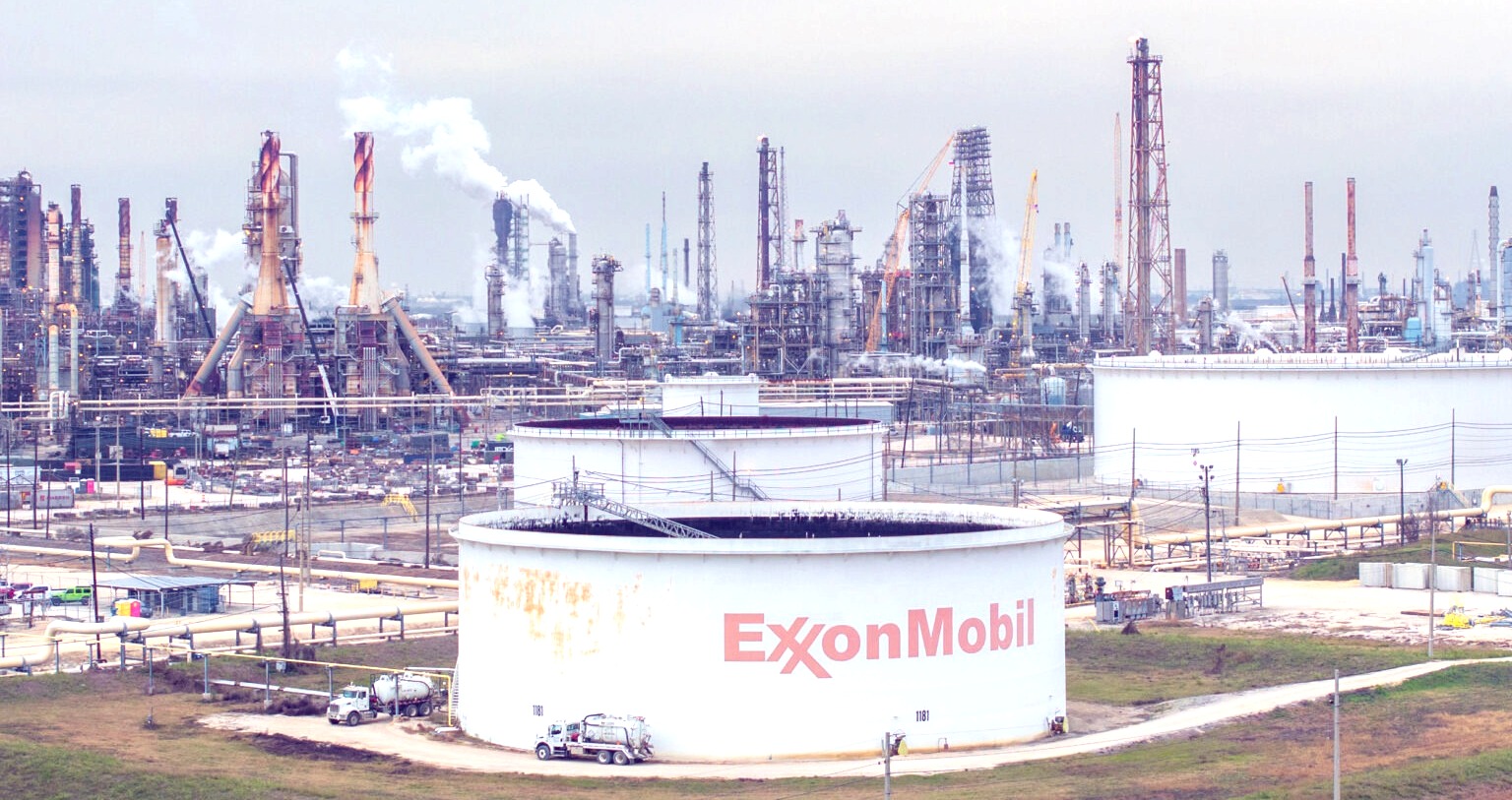
Michigan State Files A Suit Against ExxonMobil Alleging Antitrust Violations.

Texas; February 2026: After taking on major oil and gas companies in court, Michigan is now joining nearly a dozen other states that have brought climate-related lawsuits against ExxonMobil and its industry peers. But Michigan’s approach is different: accusing ExxonMobil not of deceiving consumers or misrepresenting climate change risks, but of driving up energy costs by colluding to suppress competition from cleaner and cheaper technologies like solar power and electric vehicles.
The strategy is risky and might run into challenges, but it could potentially be a game changer if the state can overcome initial dismissal attempts by the industry defendants, legal experts say. The suit comes at the crucial threshold when the industry and its political allies escalate efforts to shut down liability laws and lawsuits. Most noteworthy is that Republicans in Congress are currently crafting legislation to shield fossil fuel companies from climate liability.
Michigan Attorney General Dana Nessel has filed the lawsuit in January 2026 in the federal District Court against BP, Chevron, ExxonMobil, Shell and the American Petroleum Institute. The suit, brought under federal and state antitrust laws, alleges a conspiracy to delay the transition to renewable energy and EVs and maintain market dominance of fossil fuels.
In a reply Exxon said in a statement that the state’s action is “yet another legally incoherent effort to regulate by lawsuit. It won’t reduce emissions, it won’t help consumers, and it won’t stand up to the law”.
As per the suit (viewed by Maverick News 30) the plaintiff (Michigan State) –
- seeks to end and obtain appropriate redress for injuries caused by a conspiracy to delay the transition from fossil fuels to renewable energy in violation of Section 1 of the Sherman Act, 15 USC. § 1, Sections 4 and 16 of the Clayton Act, 15 USC. §§ 15 and 26, and Section 2 of the Michigan Antitrust Reform Act, Mich. Comp. Laws § 445.772. Defendants BP P.L.C., BP America Inc., BP Energy Company, BP Energy Retail Company LLC, BP Products North America Inc. (collectively BP); Chevron Corporation, Chevron USA. Inc. (collectively Chevron); Exxon Mobil Corporation, ExxonMobil Oil Corporation (collectively Exxon); Shell P.L.C., Shell USA, Inc., Shell Oil Products Company LLC, Equilon Enterprises LLC d/b/a Shell Oil Products US, and Shell Trading (US) Company (collectively Shell) (together, Fossil Fuel Defendants) and American Petroleum Institute (API) (together with Fossil Fuel Defendants, Defendants) have unlawfully colluded to reduce innovation and output (and thereby increase prices) in the Michigan transportation energy market and the Michigan primary energy market, causing antitrust injury to the State and its residents.
- Defendants are four of the largest energy companies in the world and their industry’s largest trade association. The Fossil Fuel Defendants produce fossil fuels and have at times invested in clean energy products and related technologies, such as solar power and batteries, that could provide energy to power buildings, infrastructure, and cars as an alternative to fossil fuels.
- But for decades, Defendants have conspired with each other to forestall meaningful competition from renewable energy and maintain their dominance in the energy market. They have done so as a cartel, agreeing to reduce the production and distribution of electricity from renewable sources and to restrain the emergence of electric vehicles (EV) and renewable primary energy technologies in the United States. To achieve this end, they have abandoned renewable energy
projects, used patent litigation to hinder rivals, suppressed information concerning the hidden costs of fossil fuels and viability of alternatives, infiltrated and knowingly misdirected information-producing institutions, surveilled and intimidated watchdogs and public officials, and used trade associations to coordinate market-wide efforts to divert capital expenditures away from renewable energy—all to further one of the most successful antitrust conspiracies in United States history.
- Defendant’s collusion traces back to approximately 1980, when their own research concluded that continued reliance on fossil fuels would impose staggeringly high and stunningly destructive negative externalities on consumers nationwide, including in Michigan. Negative externalities are external costs in the form of environmental harms, economic harms, and costs incurred to adapt to or mitigate those harms. Defendants were aware that clean energy alternatives were feasible and inevitable, and emergence of these alternatives would increase competition in the transportation and primary energy markets, reducing Defendants’ market share and the dominance of those markets with their fossil fuel products. Exxon took an early leading role in the conspiracy. Its scientists concluded that to avoid the most deadly and destructive negative externalities, including climate impacts, clean energy would need to supply at least 50% of global energy by 2010. But rather than act on these findings to compete in developing superior clean energy technologies and achieving market penetration, Exxon and the other Defendants chose to collude to protect fossil fuels’ dominance.
- Defendants have implemented this conspiracy by means of a multifaceted scheme targeting two markets: the United States market for transportation energy products such as gasoline, and the United States market for primary energy products used to heat and cool residential and public buildings. Defendants executed this conspiracy individually and jointly through trade organisations using an array of anticompetitive conduct. For each of these markets, Michigan is the relevant geographic submarket for the purchases at issue in this Complaint.
This week during a congressional hearing with Attorney General Pam Bondi testifying, US Representative Harriet Hageman (Republican-Wyoming) referenced Michigan’s lawsuit in arguing that these “novel approaches” to “climate lawfare” require a federal response. Hageman said she is working with House and Senate colleagues to craft legislation aimed at shielding fossil fuel companies from state climate liability laws and lawsuits.
American Petroleum Institute (API) has been lobbying Congress on exactly this kind of liability shield. The organization has recently lobbied on “draft legislation related to state efforts to impose liability on the oil and gas industry,” according to its lobbying reports. And API is now stating publicly that stopping “extreme climate liability policy” such as lawsuits and state climate superfund laws is one of its top priorities for 2026.
In its lawsuit, Michigan argues that the oil companies and their chief trade association operated as a cartel, working to hinder the development of alternatives in the primary energy and transportation markets in order to keep consumers dependent upon oil and gas. This anti-competitive conduct, the state says, has resulted in fewer choices for consumers when it comes to fueling their cars or heating their homes, and has left consumers paying more for energy than they otherwise would have.
The lawsuit comes at a time of mounting concerns over affordability and the cost of living, including rising energy costs. Nessel said these “out-of-control costs” are largely “due to the greed of these corporations who prioritised their own profit and marketplace dominance over competition and consumer savings”.
According to the state’s complaint, clean energy technologies would have reached scale much sooner, and consumers would have avoided billions of dollars in overcharges, were it not for the defendants’ deliberate actions to forestall their development and deployment.
Michigan’s lawsuit comes amidst escalating attempts by the fossil fuel industry and its political allies to shut down climate liability initiatives. “As more than a dozen states and communities move closer to putting Big Oil on trial, and as climate superfund laws begin to take hold, the industry is turning to Congress for protection. API has said plainly that stopping climate liability is a top priority and now we are seeing legislation take shape to do exactly that”, Cassidy DiPaola, communications director for the Make Polluters Pay campaign, said in response to Hageman’s announcement that she is working with congressional colleagues to craft a federal liability shield for energy companies.
“If these companies believe they did nothing wrong, they should be willing to defend that position in court”, DiPaola added. “Instead, they are asking lawmakers to block the cases altogether”. State lawmakers in Utah and Oklahoma recently introduced bills that aim to shield the fossil fuel industry from climate lawsuits and prohibit liability over climate damages. Both bills are currently advancing in the state legislatures.
In April 2025, President Donald Trump issued an executive order directing the attorney general to identify and “expeditiously take all appropriate action to stop” state laws and lawsuits that burden domestic fossil fuel production or otherwise target the fossil fuel industry.
Just weeks later, the US Department of Justice (DOJ) had sued New York and Vermont over their climate superfund laws. The DOJ also preemptively sued Hawaii and Michigan in anticipation of those states bringing climate lawsuits against oil companies, even though neither state had filed any case at the time. Hawaii did file a complaint against oil companies the next day.
Michigan, however, did not file its suit until just recently, and it ended up departing from the expected focus on climate damages. The DOJ argued in its complaint that Michigan’s forthcoming suit would be unconstitutional and preempted by the Clean Air Act. US District Judge Jane M. Beckering, who is now presiding over Michigan’s antitrust lawsuit, tossed out the DOJ’s case the day after the state filed its suit against Big Oil.
Beckering said the DOJ’s case was too speculative and premature, and that there appeared to be no precedent for preemptively blocking a party from bringing “a broad swath of unspecified claims against unspecified members of a given industry simply because that party has begun investigating whether a litigation strategy may have merit”.
Meanwhile, Nessel – The Michigan attorney general said in a response, “I am relieved the Court saw through this and dismissed this frivolous case. My office will not be bullied”. Nessel put out a request for outside counsel in 2024 to assist with pursuing climate litigation against fossil fuel companies, and the state subsequently entered into contingency contracts with the law firms Sher Edling, DiCello Levitt and Hausfeld. What had started as an investigative strategy of holding fossil fuel companies liable for climate impacts in the state, however, instead “uncovered one of the most successful antitrust conspiracies in United States history”, according to Nessel’s office.
Antitrust experts say the state’s case takes a novel approach, and one that tests the bounds of traditional antitrust law. “I think there are some challenges here, especially when the court looks at what else would this apply to if we were to adopt this theory: Would this really expand liability for antitrust beyond what it was really meant for?” Mouw said.
“The Michigan case is a novel application of a classic principle of the antitrust laws—that agreements between competitors to restrict output are illegal”, Nicole Veno, an antitrust lawyer and senior associate at Lowey Dannenberg, told Media reporters. “While the theory of liability appears strong, to prove damages Michigan will also need to show that it was economically harmed by the failure to invest in alternative energy sources, which could prove more challenging”.
If the case does move ahead, climate advocates say they are hopeful that it will open up new pathways for pursuing accountability. “I’m excited to see how this case goes”, Public Citizen’s Regunberg said, “and would hope it would be a model for a lot of other plaintiffs who are hopefully going to be bringing more suits like it”.
Suvro Sanyal
Team Maverick.





Mhatre’s 73 Powers CSK to 209/5 Against PBKS in High-Scoring IPL Clash
Chennai, April 2026 : A scintillating knock from youngster Ayush Mhatre, supported by expl…

Mhatre’s 73 Powers CSK to 209/5 Against PBKS in High-Scoring IPL Clash
Chennai, April 2026 : A scintillating knock from youngster Ayush Mhatre, supported by explosive …