BNP Finalises Cabinet Line-Up as Tarique Rahman Set to Lead New Government in Bangladesh

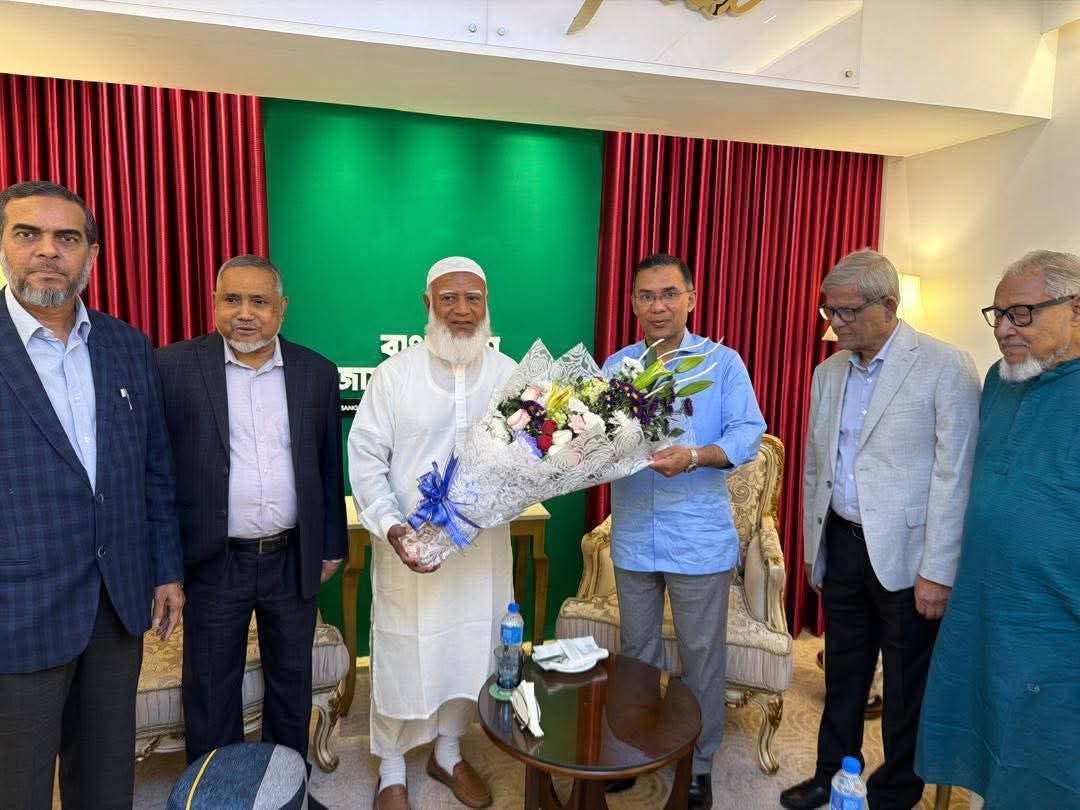
Dhaka, Feb 2026 : Bangladesh’s political transition gathered pace on Tuesday as the Bangladesh Nationalist Party (BNP) finalised its first cabinet line-up following its sweeping victory in the 13th parliamentary elections. According to local media reports, 25 BNP Members of Parliament have been selected to take oath as full cabinet ministers, while another 24 MPs will be sworn in as state ministers in the newly formed government.
Leading Bangladeshi daily The Dhaka Tribune reported that the list of cabinet ministers includes senior party heavyweights such as Mirza Fakhrul Islam Alamgir, Amir Khasru Mahmud Chowdhury, Salahuddin Ahmed, Iqbal Hasan Mahmud Tuku, and decorated freedom fighter Hafiz Uddin Ahmed Bir Bikram, among others. In addition, two BNP-affiliated figures — Mohammad Amin Ur Rashid and Khalilur Rahman — are set to be inducted as technocrat ministers, signalling the party’s intent to blend political leadership with professional expertise.
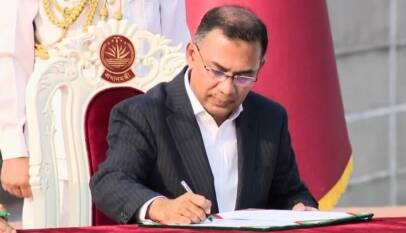
The selected MPs are expected to take oath as ministers shortly, marking the formal beginning of the new BNP-led administration. Significantly, during the BNP Parliamentary Party meeting held earlier in the day, party lawmakers collectively decided not to accept duty-free vehicles or government plots — a move widely interpreted as an attempt to project austerity, restraint and a break from past practices of political privilege.
Local media reported that as many as 45 government vehicles had already been prepared and lined up in front of the Parliament Secretariat for the incoming ministers. However, the BNP leadership’s decision not to accept such benefits sent a clear message about its stated commitment to cleaner governance and public accountability.
Earlier in the day, all 209 newly elected BNP MPs were sworn in as members of Parliament, though they declined to take the oath related to the Constitution Reform Council. BNP leader Salahuddin Ahmed stated that, on the explicit instructions of party chief Tarique Rahman, all BNP MPs had been directed not to sign the Constitution Reform Council form, as they had not been elected as members of that body. This position, reported by leading daily The Daily Star, has triggered a broader debate over the legitimacy and constitutional status of the proposed council.
Following BNP’s refusal, parties from the 11-party alliance — including Jamaat-e-Islami, Islami Andolan, and the National Citizens’ Party (NCP) — initially refused to take parliamentary oaths in protest. However, the standoff eased later in the day when independent candidates, Islami Andolan Bangladesh, and subsequently six newly elected NCP MPs chose to take the oath and assume their parliamentary roles.
In a historic first, Chief Election Commissioner AMM Nasir Uddin administered the oath to the newly elected MPs in accordance with Bangladesh’s Constitution. Never before has a sitting Chief Election Commissioner performed this function, underscoring the extraordinary political circumstances surrounding the formation of the 12th Parliament.
Meanwhile, the BNP Parliamentary Party formally elected Tarique Rahman as its Leader, paving the way for him to become the Leader of the House and take oath as the Prime Minister later in the day. As the party commanding a clear majority, the BNP constituted its Parliamentary Party and held its inaugural meeting under Tarique’s chairmanship. During the meeting, he was unanimously endorsed as the party’s leader in Parliament and its sole candidate for the prime ministership, a decision announced through an official post on BNP’s Facebook page.
Speaking to journalists after the swearing-in ceremony, BNP Secretary General Mirza Fakhrul Islam Alamgir said that Tarique Rahman, who has articulated new policy ideas and a vision for a “new Bangladesh,” has been entrusted by party MPs to guide both the government and the Jatiya Sangsad. His remarks were carried by leading Bangladeshi daily The Business Standard.
The 13th parliamentary elections were held on February 12 alongside a referendum on the July National Charter in 299 of the country’s 300 constituencies. The BNP emerged as the dominant force, winning 209 seats, while Jamaat-e-Islami secured 68 seats, making it the second-largest bloc in Parliament.
Tarique Rahman, who contested and won from two constituencies, vacated the Bogura-6 seat to allow a by-election and took oath as an MP from the Dhaka-17 constituency. With Tarique now poised to lead Bangladesh — the country last had a male prime minister nearly 35 years ago — political analysts caution that the new government faces formidable challenges. These include restoring stability after months of unrest and countering the rise of Islamist extremism that marked the 18-month tenure of the Muhammad Yunus-led interim administration.
As the new cabinet prepares to take charge, both supporters and critics will be watching closely to see whether the BNP can translate its overwhelming mandate into effective governance and long-term stability for Bangladesh.



Australia Calls India a Top-Tier Security Partner, Unveils Landmark Defence and Energy Agreements
Canberra, July 2026 : Australia on Thursday described India as one of its most important s…
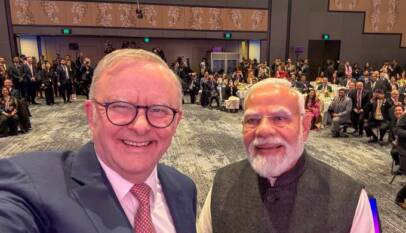
Australia Calls India a Top-Tier Security Partner, Unveils Landmark Defence and Energy Agreements
Canberra, July 2026 : Australia on Thursday described India as one of its most …