Trump Raises Global Tariff to 15% Using Rare Legal Provision After Supreme Court Setback

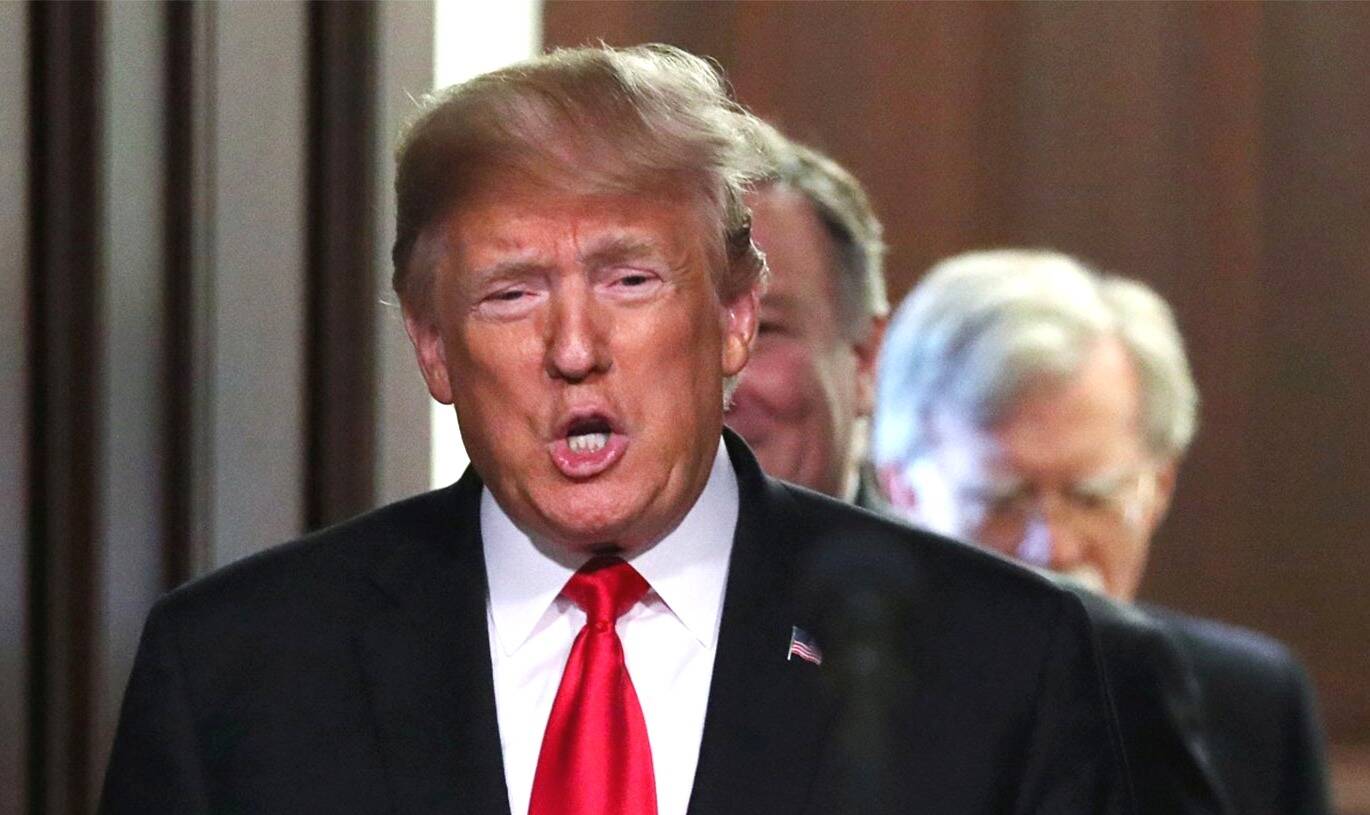
Washington, Feb 2026 : US President Donald Trump on Friday escalated his trade offensive by increasing a newly imposed global tariff from 10 per cent to 15 per cent, invoking Section 122 of the Trade Act of 1974. The move came just a day after the Supreme Court of the United States struck down a major portion of his earlier tariff regime, dealing a significant legal blow to the administration’s trade policy.
According to a report by The Wall Street Journal, the 15 per cent levy is being imposed under Section 122, a little-used provision that allows the president to impose temporary tariffs of up to 15 per cent for a maximum period of 150 days, unless Congress approves an extension. Notably, this section has never before been used as the legal basis for tariffs and requires the duties to apply uniformly to all imports rather than targeting specific countries.
Trump announced the decision in a strongly worded post on his social media platform Truth Social, reacting angrily to the Supreme Court’s ruling. He said the increase followed “a thorough, detailed, and complete review of the ridiculous, poorly written, and extraordinarily anti-American decision on Tariffs issued yesterday” by the court.
“I, as President of the United States of America, will be, effective immediately, raising the 10% Worldwide Tariff on Countries, many of which have been ‘ripping’ the U.S. off for decades, without retribution (until I came along!), to the fully allowed, and legally tested, 15% level,” Trump wrote. He added that over the next few months, his administration would determine and announce “new and legally permissible Tariffs” to continue what he described as the “extraordinarily successful” project of Making America Great Again.
A separate report in The Wall Street Journal said the Supreme Court, in a 6–3 decision, rejected the administration’s argument that the International Emergency Economic Powers Act (IEEPA) authorised the sweeping tariffs Trump had previously imposed. Writing for the majority, Chief Justice John G. Roberts Jr. held that the statute did not give the president the authority to “impose tariffs on imports from any country, of any product, at any rate, for any amount of time,” according to The Washington Post.
Trump responded sharply to the ruling, calling it “deeply disappointing” and saying he was “ashamed of certain Members of the Court for not having the Courage to do what is right for our Country.” He singled out Justices Clarence Thomas, Samuel Alito and Brett Kavanaugh for praise, thanking them for their “Strength, Wisdom, and Love.”
The The New York Times reported that Trump had initially planned to set the replacement global tariff rate at 10 per cent but later raised it to the maximum 15 per cent allowed under Section 122. The move signalled his determination to press ahead with an aggressive trade agenda despite the judicial setback. Under the new framework, the flat tariff will apply to exports from all countries, regardless of existing trade agreements or concessions previously negotiated with Washington.
The Supreme Court’s decision has wide-ranging implications. According to The Washington Post, the invalidated tariffs had generated more than $130 billion in import taxes, raising complex questions about potential refunds to importers and adding fresh uncertainty for businesses and foreign governments alike. Companies now face renewed ambiguity over costs, while US trading partners must reassess their strategies in light of the rapidly shifting legal landscape.
The Wall Street Journal also noted that goods already subject to national security-based tariffs — including steel and automobiles — would not be hit with the additional 15 per cent levy, limiting the immediate impact on some heavily protected sectors. However, the broader application of the global tariff is expected to increase costs across a wide range of imported products.
Looking ahead, the administration is expected to explore other trade law authorities, including Section 301 and Section 232, to impose more durable, country-specific or sector-focused tariffs. Such measures, however, require formal investigations and procedural steps that could take several months to complete.
The New York Times observed that governments which had made concessions under earlier tariff pressure may now reconsider their positions as the United States recalibrates its legal footing. The ruling represents a significant judicial check on presidential trade powers, reinforcing limits on unilateral executive action in trade policy.
Yet Trump’s rapid pivot to an alternative legal mechanism underscores his resolve to keep tariffs at the centre of US economic and geopolitical strategy, even as courts and critics challenge the scope of his authority.
(The content of this article is sourced from a news agency and has not been edited by the Mavericknews30 team.)





China Open: Lakshya, Sindhu and Ayush Shetty Advance to Second Round After Gritty Wins
Changzhou (China), July 2026 : India’s top badminton stars Lakshya Sen, P.V. Sindhu …

China Open: Lakshya, Sindhu and Ayush Shetty Advance to Second Round After Gritty Wins
Changzhou (China), July 2026 : India’s top badminton stars Lakshya Sen, P.V. Sindhu and …