Indian Firms Reduce Gas Supply To Industries After Qatar Halts LNG Production.

Furthermore, following the suspension of liquefied natural gas production, Qatar Energy halted the output of urea, polymers, methanol and other products, the company said.
New Delhi; March 2026: Companies in India have reduced natural gas supplies to industries in anticipation of tighter supply after top producer Qatar suspended its liquified natural gas (LNG) production following a drone attack, as per official sources informing the media outlet. India, which is the world’s fourth-largest buyer of LNG, relies heavily on producers from the Middle East for its imports. It is the top LNG client for Abu Dhabi National Oil Company and the second-largest buyer of Qatari LNG.
Top LNG importer Petronet LNG Ltd has formally informed GAIL (India), gas marketing major, alongside other companies about the prevailing lower supplies. Subsequently, GAIL and Indian Oil Corporation have informed customers of the gas supply cut late on Monday. The cuts, which has ranges from 10% to 30%, have been set at minimum lifting quantities that would shield the suppliers from any penalties from the customers based on contractual terms, the sources said.
As a consequence, in order to make up for the LNG shortfall, companies including IOC, GAIL, Petronet LNG are planning to issue spot tenders, although spot prices, freight, and insurance costs have surged.
Since, US and Israel have attacked Iran, and today early morning IRGC has formally announced the closure of the Hormuz Strait, oil and gas supply has come to a standstill. As it was apprehended – 20% of the World’s LNG Supply from Qatar can be badly affected which proved true. Countries will now have to scramble for the remaining gas, driving up prices.
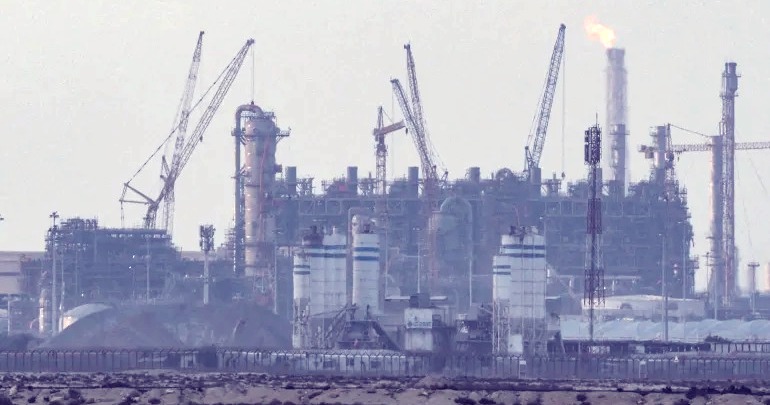
Qatar Energy has suspended liquefied natural gas (LNG) production following a drone attack, straining the global LNG market. Yesterday on 02nd March 2026, Iranian drones struck two sites, according to Qatar’s Ministry of Defence: a water tank at a power plant in Mesaieed Industrial City and an energy facility in Ras Laffan belonging to Qatar Energy, the world’s largest LNG producer.
While no casualties were reported, Qatar Energy have suspended the production of LNG and other products at the impacted sites for security reasons. The reasons are well known globally:
- The drone attacks has hit the omnipotent Ras Laffan complex, which is home to several processing units for liquefied natural gas, those which are poned to be exported.
- The state-owned energy company was forced to declare what is known as Force Majeure Clause.
- In the event of any extraordinary circumstances, such as a drone attack – a company is freed from contractual obligations, as per international laws.
This eventuality comes at a time when intensifying sea battles between Iran and the United States, coupled with missiles flying over the region, have effectively choked the Strait of Hormuz, a strategic trade route. At least 150 vessels have dropped anchor, including those carrying LNG, in the strait and surrounding areas as per information from sea waferier sources. Traffic in the strait for both LNG and oil has declined by 86%, with roughly 700 ships sitting idle on either side of the passage.
As reiterated earlier, Qatar’s LNG exports represent 20% of the global market. With fewer products reaching the market, LNG supply is down, causing prices to surge. What is evident is the fact that an escalation overnight with pressure on energy infra in the Gulf is the cause. The countries hit the most directly are Asian markets, particularly Bangladesh, India, and Pakistan.
China is the world’s largest importer of natural gas, but it gets the majority of its imports from Australia, accounting for 34% of its imports, according to the US Energy Information Administration.
Maksim Sonin, an energy expert at Stanford University’s Center for Fuels of the Future, however, said that while Qatar Energy’s decision would bring “volatility” to energy markets, he wouldn’t describe the situation as a “crisis” just yet. “We will see near-term volatility in the LNG market, especially if infrastructure in Qatar and other hubs is damaged”, Sonin told media reporters. However, he added, “I do not expect the 2022 gas crisis to repeat in Europe”, referring to the period following Russia’s full-fledged invasion of Ukraine, when many European nations tried to dramatically scale back their dependence on Russian oil and gas.
Until 2022, Russia was the world’s biggest exporter of LNG, but its sales have plummeted since its war on Ukraine began. Now, the US is the world’s largest exporter of LNG (by the virtue of its control on the Russian alongwith Venezuelan oil), followed by Qatar and Australia.
While 82% of Qatar Energy’s sales are to Asian countries, the halt puts increased pressure on other markets across the globe, too, particularly in Europe. In effect, a smaller supply of gas will need to meet the same global demand. As a result, gas prices have already started soaring: Benchmark Dutch and British wholesale gas prices soared by almost 50%, while benchmark Asian LNG prices jumped almost 39 percent, on Monday after the Qatar Energy announcement.
“Not good if Qatar stays offline for long, of course”, said Ziemba. The only silver lining for Europe: “At least the worst of the winter in Europe may be behind”, Ziemba pointed out. The European Union’s gas coordination group will meet on Wednesday to assess the impact of the widening conflict in the Middle East, a European Commission spokesperson told Reuters on Monday. The group includes representatives from member state governments. It monitors gas storage and security of supply in the EU, and coordinates response measures during crises.
Team Maverick.



Heavy Rains Lash Kerala, Schools and Colleges Shut in Nine Districts
Thiruvananthapuram, Aug 2026 : Widespread rainfall continued across Kerala on Sunday, leav…
Heavy Rains Lash Kerala, Schools and Colleges Shut in Nine Districts
Thiruvananthapuram, Aug 2026 : Widespread rainfall continued across Kerala on Sunday, leaving several low-lying …