Iran Have Targeted Kurdish Groups In Iraq, Amid Reports That Iranian Kurdish Armed Groups Have Consulted With CIA.

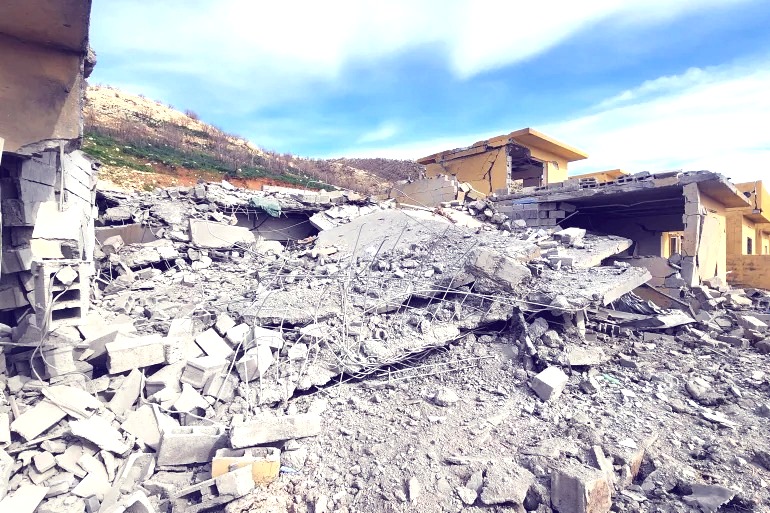
March 2026: Iran’s intelligence ministry confirmed that it has targeted posts of “separatist groups” who intended to enter through western borders, adding that they sustained heavy losses. The Iranian ministry statement, which was carried by state media, said Iranian forces are cooperating with “noble Kurds” to thwart the “Israeli-American” plan to attack Iranian soil. The new strikes on Iraq’s semi-autonomous Kurdish region come nearly one week into the US-Israel war against Iran, which has killed at least 1,045 people across the country since Saturday, according to Iran’s Tasnim news agency.
Local sources said the attacks targeted the headquarters of the Kurdistan Toilers Association, or Komala, an Iranian Kurdish armed group in Iraq. The attacks come amid reports that Iranian Kurdish armed groups have consulted with the CIA in recent days about whether, and how, to attack Iran’s security forces in the western part of the country and what support they might receive from Washington.
According to local information, the Iranian Kurdish coalition of groups based on the Iran-Iraq border has been training to mount such an attack in hopes of weakening the country’s military.
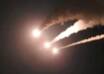
As the attacks on Kurdish groups were launched, Iran’s Islamic Revolutionary Guard Corps (IRGC) also announced the latest round of attacks against Israel and US assets in the Middle East early today. Israel’s air defence system intercepted two drones over the western Galilee region, Israel’s Channel 12 reported. Saudi Arabia said it intercepted at least three drones, while Qatar ordered the evacuation of homes near the US Embassy in Doha.
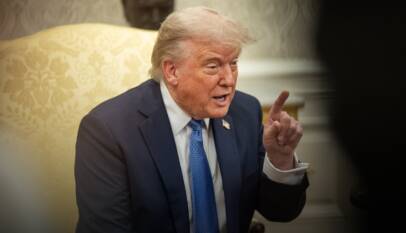
Earlier, yesterday (04th March 2026), it was reported that the United States is in talks with opposition Kurdish forces in a bid to arm them and foment an uprising in Iran, according to multiple media reports, as the US-Israel war on Iran enters its 05th day. President Donald Trump’s administration is actively discussing with opposition Kurdish groups the possibility of arming them. As of yesterday, it was unclear whether any deals had been struck.
Kurdish rebels have for years opposed Tehran and carried out numerous attacks in Iran’s Kurdistan province as well as other western provinces. They operate along the Iraq-Iran border, with Iran and Iraq’s Kurdish minorities sharing close ties.
The US spy agency CIA has a history of working with Kurdish groups in neighbouring Iraq, which the US had invaded in 2003. Washington also funded, armed and trained Kurdish fighters in Syria against former President Bashar al-Assad. The CIA has funded rebels and armed groups in numerous countries over the past several decades to destabilise governments critical of US foreign policy.
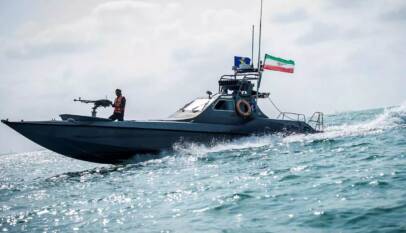
Amid the ongoing war, and as Iran hits US assets and personnel hosted in neighbouring Gulf countries, the Iranian Revolutionary Guard Corps (IRGC) has also targeted Kurdish positions in the west.
“Instinctively, it feels like a bad move”, analyst Neil Quilliam of the United Kingdom-based think tank Chatham House told media reporters of the plan, warning that it might cause more internal conflict in Iran. “It is an afterthought and has not featured in any major planning to support any broader end game. It reveals that the US-Iran war against Iran has been poorly thought out”, he said.
Kurds are an ethnic minority spread across the Middle East, but without a state of their own and with a history of marginalisation across countries. They share a common culture and language. Several Kurdish groups have for decades sought self-governance in Turkiye, Syria and Iran. Washington has been a historical ally, particularly of Iraqi Kurds. The US provided tactical support in the form of no-fly zones that protected Kurdish groups during the 1991 uprising, although Washington was criticised for prompting the revolt and then abandoning people as Iraqi forces under Saddam Hussein responded violently.
The no-fly zone allowed the creation of a de facto Kurdish-controlled region, the Kurdish Regional Government, which was officially recognised in 2005. Since 2014, the US has also partnered militarily with the Kurdish Peshmerga forces to fight ISIL (ISIS) in Iraq.
Similarly, the US, under Trump’s first administration in 2017, trained and armed the People’s Protection Units (YPG), a Syrian Kurdish militia that Turkiye lists as a “terror” group due to links with the proscribed Turkiye-based Kurdistan Workers’ Party (PKK), in its successful resistance to ISIL.
Meanwhile, US’s alliance with Iranian Kurds was not strategic, rather it was for the sole gain of the United States, as they have retracted immediately after their objectives were fulfilled. This happens to be a major concern for US’s partners in the region, most notably Turkiye and Syria, and as for the Iraq too.
The US spy agency CIA has funded, trained and supplied weapons to rebels and armed groups across numerous countries over the past five to six decades.
Afghanistan: Starting in the late 1970s, the CIA funded and trained Afghan mujahideen to fight the Soviet occupation.
Libya: The US spy agency provided intelligence and other support to rebels fighting the long-time leader Muammar Gaddafi in 2011.
Iran: The CIA, in a joint operation with the British spy agency MI6, helped groups, including military officers, to overthrow the country’s first democratically elected prime minister, Mohammad Mossadegh, in 1953.
Nicaragua: In the 1980s, the CIA provided weapons and funds to the Contras against the socialist Sandinista government of Daniel Ortega. The CIA also backed armed groups in Guatemala (1954) and Cuba (1960-61) and El Salvador to destabilise the governments critical of US policy in Latin America.
Vietnam: Starting in the 1950s, the CIA began arming rebels in Vietnam. Later, it sent its army, making it one of the bloodiest US interventions of all time.
Indonesia: In the late 1960s, the US spy agency armed rebels against President Sukarno.
Team Maverick.



China Open: Lakshya, Sindhu and Ayush Shetty Advance to Second Round After Gritty Wins
Changzhou (China), July 2026 : India’s top badminton stars Lakshya Sen, P.V. Sindhu …

China Open: Lakshya, Sindhu and Ayush Shetty Advance to Second Round After Gritty Wins
Changzhou (China), July 2026 : India’s top badminton stars Lakshya Sen, P.V. Sindhu and …