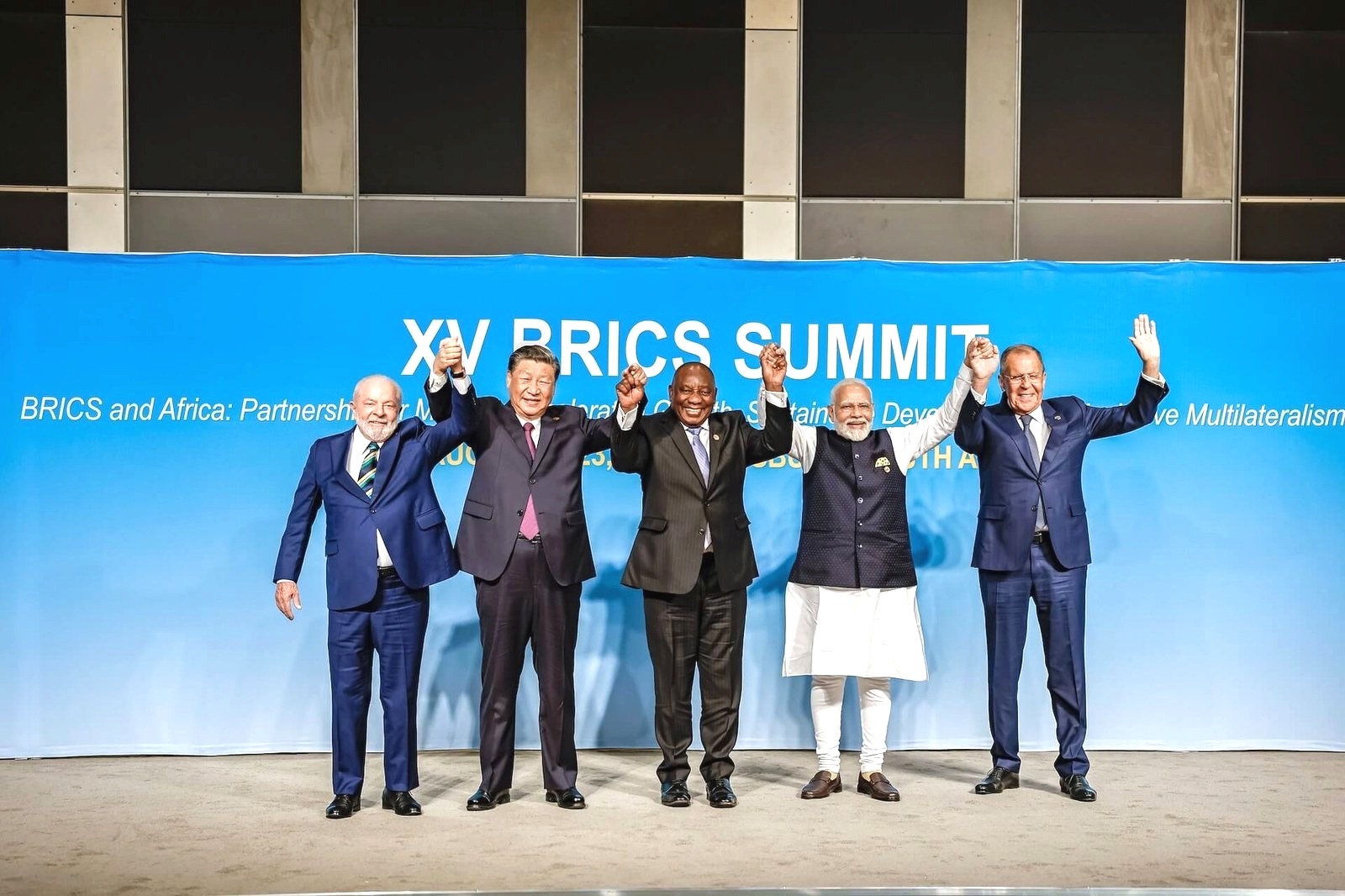
BRICS Summit In India; What To Expect? PART 1

New Delhi; March 2026: The 18th annual BRICS Summit will take place in India this year. Under India’s Presidency, the grouping is operating under the theme “Building for Resilience, Innovation, Cooperation, and Sustainability”, reflecting the people-centric and humanity-first vision outlined by Prime Minister Narendra Modi at the 2025 summit in Brazil.
This suggests that overt “dedollarisation” rhetoric is likely to remain muted at this year’s summit. Nevertheless, as highlighted in the organisation’s July 2025 communiqué, member states are expected to prioritise practical financial cooperation, including advancing discussions on the BRICS Cross-Border Payments Initiative, first launched at the 2024 summit in Russia, and expanding the use of domestic currencies in trade and settlement.
Reports suggest that the Reserve Bank of India has proposed including a discussion on the interoperability of BRICS central bank digital currencies (CBDCs) on the 2026 summit agenda. This builds on India’s ongoing efforts to advance cross-border CBDC integration, including its pilot bilateral initiative with the United Arab Emirates.
The BCBPI strategy encompasses three key projects:
| Project Name | Purpose | Example |
| BRICS Pay | Aims to interconnect domestic payment systems within BRICS member countries, currently in early stages of development. | A Brazilian traveller, with a rial-based bank account, pays directly in rubles at a shop in Russia using the BRICS Pay app |
| BRICS Clear | Proposes an alternative securities depository and settlement system to Western entities like the Depository Trust and Clearing Corporation and Euroclear, still in ideation phase. | A South African investor purchases Indian bonds, using BRICS Clear for depositing securities and settlement. |
| BRICS Bridge | Plans to leverage Distributed Ledger Technology (DLT) for wholesale currency transactions, potentially using multi-central bank digital currencies as back-end infrastructure, still in ideation phase. | An Indian enterprise pays a UAE business for oil shipments using the BRICS Bridge, where DLT/smart contracts automate the transfer of the digital rupee payment into digital ruble through commercial banks |
While these projects might offer efficiency and cost benefits to BRICS members, they would also enable them to settle transactions bypassing the US-led financial system. Therefore, the projects would provide mechanisms for countries such as Russia to evade sanctions, and others to evade secondary sanctions implications, inevitably diminishing the effectiveness of the US economic statecraft toolkit. Additionally, advancements in financial technology and payment infrastructure are now supporting the growing demand to “dedollarise” among BRICS members.
BRICS does not need to look far from inspiration –
FOR A MESSAGING MODEL — SPFS: Russia’s System for Transfer of Financial Messages (SPFS) was developed in 2014 as an alternative to the widely used SWIFT messaging system. By 2024, SPFS was connected to 550 organizations across twenty countries, including China, Kazakhstan, and Kyrgyzstan. In November 2024, the US Treasury emphasized the risks of sanctions evasion associated with SPFS. However, SPFS still lacks SWIFT’s international connectivity and continues to have operational limitations.
FOR A CLEARING SETTLEMENT AND MESSAGING MODEL — CIPS: China’s Cross-Border Interbank Payment System (CIPS), launched in 2015, combines messaging and settlement for cross-border renminbi payments. As of December 2025, CIPS has 193 Direct Participants and 1,573 Indirect Participants. In 2024, the annual business volume was over $26 trillion. CIPS continues to be a part of China’s effort to internationalize the renminbi, and could serve as a model for BRICS Clear.
FOR A DIGITAL CURRENCY MODEL — mBRIDGE: Project mBRIDGE is a cross-border digital payments network that connects Hong Kong, Thailand, the UAE, Saudi Arabia, and China through their central bank digital currencies (CBDCs). By November 2025, mBridge’s cumulative transaction volume had reached $55.49 billion, a dramatic increase from just $22 million in 2022. All founding BRICS members are piloting their CBDCs and they could leverage this project as a model for BRICS Bridge. In October 2024, Chinese state media stated that the new BRICS plan “is likely to draw on the lessons learned” from mBRIDGE.
While the 2025 BRICS communique mentions several financial mechanisms—including local currency financing through the New Development Bank and enhanced payment systems—the language emphasizes ongoing deliberations rather than implemented solutions.
These initiatives are still in formation phase and face challenges:
- Many in the BRICS bloc are now more focused on managing trade risks, negotiating deals, and therefore avoiding spotlighting any dedollarisation efforts. Since the 2024 summit, the member states’ public ambitions have been significantly lowered.
- Proposals continue to deliberately avoid elaborating on the specifics, including on currency management and technical developments. These discussions could generate disagreements between BRICS member states on economic terms, as they evaluate their exposure to volatile or isolated financial markets, and on political terms as countries will want to avoid encouraging the internationalization of a geostrategic rival’s currency.
- Inconsistency in the BRICS dedollarisation agenda is likely to persist, as the rotating presidency shifts priorities from year to year. Each presiding country brings its own strategic interests and economic sensitivities, with some member states being more cautious about significantly reducing ties with the United States and the dollar.
Team Maverick.

Prime Minister participates in Vivatech 2026
Prime Minister Shri Narendra Modi, accompanied by the President of France, H.E. Mr. Emmanu…
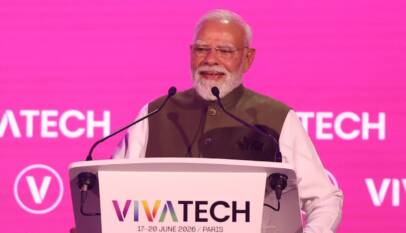
Prime Minister participates in Vivatech 2026
Prime Minister Shri Narendra Modi, accompanied by the President of France, H.E. Mr. Emmanual …