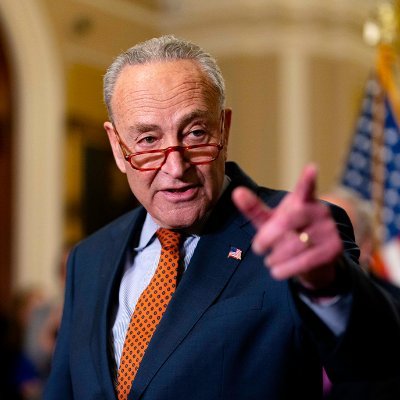
Schumer Slams Trump Over Iran Conflict, Says Americans Oppose War as Tensions Escalate

Washington, March 2026 : Senate Minority Leader Chuck Schumer on Thursday delivered a sharp criticism of Donald Trump over the escalating conflict with Iran, declaring that the American public does not want another war in the Middle East and accusing Senate Republicans of supporting what he described as the President’s “military escapades.”
Speaking on the Senate floor, the New York Democrat argued that voters across the political spectrum were increasingly uneasy about the growing military confrontation. According to Schumer, opposition to the conflict extends beyond party lines and includes Republicans, independents, and even members of Trump’s own political base.
“Americans don’t want war,” Schumer said during his address. “Not Republican voters, not independents, and not even many of President Trump’s MAGA supporters. People across the country feel deeply concerned about the direction in which this conflict is heading.”
Schumer further claimed that many Americans feel “betrayed” by what they see unfolding in the Middle East and by lawmakers who have not challenged the administration’s decisions. He argued that the Senate recently missed an important opportunity to assert oversight over the President’s military actions.
The Senate leader referred to a vote held earlier this week, stating that it represented a “disappointing and low moment” for the chamber. In his view, Senate Republicans chose to back the administration’s military strategy despite what he described as widespread public opposition to the war.
“With the conflict in the Middle East escalating day by day, Senate Republicans chose to support President Trump’s military actions rather than stand up for the will of the American people,” Schumer said.
He also warned that the conflict appears to be expanding beyond its original scope. According to Schumer, reports of military activity suggest that hostilities are spreading across a wider geographic region, raising concerns about a prolonged and more complicated confrontation.
“The war is widening,” Schumer said, pointing to reports of fighting extending as far south as the Indian Ocean and drone activity possibly reaching as far north as Azerbaijan. He argued that these developments highlight the risk of a broader regional conflict.
Another point of criticism raised by Schumer focused on what he described as inconsistent messaging from the administration regarding the objectives of the military campaign. He suggested that senior officials have offered varying explanations for the strategy and goals behind the operation.
“If you listen to different members of the administration, it becomes very clear that the rationale keeps shifting,” Schumer said, referring to comments by Pete Hegseth and Marco Rubio along with the President himself. “It appears they are making decisions as they go along without a clear strategy.”
Schumer also warned that the conflict is beginning to affect Americans domestically, particularly through rising fuel costs. He noted that gasoline prices have increased in recent days, a trend he attributed to growing instability in global energy markets linked to the conflict.
“Americans are worried,” Schumer said. “Gas prices are already higher than they were a week ago, and people are feeling the impact.”
Citing a report by the news outlet Politico, Schumer added that the White House was becoming increasingly concerned about the political fallout from rising energy prices. According to the report, White House Chief of Staff Susie Wiles had raised alarms internally about the potential impact of fuel costs on public opinion.
Schumer suggested that the administration was now attempting to shift the narrative surrounding the economic effects of the conflict.
“The White House appears to be scrambling to find something positive to say about gas prices in order to change the narrative,” he said.
He argued that the simplest way to address the issue would be to avoid escalating the conflict in the first place.
“If President Trump does not want gas prices to rise, then he should not have unilaterally started a war with Iran,” Schumer said.
Beyond the economic consequences, Schumer also accused the administration of failing to adequately plan for the long-term implications of military action. He argued that the decision-making process appeared rushed and lacked strategic foresight.
“This administration seems allergic to having a plan and thinking about the consequences ahead of time,” he said.
In his closing remarks, Schumer placed responsibility not only on the President but also on Senate Republicans who supported the administration’s approach. He said lawmakers had an opportunity to oppose the military campaign but chose not to do so.
“Senate Republicans had their chance to say no to this war,” Schumer said. “Instead, they supported it, and now they share responsibility for the consequences of this conflict just as much as the President does.”
The remarks underscore the growing political debate in Washington as tensions between the United States and Iran continue to intensify.
(The content of this article is sourced from a news agency and has not been edited by the Mavericknews30 team.)






Protect Her Tomorrow: Facts Every Family Should Know About Cancer Prevention
Scared about the HPV vaccination for your teenage daughter? Does it cause infertility? Bre…

Protect Her Tomorrow: Facts Every Family Should Know About Cancer Prevention
Scared about the HPV vaccination for your teenage daughter? Does it cause infertility? Breast …