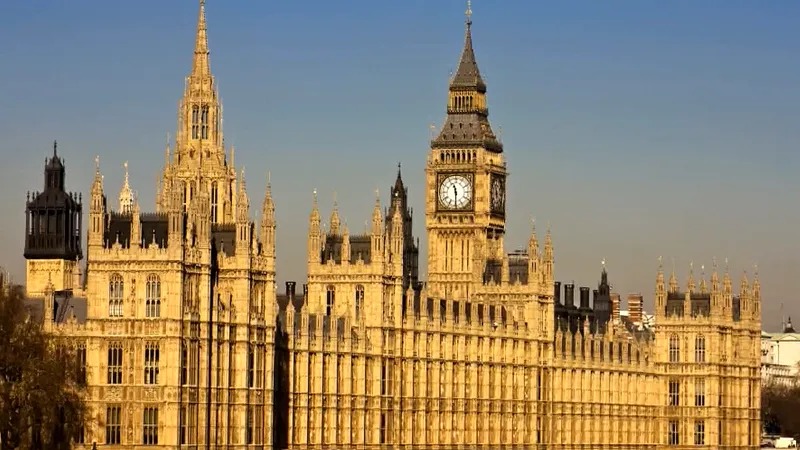
United Kingdom Parliament Members Asks Britain To Apologise Over Balfour Declaration.

London; March 2026: Approximately 45 members of the UK Parliament and House of Lords signed a letter urging Britain to issue a formal apology for the 1917 Balfour Declaration. The letter condemned the historical violations committed by Britain during its mandate in Palestine from 1917 to 1948.
Among the signatories were Liberal Democrat MP Layla Moran, Labour MP Nadia Whittome, and Green Party MP Carla Denyer. This move follows a petition submitted to the British government in September 2025 by Palestinian businessman Muneeb Al-Masri, calling for both an apology and reparations for Britain’s historical role in dispossessing Palestinians of their land.
BALFOUR DECLARATION –
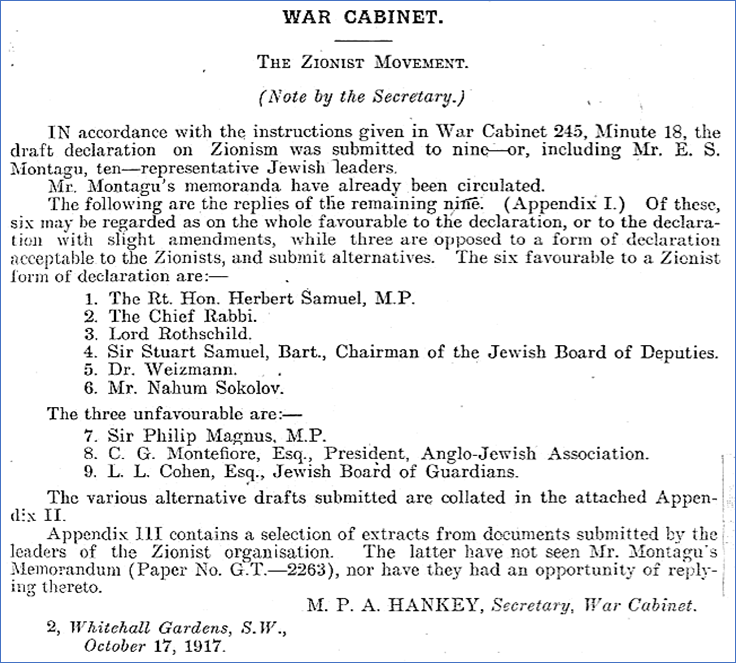
Following Britain’s declaration of war on the Ottoman Empire in November 1914, it began to consider the future of Palestine. Palestine was first discussed at British Cabinet level on 09th November 1914, just 04 days after the British Declaration of war. Within two months a memorandum was circulated to the War Cabinet by a Zionist member, Herbert Samuel, proposing the support of Zionist ambitions to enlist the support of Jews in the wider war.
By late 1917, the wider war had reached a stalemate, with two of Britain’s allies not fully engaged: the United States had yet to suffer a casualty, and the Russians were in the midst of a revolution. A stalemate in southern Palestine was broken by the Battle of Beersheba on 31st October 1917. The release of the final declaration was authorised on 31st October; the preceding Cabinet discussion had referenced perceived propaganda benefits amongst the worldwide Jewish community for the Allied war effort.
The Balfour Declaration was a public statement issued by the British Government in 1917 during the First World War announcing its support for the establishment of a “national home for the Jewish people” in Palestine, then an Ottoman region with a small minority Jewish population. The declaration was contained in a letter dated 02nd November 1917 from Arthur Balfour, the British foreign secretary, to Lord Rothschild, a leader of the British Jewish community, for transmission to the Zionist Federation of Great Britain and Ireland. The text of the declaration was published in the press on 09th November 1917.
The opening words of the declaration represented the first public expression of support for Zionism by a major political power. The term “national home” had no precedent in international law, and was intentionally vague as to whether a Jewish state was contemplated. The intended boundaries of Palestine were not specified, and the British government later confirmed that the words “in Palestine” meant that the Jewish national home was not intended to cover all of Palestine.
The second half of the declaration was added to satisfy opponents of the policy, who had claimed that it would otherwise prejudice the position of the local population of Palestine and encourage antisemitism worldwide by “stamping the Jews as strangers in their native lands”. The declaration called for safeguarding the civil and religious rights for the Palestinian Arabs, who composed the vast majority of the local population, and also the rights and political status of the Jewish communities in countries outside of Palestine. The declaration greatly increased popular support for Zionism within Jewish communities worldwide, and became a core component of the British Mandate for Palestine, the founding document of Mandatory Palestine. It indirectly led to the emergence of the State of Israel and is considered a principal cause of the ongoing Israeli–Palestinian conflict, often described as the most intractable in the world.
However, there are controversies which looms over a number of areas, such as whether the declaration contradicted earlier promises the British made to the Sharif of Mecca in the McMahon–Hussein correspondence. In 1939, the British government had acknowledged that the local population’s wishes and interests should have been taken into account, and had recognised much later in 2017 that the declaration should have called for the protection of the Palestinian Arabs’ political rights.
Early British political support for an increased Jewish presence in the region of Palestine was based upon geopolitical calculations. This support began in the early 1840s and was led by Lord Palmerston, following the occupation of Syria and Palestine by separatist Ottoman governor Muhammad Ali of Egypt. French influence had grown in Palestine and the wider Middle East, and its role as protector of the Catholic communities began to grow, just as Russian influence had grown as protector of the Eastern Orthodox in the same regions. This left Britain without a sphere of influence, and thus a need to find or create their own regional “protégés”. These political considerations were supported by a sympathetic evangelical Christian sentiment towards the “restoration of the Jews” to Palestine among elements of the mid-19th-century British political elite, most notably Lord Shaftesbury. The British Foreign Office actively encouraged Jewish emigration to Palestine, exemplified by Charles Henry Churchill’s 1841–1842 exhortations to Moses Montefiore, the leader of the British Jewish community.
Although other factors played their part, Jonathan Schneer [American historian; professor emeritus at the Georgia Institute of Technology] says that stereotypical thinking by British officials about Jews also played a role in the decision to issue the Declaration. Robert Cecil, Hugh O’Bierne and Sir Mark Sykes all held an unrealistic view of “world Jewry”, the former writing “I do not think it is possible to exaggerate the international power of the Jews”.
Zionist representatives saw advantage in encouraging such views. James Renton concurs, writing that the British foreign policy elite, including Prime Minister David Lloyd George and Foreign Secretary A.J. Balfour, believed that Jews possessed real and significant power that could be of use to them in the war.
Drafting Of Balfour Declaration –
The agreed version of the declaration, a single sentence of just 67 words, was sent on 02nd November 1917 in a short letter from Balfour to Walter Rothschild, for transmission to the Zionist Federation of Great Britain and Ireland. The declaration contained four clauses, of which the first two promised to support “the establishment in Palestine of a national home for the Jewish people”, followed by two “safeguard clauses” with respect to “the civil and religious rights of existing non-Jewish communities in Palestine”, and “the rights and political status enjoyed by Jews in any other country”.
The term “national home” was intentionally ambiguous; According to historian Norman Rose, the chief architects of the declaration contemplated that a Jewish State would emerge in time while the Palestine Royal Commission concluded that the wording was “the outcome of a compromise between those Ministers who contemplated the ultimate establishment of a Jewish State and those who did not”.
| List of known drafts of the Balfour Declaration, showing changes between each draft | ||
| Draft | Text | Changes |
| Preliminary Zionist draft July 1917 | His Majesty’s Government, after considering the aims of the Zionist Organization, accepts the principle of recognizing Palestine as the National Home of the Jewish people and the right of the Jewish people to build up its national life in Palestine under a protection to be established at the conclusion of peace following upon the successful issue of the War. His Majesty’s Government regards as essential for the realization of this principle the grant of internal autonomy to the Jewish nationality in Palestine, freedom of immigration for Jews, and the establishment of a Jewish National Colonizing Corporation for the resettlement and economic development of the country. The conditions and forms of the internal autonomy and a Charter for the Jewish National Colonizing Corporation should, in the view of His Majesty’s Government, be elaborated in detail and determined with the representatives of the Zionist Organization. | |
| Lord Rothschild draft 12th July 1917 | His Majesty’s Government accepts the principle that Palestine should be reconstituted as the national home of the Jewish people. His Majesty’s Government will use its best endeavours to secure the achievement of this object and will discuss the necessary methods and means with the Zionist Organisation. | His Majesty’s Government [*] accepts the principle of recognizing that Palestine should be reconstituted as the national home of the Jewish people. [*] [* Text Deleted] His Majesty’s Government [*][* Text Deleted] will use its best endeavours to secure the achievement of this object and will discuss the necessary methods and means with the Zionist Organisation. |
| Balfour draft Mid-August 1917 | His Majesty’s Government accepts the principle that Palestine should be reconstituted as the national home of the Jewish people and will use their best endeavours to secure the achievement of this object and will be ready to consider any suggestions on the subject which the Zionist Organisation may desire to lay before them | 1. His Majesty’s Government accepts the principle that Palestine should be reconstituted as the national home of the Jewish people. 2. |
| Milner draft Late August 1917 | His Majesty’s Government accepts the principle that every opportunity should be afforded for the establishment of a home for the Jewish people in Palestine and will use its best endeavours to facilitate the achievement of this object and will be ready to consider any suggestions on the subject which the Zionist organisations may desire to lay before them. | His Majesty’s Government accepts the principle that |
| Milner–Amery draft 04th October 1917 | His Majesty’s Government views with favour the establishment in Palestine of a national home for the Jewish race, and will use its best endeavours to facilitate the achievement of this object, it being clearly understood that nothing shall be done which may prejudice the civil and religious rights of existing non-Jewish communities in Palestine or the rights and political status enjoyed in any other country by such Jews who are fully contented with their existing nationality. | His Majesty’s Government |
Suvro Sanyal – Team Maverick.

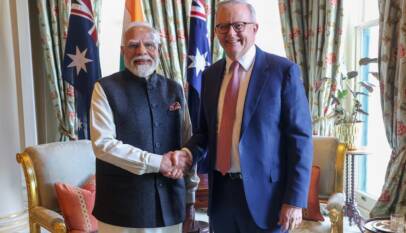






PM Modi, Australian Opposition Leader Angus Taylor Reaffirm Bipartisan Commitment to Stronger India-Australia Ties
Melbourne, July 2026 : Prime Minister Narendra Modi on Friday met Australian Opposition Le…

PM Modi, Australian Opposition Leader Angus Taylor Reaffirm Bipartisan Commitment to Stronger India-Australia Ties
Melbourne, July 2026 : Prime Minister Narendra Modi on Friday met Australian Opposition Leader …