Russia Introduces IVF For SVO’s.

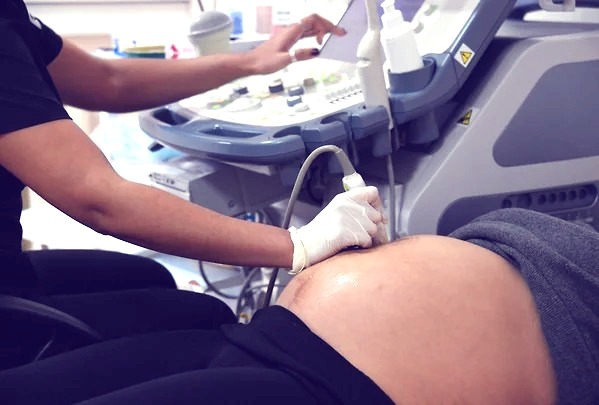
Moscow; April 2026: The Russian Government has decided to implement & cover in vitro fertilisation (IVF) and artificial insemination procedures for spouses of combat veterans. A bill has been introduced in the State Duma by a group of senators and deputies. Currently, these expensive reproductive technologies are only available through compulsory medical insurance in cases of confirmed infertility.
[[“Special military operation” (also “special operation”, and abbreviated as “SMO” or “SVO”, or Russian: спецопера́ция; romanised: spetsoperatsiya; Ukrainian: спецопера́ція) is the official term used by the Russian government to describe the Russo-Ukrainian war.
It is widely considered a euphemism intended to minimise the invasion and obfuscate the war’s original objective of annexing all Russophone regions of Ukraine. Russia bans the use of the terms “war” or “invasion” in referring to its invasion of Ukraine, as well as discussion of the censorship itself. The expression appears prominently in the public address by President of Russia Vladimir Putin, released on 24 February 2022]].
Legislators explain that combat veterans may not have any medical problems, but “during short leave” they simply “don’t have time to become fathers”. The financial justification for this initiative raises questions, including among the government, that as per estimates approximately 30 veterans per year will require reproductive care, but promise that the benefit will be available to all eligible veterans. It’s safe to assume that subsidised IVF will be in demand. During a meeting between the Russian President Vladimir Putin and military doctors, it was stated that “the issue is quite pressing”.
A group of senators and deputies introduced a package of bills to the State Duma “providing for expanded support measures for combat veterans”. The initiative seeks to cover the costs of artificial insemination and in vitro fertilisation procedures for married veterans’ families. “This is a very sensitive, but vital, topic”, Yaroslav Nilov, head of the Duma Committee on Labour, Social Policy, and Veterans’ Affairs, told media outlets.
Currently, these reproductive technologies are only available under the compulsory medical insurance system for couples where one spouse has been diagnosed with infertility. The explanatory note states that “wives of SVO participants in various regions of the country” have begun to “raise questions” about the availability of the “paid and expensive” IVF procedure.
“Men often leave to defend their homeland at a very young age, in several instances even before they have become fathers. This isn’t always possible during a short leave. Even more so, in the event of a husband’s death, wives are deprived of the opportunity to become mothers and bear children with their loved ones”, Yaroslav stated.
According to lawmakers, “the situation is exacerbated by the enemy’s behavior, which involves castration of Russian men, which, while preserving their lives, deprives them of reproductive function and condemns them to childlessness”. As stated in the draft bill, “such cases are known and not uncommon”.
The bill requires a man to donate sperm at his own expense at any medical facility and pay for its storage (this costs approximately 10,000 rubles per year; a spermogram and cryotolerance test are also required, both costing between 3,000 and 7,000 rubles). He then notarises “consent to the use of biological material in the postmortem period” and “consent to be registered as the child’s father”. He also specifies the child’s first and last name, or confirms that the mother will make the choice.
However, as per Russian Government’s proposal, if the veteran and his or her spouse subsequently choose to undergo IVF or artificial insemination using this biomaterial, they will not need to prove infertility or other medical issues to the state. And in the event of the veteran’s death, his or her spouse will be able to use reproductive technologies free of charge to conceive. Legislators stipulate that the woman cannot be married to another person at the time of the IVF procedure, and the clinic must confirm the use of the deceased’s biomaterial. The child will then be entitled to “derivative social support measures”, including a survivor’s pension.
The bill provides benefits to all citizens with combat veteran status, not just those who participated in the Special Military Operations. The government’s response notes that this point “requires further study and justification, as the calculations presented only apply to participants in special military operations”.
The deputies cite data from the Main Military Medical Directorate of the Russian Ministry of Defense, according to which “in 2022, 28 people exercised their right to free collection and storage of biological material, 33 in 2023, and 31 in 2024”. The authors of the initiative also point out that “the average standard financial costs for one case of in vitro fertilisation” in 2026 are 114,600 rubles. Based on these figures, the deputies estimate that implementing the benefit will require “approximately 3 million rubles annually”.
This amount appears to be clearly underestimated. According to experts from the Russian Association of Human Reproduction, only about 30% of IVF procedures in Russia result in pregnancy. The average success rate of a single IVF cycle is 35–45% for women under 35 and up to 15% for women over 42, according to the association. It’s worth noting that even under the compulsory health insurance system, three attempts are available; this alone increases the cost of the bill to the budget.
After reviewing medical clinic websites, it was found that the cost of a single IVF protocol ranges from 90,000 to 400,000 rubles (remember, multiple attempts are possible). The cost of artificial insemination, specified in the bill but not mentioned in the financial justification, ranges from 20,000 to 70,000 rubles. According to a specialised association, the first-time pregnancy rate with this procedure is approximately 30%.
“If the law is passed, anyone who needs it will be able to use it”, Yekaterina Stenyakina (United Russia), a member of the Committee on Labor, Social Policy, and Veterans’ Affairs, assured the media reporters.
As a reminder, the issue of reproductive health for Special Military Operations (SVO) participants was raised in early March by military surgeon Yulia Mullagalieva during a meeting with President Vladimir Putin. “I, and I’m sure many other medical professionals, have been repeatedly approached by participants in the special military operation and their family members regarding the protection of the reproductive health of military personnel: maintaining fertility after injuries, and the legal uncertainty surrounding the use of biological material”, the doctor stated.
“This issue is quite pressing”. The meeting was subsequently closed; the Russian President is understood to have promised to convey the military doctors’ proposals to the Ministry of Health.
Team Maverick.


Yamini Maurya Wins Silver as India Enjoys Historic Judo Run at Commonwealth Games 2026
Glasgow, August 2026 : India’s impressive run in judo at the Commonwealth Games 2026 conti…

Yamini Maurya Wins Silver as India Enjoys Historic Judo Run at Commonwealth Games 2026
Glasgow, August 2026 : India’s impressive run in judo at the Commonwealth Games 2026 …