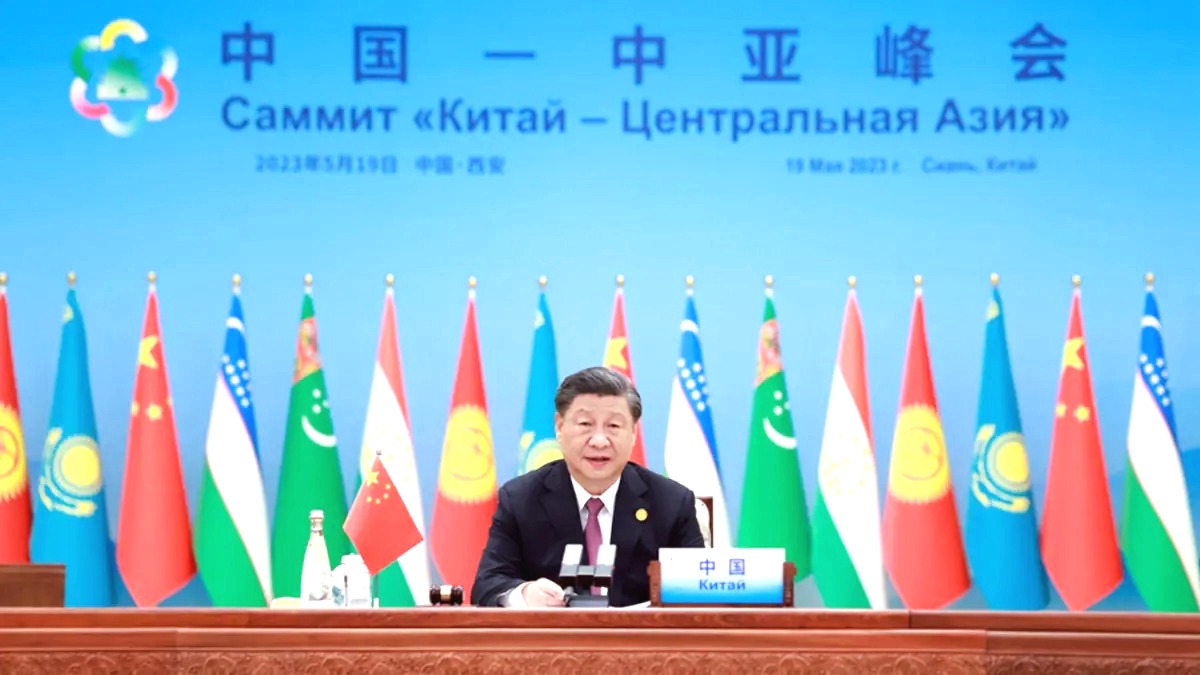
Will The War Drive Central Asia Further Towards China?

April 2026: The Russian invasion of Ukraine and subsequent sanctions highlighted the risks of using transportation routes traversing Russia. This was the impetus behind the Middle Corridor, which is a transportation route from China to Europe through Central Asia and the South Caucasus. Now the war in Iran has brought maritime chokepoints into sharp focus. About 20% of the world’s oil and gas moves through the Strait of Hormuz, along with most cargo heading into and out of the Gulf States. Iran is also a pivotal transit route for land transportation out of Central Asia.
As countries seek to diversify supply sources and build resilience into transportation routes, attention has turned to Central Asia. The opportunity is greater than merely monetizing the region’s natural resources and its importance as a through-road for global supply chains. As countries on the periphery of the landmass seek to de-risk their supply chains, Central Asia could benefit from trade, investment, and manufacturing outsourcing from China, Europe, South Asia, the Gulf, and Russia. The risk is that as great powers seek to immunize themselves from geoeconomics risk, they pursue levels of influence that enable them to bend other countries to their will, even if such actions are detrimental to those countries’ national interests.
The age of hyper-globalisation largely left Central Asia untouched. In a world built around efficiency and just-in-time delivery, the maritime nations of Southeast Asia and East Asia became heavily embedded in global supply chains, while the countries of Central Asia did not. However, in recent years, the abundance of natural resources to be found in the heart of the Eurasian landmass has caught the eye of great powers. Increasing thirst for energy and the transition to electric transportation and renewable energy are fueling the demand for a range of critical minerals, many of which can be found in Central Asia. In addition, if denied access to the region’s resources, the next best option may be to ensure competitors do not access them either. Connectivity with Central Asia is therefore becoming highly politicised and volatile.
It is now four years since the Russian full-scale invasion of Ukraine. Russian trade has been reoriented away from Europe and toward China at discounted prices. During this period, the Russian economy has been on a war footing, and sanctions have significantly reduced its ability to earn foreign exchange. One might therefore expect this to have created something of a power vacuum in Central Asia, where Russia has historically been the dominant trading partner and a major source of foreign investment.
China has been running very large current account surpluses, even by its own standards, during the duration of the war. By definition, such surpluses entail net overseas investment, and China has been focusing on developing investment ties with the Global South and its near abroad. These facts strongly suggest that China is filling the vacuum created by Russia’s enforced withdrawal.
At the end of 2021, the European Union (EU) announced its “Global Gateway” project, a EUR 300 billion (US$345 billion) equivalent to China’s Belt and Road Initiative. It has also expressed a strong desire to cultivate deeper economic ties with Central Asia and the Caucasus. In particular, the EU has signaled its intention to develop the Middle Corridor, a transcontinental trade route that touches neither Russia nor Iran. Furthermore, the United States has taken a much more structured approach to economic engagement with Central Asia and the Caucasus since 2021. This has been driven by Russia’s invasion of Ukraine, China’s deepening economic presence, and Washington’s desire to diversify supply chains and secure supplies of critical minerals.
Central Asia and the Caucasus have, therefore, become something of a petri dish for observing how a multipolar world might evolve. In addition to Russia, China, the EU, and the United States, Türkiye, Iran, and India all view the region as strategically important. The region is rich not only in hydrocarbons but also in critical minerals that are fundamental to the Fourth Industrial Revolution. Against this backdrop of a highly politicised international economy, trade patterns are being reshaped.
Team Maverick.



AAIB Interim Statement on the Progress of Investigation into the Accident Involving Air India Flight AI-171
Today marks one year since the tragic accident involving Air India Flight AI-171, a Boeing…
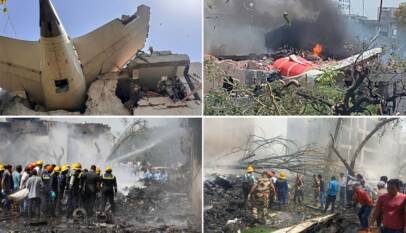
AAIB Interim Statement on the Progress of Investigation into the Accident Involving Air India Flight AI-171
Today marks one year since the tragic accident involving Air India Flight AI-171, a …