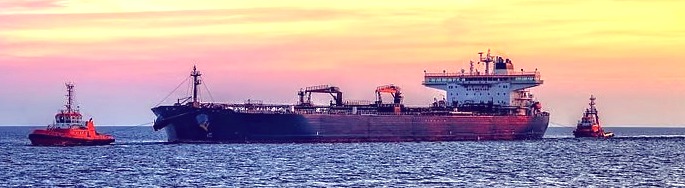
Jones Act Waiver Has Little Impact On US Domestic Oil Supply But Fuel Exports Soar.

Washington DC; April 2026: US President Donald Trump’s move – in waiving Jones Act Limitations for 60 days, starting March 17th, alongside allowing foreign-flagged cargo ships to move fuel and other goods between domestic ports, hoping the move would help tame the surge in fuel prices caused by the Iran war by increasing shipments from the US Gulf Coast to other coastal markets in the country – has so far had little impact on American oil supply, according to trade data and analysts who noted that US refiners and shippers are earning more profits sending fuel overseas.
So far, however, shipping data shows the move has not boosted US oil flows between domestic ports. Instead, US fuel exports hit a record high last month, as refiners shipped more fuel from the US Gulf Coast to Asia and Europe, and even reversed traditional flows to export from the US East Coast to Europe.
The Jones Act limits movements of goods between US ports to US-flagged vessels only. Low availability of such vessels was partly blamed for high fuel prices in California, Hawaii, and other US markets that lack pipeline connections to US Gulf Coast refiners. Crude oil, refined products, biofuels and liquid chemicals shipments between US ports were virtually unchanged in March from February, at about 1.37 million barrels per day (BPD), Kpler data showed. Liquids exports from the US Gulf Coast to other US coastal markets declined to 770,000 bpd in March, from 826,000 bpd in February, the Kpler data showed.
Asian and European oil markets have been hit hardest by the Middle East war, as Iran’s blockade of the Strait of Hormuz has cut off refiners in those continents from their regular crude and fuel exporters. As a result, US refiners are reaping better margins sending fuel abroad than sending it within US markets.
European gasoil futures, used to price diesel in the region, traded north of $200 a barrel on Monday, compared to US ultra-low sulphur diesel futures, the US pricing benchmark, at under $185.
“With incredible arbitrage opportunities involving various continents, I’m not sure when there might be a few vessels that could, say, bring Gulf Coast product to the Northeast. We are not seeing any real response or results due to the Jones Act waiver because all freight, whether via US flagged vessels or foreign flagged vessels have skyrocketed at the end of March”, said Tom Kloza, chief energy adviser to Gulf Oil.
In addition to better prices for refiners, ship owners are also earning more sending vessels on longer journeys from the US to Asia. Asian refiners have been bidding up for vessels in the Atlantic Basin so that they can use them to import more US crude to replace the Middle East supply they have lost. This has tightened the US Gulf Coast tanker market and sent freight rates skyrocketing.
Jones Act –
The Jones Act, also known as the Merchant Marine Act of 1920, is a federal statute establishing support for the development and maintenance of a merchant marine in order to support commercial activity and serve as a naval auxiliary in times of war or national emergency (see 46 USC § 50101).
The statute, among other things, requires shipping between U.S. ports to be conducted by US-flag ships. (46 USC § 50102.)
The statute (46 U.S.C. § 30104) also extends the Federal Employer’s Liability Act (FELA) to seamen. The Act enables seamen who have been injured at sea during the course of their employment to bring a personal injury action against their employers.
Under the Jones Act, the plaintiff may bring an action in federal district court or in state court. The defendant is not entitled to remove the case from a state court to federal court. Although maritime law generally does not afford the plaintiffs the right to a jury trial, the Jones Act grants plaintiffs that right in personal injury actions.
46 U.S.C. § 30104 reads: “A seaman injured in the course of employment or, if the seaman dies from the injury, the personal representative of the seaman may elect to bring a civil action at law, with the right of trial by jury, against the employer. Laws of the United States regulating recovery for personal injury to, or death of, a railway employee apply to an action under this section”.
Team Maverick.






FIFA Chief Infantino Hails Messi’s ‘Timeless Brilliance’ After Record-Equalling World Cup Feat
New Delhi, June 2026 : FIFA President Gianni Infantino has showered praise on Lionel Messi…

FIFA Chief Infantino Hails Messi’s ‘Timeless Brilliance’ After Record-Equalling World Cup Feat
New Delhi, June 2026 : FIFA President Gianni Infantino has showered praise on Lionel …