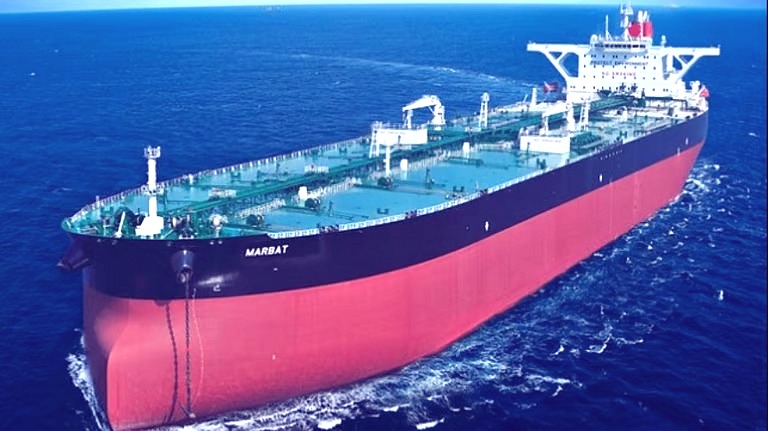
South Korea To Secure Oil From Kazakhstan, Oman, And Saudi Arabia.

Seoul; April 2026: South Korean presidential chief of staff Kang Hoon-sik said today that he would travel to Kazakhstan, Oman and Saudi Arabia to secure supplies of crude oil and naphtha amid disruptions to shipping through the Strait of Hormuz. Kang is due to depart later today as President Lee Jae Myung’s special envoy to hold talks with governments, energy firms and ship operators to ensure cargoes reach domestic ports and to support stable supplies of key goods, including medical products, he said.
South Korea urgently needed to diversify supply lines as the country relied on the Hormuz route for about 61% of its crude oil and 54% of its naphtha imports, he told a press briefing at the presidential Blue House. Kang said shipments of crude oil and naphtha secured last month from the United Arab Emirates under a 24 million barrels supply deal had already started arriving at South Korean ports.
24 Million Barrels Supply Deal: Earlier, on 01st April, 2026, South Korea’s industry ministry have said that the country is on track to receive delivery of the combined 24 million barrels of crude oil that the United Arab Emirates pledged to export to South Korea since the Middle East crisis began.
Of the initial 06 million barrels announced on March 6, unloading of 02 million barrels began on March 30, with another 02 million barrels due to arrive in early-to-mid-April. A further 02 million barrels held in joint storage in South Korea have already been delivered to domestic refiners, the ministry said.
An additional 02 million barrels secured through a joint stockpiling agreement with Abu Dhabi National Oil Company (ADNOC) were unloaded at the Korea National Oil Corporation’s Yeosu storage terminal on March 25. A further 02 million barrels contracted with private refiners were loaded on March 29 after a UAE port partially resumed operations after being struck, with arrival in South Korea expected in mid-April. This leaves 14 million barrels still to be accounted for. South Korea says it has received assurances from the UAE that it will be given “top priority” in crude supply, with remaining volumes to follow on a rolling basis.
While the UAE deal had been aimed at easing short-term supply concerns, Kang said his latest trip was focused on securing longer-term supplies, according to local media. The government was also working with international partners to ensure the safe passage of 26 South Korean-flagged vessels currently waiting inside the Strait of Hormuz, he said. Kang has urged households and businesses to actively take part in energy-saving measures to help the country weather tight supply conditions.
Separately, presidential policy adviser Kim Yong-beom said South Korea had secured about four months’ worth of helium supplies for the semiconductor industry, local media reported. Helium, critical for industries such as semiconductors, is a by-product of liquefied natural gas processing.
South Korea has scrambled to diversify its energy sources in recent weeks, as it imports about 70% of its crude oil from the Middle East, leaving the country highly exposed to supply disruptions and sharp price swings.
Yang Ki-wook, director general of the Office of Industry, Trade and Resource Security at the trade ministry, said in a press briefing on Tuesday the government had secured 110 million barrels of alternative crude oil supplies for April and May through 17 countries including Saudi Arabia and the US.
That includes 50 million barrels for April and 60 million barrels for May sourced from countries that also include Brazil, Australia, Congo, Gabon and Canada, said Yang. This would bring alternative supplies available to about 60 per cent of typical April demand and 70% for May 2026, he said, citing ministry data. Yang said operating rates at local refineries had fallen by 10% on average across the industry since the Iran war broke out. Domestic supplies of naphtha had dipped by around 10% to 20%, he noted.
Meanwhile, bolstering South Korean aspirations – Kazakhstan’s energy ministry said today that oil shipments via the Caspian Pipeline Consortium were stable after Russia’s military accused Ukraine of damaging loading facilities belonging to the group in the Black Sea.
Russia’s Defence Ministry said yesterday (06th April) that Ukraine had attacked facilities at the maritime transhipment complex in the port of Novorossiysk overnight, damaging a mooring point for the CPC and igniting fires at four oil product reservoirs.
“The work of our oil sector is stable and CPC exports continue to be stable” Sungat Yesimkhanov, Kazakhstan’s deputy energy minister, told reporters. The CPC terminal, located to the south-west of Novorossiysk, handles 80 per cent of Kazakhstan’s crude exports. Supply volumes via the Tengiz-Novorosiysk pipeline rose last year to 70.5 million tons (1.53 million barrels per day), from 63 million tons in 2024. CPC shareholders include US majors Chevron and Exxon Mobil.
Team Maverick.





Shivakumar Meets Sonia, Rahul and Priyanka Gandhi Amid Karnataka Cabinet Discontent
New Delhi, June 2026 : Karnataka Chief Minister D.K. Shivakumar on Wednesday met senior Co…

Shivakumar Meets Sonia, Rahul and Priyanka Gandhi Amid Karnataka Cabinet Discontent
New Delhi, June 2026 : Karnataka Chief Minister D.K. Shivakumar on Wednesday met senior …