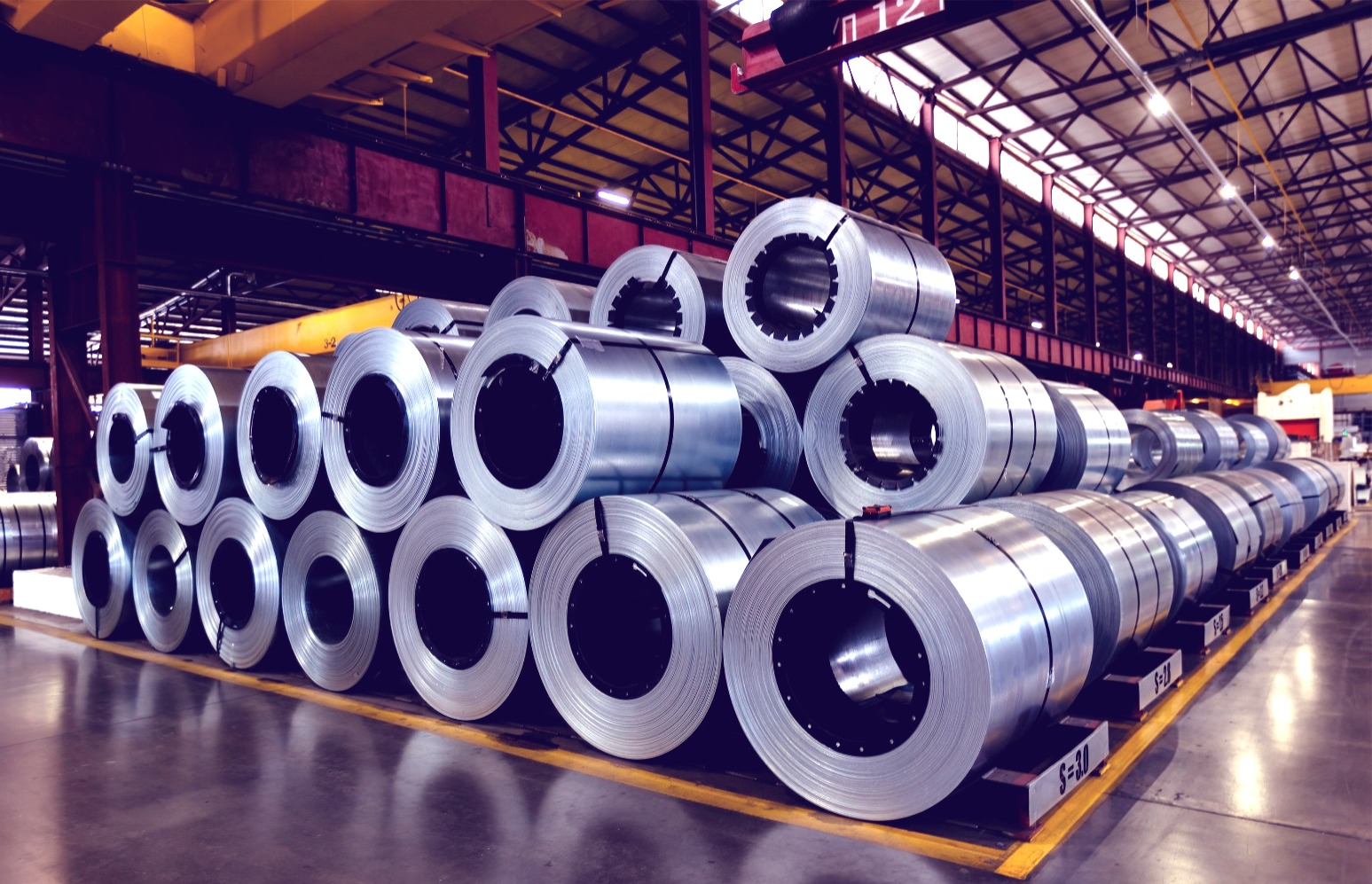
European Union Auditors Have Questioned The Set-Up And Impact Of The Temporary Decarbonisation Fund.

Luxembourg; April 2026: In an opinion published today, the European Court of Auditors (ECA) has highlighted several weaknesses in the Temporary Decarbonisation Fund recently proposed by the European Commission. The Fund is designed to provide financial support for European companies at risk of carbon leakage, while preserving the EU’s decarbonisation efforts. The Temporary Decarbonisation Fund was proposed by the Commission in December 2025 to support European Union based companies in carbon-intensive sectors whose production may be at risk of relocation outside the EU.
The Temporary Decarbonisation Fund aims to provide financial support for the fertiliser, aluminium, and iron and steel sectors until a long-term solution for carbon leakage is found, with a clear proposal that the fund would be financed by the sale of Carbon Border Adjustment Mechanism (CBAM) certificates to importers of carbon-intensive goods in 2026 and 2027. Member states, those which collect the proceeds from the sale of CBAM certificates, will be required to transfer 25% of the revenue for these two years to the Fund.
The Union is committed to achieving climate neutrality by 2050 and reducing net greenhouse gas emissions by at least 55% by 2030, in line with the European Green Deal and the European Climate Law. The Clean Industrial Deal, as set out in the Commission Communication of 26 February 2025, underscores the need to align industrial competitiveness with climate ambition, ensuring that the transition to a climate-neutral economy is both just and economically resilient.
Revenues generated from the sales of CBAM certificates pursuant to Regulation (EU) 2023/956 will be collected by Member States. As part of its proposal for a new Own Resources Decision, the Commission has proposed for the next Multiannual Financial Framework 2028-2034 that 75% of the revenue from the sale of CBAM certificates should accrue to the EU budget as an own resource. In order to ensure the necessary funding, the Fund should be financed from the remaining 25% of the revenues from
the sale of certificates, which should constitute external assigned revenue for the purpose of covering the commitments to pay financial support to final beneficiaries of the Fund, and the Commission’s administrative costs to be incurred in managing the Fund. It is necessary to provide for a derogation from Article 21(5) of Regulation (EU, Euratom) 2024/2509 of the European Parliament and of the Council to allocate to the Fund the appropriate share of the revenue generated from the sale of CBAM
certificates pursuant to Regulation (EU) 2023/956 as external assigned revenue.
The Fund’s resources should only be used to cover the commitments to pay financial support to the final beneficiaries and the administrative costs of the Fund. Any unused revenue should be returned to the Member States in proportion to their contribution to the Fund. For this purpose, it is necessary to provide for a derogation from Article 12(4), point (c), of Regulation (EU, Euratom) 2024/2509.
The Fund should provide financial support in the years 2028 and 2029 to the final beneficiaries to address their exposure to the remaining risk of carbon leakage, determinable based on the two-year production reference period 2026–2027. Given the need to ensure continuity of decarbonisation efforts and address the remaining risks of carbon leakage and the fact that CBAM revenue will only become available in 2028, it is appropriate to allow support under this Regulation to cover actions before the entry into force of this Regulation, in accordance with Article 3(2) of Regulation 2024/2509. Such retroactive eligibility is strictly limited to actions that contribute to the environmental objectives of this Regulation.
The Fund should in particular contribute to the decarbonisation objective by providing support to operators of EU-ETS installations which produce goods exposed to the highest remaining risk of carbon leakage in the short term. Those goods should be selected taking into account both their emissions and carbon leakage exposure, using the approach followed to determine the carbon leakage list for the EU-ETS as a starting point and targeting the measure to those goods which remain most at risk of carbon leakage based on an objective indicator.
At present, the auditors have made the following main observations about the proposal:
- It is unclear how much new investment in decarbonisation the Fund will actually trigger. The conditions for receiving support from the proposed Fund are similar to those for obtaining the free EU Emissions Trading System (EU ETS) allowances in 2026 and 2027. The Commission has not assessed the impact of the limited number of new conditions on companies’ investments. In addition, as payments from the Fund will be based on historical production, they will not be directly supporting new investments in decarbonisation.
- Not all exemptions from the EU’s financial rules are justified or clear. The Commission has requested three exemptions (derogations) from the EU Financial Regulation. The auditors disagree with one of these requests, as it deviates from fundamental budgetary principles and alternative solutions do exist that are in line with the principle. As regards the exemption concerning the retroactive payment of support for companies, the auditors found that the proposal does not properly reflect the extent to which the exemption will be used.
- The assumptions underlying the proposal are uncertain. The Commission estimates the total revenue of the Fund to be €632 million, while total estimated expenditure is €265 million. This mismatch raises the question of whether the member states’ contribution to the Fund needs to 25 %. Moreover, both revenue and expenditure figures are subject to considerable uncertainty, as the future prices of EU ETS allowances and the sale of CBAM certificates are difficult to predict. As CBAM certificates are a new form of revenue, there is no historical data to guide projections.
- Some of the collected money will not be used for a year. Member states will be required to transfer CBAM revenues in two instalments – one in 2028 and the other in 2029 – but support payments will not begin until 2029. As a result, the Commission will make little use of the estimated €308 million expected in 2028, and the proposal does not specify how these assets will be managed. The auditors suggest that the member states should instead make a single transfer of the collected revenue in 2029.
- Using existing administrative structures is a positive feature. The auditors found that although the Fund is entirely new, it builds on existing administrative structures and reporting requirements for the free allocation of ETS allowances. This approach should entail a lower administrative burden for beneficiaries, and cost less.
Auditors Observations And Opinions –
Under Article 34 of the Regulation (EU, Euratom) 2024/2509 (the Financial Regulation) an ex-ante evaluation must be carried out when programmes and activities which entail significant spending are created. The Commission carried out this ex-ante evaluation in the form of a staff working document1, however, it was not published alongside the proposal, contrary to the usual practice.
- The Fund is a temporary solution with the objective of addressing risks of carbon leakage during the start of the phase-out of the free allocation of EU ETS allowances. It will apply only to production and CBAM certificate sales in 2026 and 2027, as a bridging solution for these two years (paragraphs 03-04).
- According to the Commission, the Fund was set up to support the efforts by companies to further decarbonise, thereby helping to address the risk of carbon leakage. The conditions for receiving support from the proposed Fund have been modelled on those for obtaining the EUETS free allowances in 2026 and 2027. The staff working document accompanying the proposal did not include an estimation of the additional investments in decarbonisation expected from establishing this Fund (paragraphs 17-19).
- New spending programmes, including the proposed Fund, must follow the rules set out in the Financial Regulation to ensure sound financial management. In this case, the Commission has requested three derogations from the Financial Regulation. We consider that:
In the first case, a derogation should not be used, as there are alternatives that can be followed within the provisions of the Financial Regulation.
In the second case, we consider that the derogation from the Financial Regulation is necessary.
In the third case, the proposed derogation is sufficiently justified; however, the wording does not properly reflect the extent to which the derogation will be used (paragraphs 20-27).
- The Commission estimates the total revenue of the Fund to amount to €632 million. Total expenditure is estimated to be €265 million. This mismatch raises doubts about the need to set the contribution share at 25 % of the member state revenue collected from the sale of the CBAM certificates. Estimated revenue and expenditure of the Fund are subject to great uncertainty, especially regarding the future pricing of EU ETS allowances and the scale of imports necessitating CBAM certificates. The member states will be required to transfer to the Fund the first portion of collected revenues already in 2028, while the payment will be disbursed in 2029. The proposal does not set out how the Commission will manage the collected revenue before it is disbursed (paragraphs 29-30).
- Although this is an entirely new fund, it builds on the existing administrative structures and reporting requirements for the free allocation of EU ETS allowances. This approach should contribute to a lower administrative burden to the beneficiaries and less cost for administering the Fund (paragraphs 31-32).
- Although the proposal plans for an entirely new fund, the application procedures for support from the Fund, as set out in Article 8(1) of the proposal, build on the existing administrative structures and reporting requirements for the free allocation of EU ETS allowances, both at member state and at Commission level, as set out in in the delegated and implementing. Regulations on the free allocation of emissions allowances. Beneficiaries will therefore not be required to use new channels for the financial support application procedure; growth in administrative costs will also be limited.
- The free allocation of allowances is determined at the level of installations or sub installations. The amount of support available from the Fund, however, is based on the production of individual goods within these installations. In some cases, in particular those concerning small companies, the available production data is not yet detailed enough to allow the precise amount of support to be provided from the Fund to be calculated. We note that the Commission should make use of the provisions of Article8(3) of the proposal to require further details to be included in the production data report.
Team Maverick.






Shivakumar Says Congress United, Assures Women Will Get Cabinet Berth
Bengaluru, Aug 2026 : Karnataka Chief Minister D.K. Shivakumar on Monday sought to dismiss…
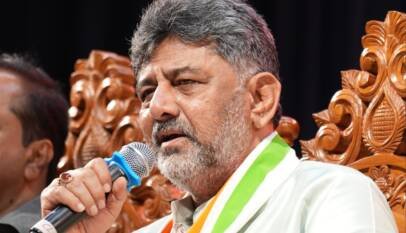
Shivakumar Says Congress United, Assures Women Will Get Cabinet Berth
Bengaluru, Aug 2026 : Karnataka Chief Minister D.K. Shivakumar on Monday sought to dismiss …