Cooperatives Create New Livelihood Pathways For Informal Workers In India.

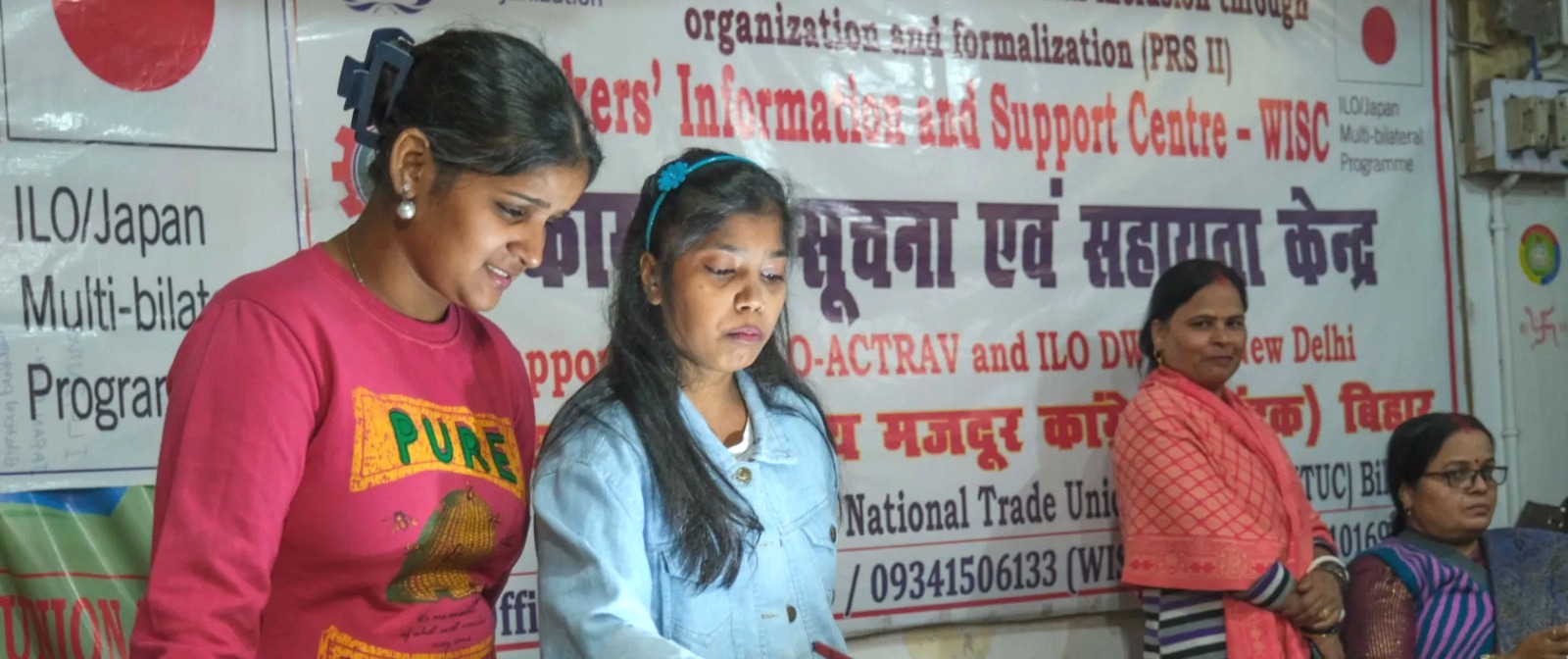
Patna; April 2026: The ILO’s Promoting Rights and Social Inclusion through Organization and Formalization (PRS) Phase 2 Project, in partnership with the Indian National Trade Union Congress (INTUC), brought together domestic and other informal workers to explore the cooperative approach to enterprise development. Domestic and other informal workers in Bihar State are gaining new opportunities to improve their livelihoods through a cooperative business model.
India’s labour market is highly informal, with around 83% of workers employed in the informal sector, particularly in rural areas and among self-employed and casual labourers. Many informal workers lack access to paid leave, written contracts, social security, and legal protections. Workers in domestic, sanitation, construction, and home-based sectors are among the most marginalized.
The Government of India has advanced formalisation through initiatives such as the e-Shram portal, National Social Assistance Programme (NSAP), Pradhan Mantri Shram Yogi Maandhan Yojana (PM-SYM) pension scheme, skill development programs, and sector-specific strategies and policies to support informal workers. India’s Decent Work Country Programme and its commitments under the UN Sustainable Development Cooperation (UNSDC) Framework further promote inclusive growth, social protection, and decent employment, providing a key pathway toward formalisation.
In this context, the PRS Project works closely with social partners and government to address decent work deficits and gender inequalities in the informal economy, promote formalisation, and strengthen partnerships and coordination among policymakers, employers organisations, and workers organisations to tackle informality and gender inequality.
The project supports the transition of informal economy workers from the construction, domestic work, sanitation sectors and economic units in the states of Bihar, Maharashtra, and Kerala to formality while reducing decent work deficits. Key objectives include:
- Strengthening the capacity of employers’ and workers’ organizations to promote formalization and gender equality.
- Enhancing partnerships and coordination among stakeholders to implement policy actions.
- Raising awareness among the public and stakeholders about the challenges faced by informal workers.
- Stronger institutional capacities, social dialogue, and the application of national laws and international labour standards.
The project was partnered by Ministry of Labour and Employment (MOLE), Ministry of Social Justice and Empowerment (MoSJE), National Safai Karamcharis Finance & Development Corporation (NSKFDC), Labour Departments of Bihar, Kerala, and Maharashtra, alongside Central trade unions at the national level and their state counterparts.
As the first initiative of its kind in the state, the ILO delivered the Think.CareCoop and Think.Coop training with active participation and support from officials of the Cooperative Department and the Labour Department of the Government of Bihar.
THINK COOP is an International Labour Organization (ILO) training methodology that builds the capacity of cooperative leaders and support organisations to establish, manage, and strengthen sustainable and inclusive cooperatives, while Think.CareCoop is a tailored adaptation specifically designed for care workers and the care economy.
The Think.Care Coop training took place in Patna on 18th – 19th November 2025 and the Think.Coop training took place in Gaya on 15th – 16th March 2026. A total of 22 women workers in Patna and 60 in Gaya, along with community leaders, participated in the events.
“The ILO’s PRS Phase II Project and INTUC are strengthening women’s agency and decent work for informal workers in Bihar by initiating a state-level cooperative through the first Think.CareCoop training, enabling collective bargaining and improved livelihoods”, said Chandra Prakash Singh, President, INTUC Bihar and National Vice-President.
Through interactive sessions, participants learned the cooperative models and developed ideas for member-owned enterprises. Proposed initiatives included collective care services for homes and offices to ensure fair wages and working conditions; community-based childcare services to reduce women’s unpaid care burden; and tiffin services offering affordable, nutritious meals. In addition to care services, participants also identified home-based enterprises such as bangle making, salon services, and tailoring to strengthen livelihoods of other informal workers and reduce reliance on intermediaries through a cooperative approach.
Team Maverick.
Good Governance and Citizen-Centric Administration Key to Viksit Rajasthan@2047: Chief Secretary V. Srinivas
Jaipur, April 2026 : Rajasthan Chief Secretary V. Srinivas said that good governance and c…
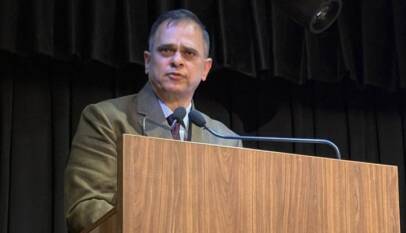
Good Governance and Citizen-Centric Administration Key to Viksit Rajasthan@2047: Chief Secretary V. Srinivas
Jaipur, April 2026 : Rajasthan Chief Secretary V. Srinivas said that good governance and …