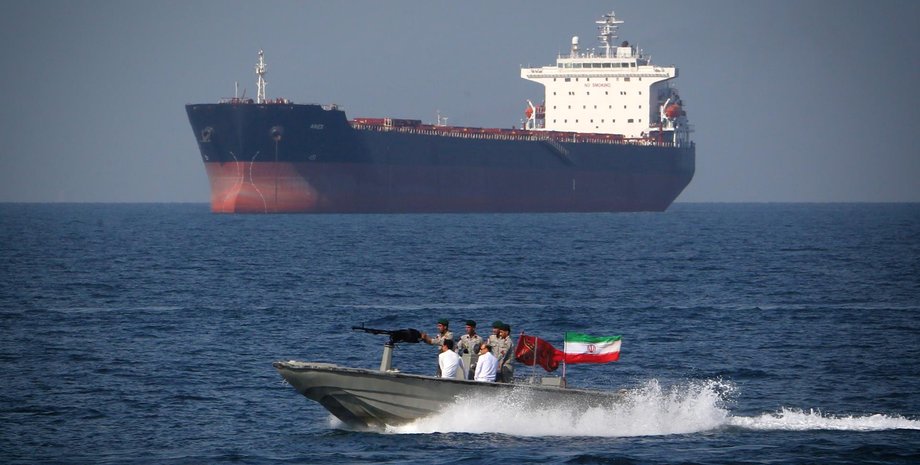
Iran Imposes New Controls in Strait of Hormuz, Escalating Maritime Standoff with US

May 2026 : Amid rising geopolitical tensions, Iran has introduced a new system to regulate ship movement through the strategically vital Strait of Hormuz, intensifying an already volatile maritime standoff involving the United States.
According to state media reports, all vessels intending to pass through the narrow waterway must now obtain prior approval from Iranian authorities via email. The move has been described by Tehran as a “sovereign governance system,” signalling its intent to assert tighter control over one of the world’s most critical shipping routes.
Under the new framework, ships will be required to submit operational details in advance and receive clearance before entering the strait. Iranian officials claim the system is designed to enhance oversight and security in the region, though critics view it as a significant escalation with potential global economic implications.
The development comes in the backdrop of heightened tensions since late February, when Iran announced restrictions on vessels linked to Israel and the United States following joint military strikes on Iranian territory. Tehran has since adopted a firmer stance, warning that certain ships may be denied safe passage altogether.
Adding to the uncertainty, Iran’s parliament is currently considering legislation that could formalise these restrictions. Proposed measures include banning vessels associated with Israel and the US, as well as introducing a toll system for ships deemed neutral or non-hostile. If implemented, such rules could fundamentally alter navigation norms in the region.
The situation has been further complicated by actions from Washington. The US has imposed its own restrictions on maritime activity involving Iranian ports, following unsuccessful negotiations with Tehran held in Islamabad in April. These diplomatic setbacks have contributed to the current standoff.
US President Donald Trump recently announced the launch of “Project Freedom,” a military-backed initiative to escort commercial vessels safely through the Strait of Hormuz. Describing the move as a humanitarian effort, Trump said it was aimed at ensuring uninterrupted global trade and protecting stranded ships.
Iran, however, has responded sharply. The Khatam al-Anbiya Central Headquarters, the country’s joint military command, issued a stern warning that any foreign military presence in the strait—particularly from the US—would be met with force if it attempted to enter or operate in the area.
The Strait of Hormuz remains one of the world’s most sensitive maritime chokepoints, handling a substantial share of global oil and gas shipments. Any disruption in its operations can have immediate consequences for international energy markets, shipping costs, and geopolitical stability.
As both sides harden their positions, the risk of further escalation looms large, raising concerns among global stakeholders about the security of this vital economic lifeline.







Habuild at 6: ‘We Are Not Just Teaching Yoga, We Are Helping Millions Build Lifelong Healthy Habits’
As Habuild celebrates six years of transforming lives through wellness, its founder reflec…

Habuild at 6: ‘We Are Not Just Teaching Yoga, We Are Helping Millions Build Lifelong Healthy Habits’
As Habuild celebrates six years of transforming lives through wellness, its founder reflects on …