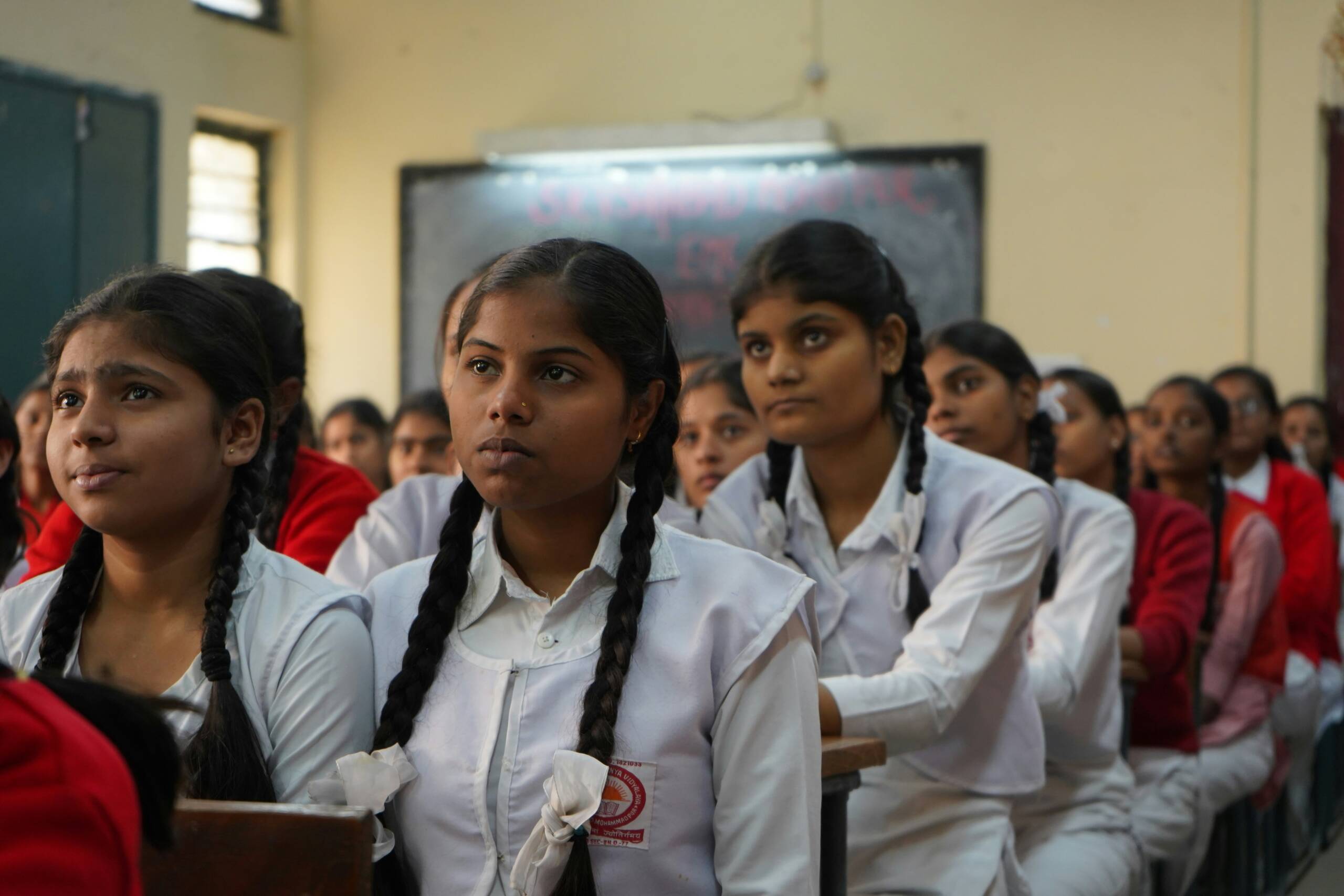
CBSE Makes Major Language Policy Shift: Class IX Students to Study Three Languages from July 1

New Delhi, May 2026: In a significant step aligned with the National Education Policy (NEP) 2020 and the National Curriculum Framework for School Education (NCF-SE) 2023, the Central Board of Secondary Education (CBSE) has introduced a new Scheme of Studies making it mandatory for Class IX students to study three languages starting July 1.
Adopting a transitional approach to align its curriculum with the revised NCERT syllabus, the Board issued a circular to all CBSE-affiliated school heads outlining the new language structure and implementation guidelines.
According to the circular dated May 15, students will now study three languages—R1, R2, and R3. Of these, at least two languages must be native Indian languages. CBSE clarified that students who wish to learn a foreign language may do so only as the third language (R3), and only if the first two languages are Indian languages. Alternatively, a foreign language can also be taken as an additional fourth subject.
To ease the transition and address the shortage of textbooks, the Board stated that until dedicated R3 textbooks are available, Class IX students will use Class VI R3 textbooks (2026–27 edition) of the chosen language.
In an important relief measure for students, CBSE has decided that no Board examination will be conducted for the R3 language at the Class X level. Instead, all assessments for R3 will be entirely school-based and internal. The performance in R3 will be reflected in the final CBSE certificate.
The Board also clarified that no student will be barred from appearing in Class X Board examinations due to performance in R3, ensuring that the additional language requirement does not create academic pressure.
CBSE further stated that sample question papers and assessment rubrics for internal evaluation will be released soon to guide schools and teachers.
Schools have been instructed to update their R3 language offerings for Classes VI to IX on the OASIS portal by June 30, 2026. They may choose any language from the CBSE-approved list, ensuring compliance with the requirement of at least two native Indian languages among the three.
Recognising possible challenges in implementation, especially the shortage of qualified language teachers, CBSE has allowed flexible arrangements. These include inter-school teacher sharing through Sahodaya clusters, hybrid teaching models, engagement of retired language teachers, and recruitment of qualified postgraduate language educators.
The Board also announced that Class VI R3 textbooks in 19 scheduled Indian languages will be made available to schools before July 1, 2026, to support smooth implementation.
Education experts see the move as part of a broader effort to strengthen linguistic diversity, promote Indian languages, and reduce overdependence on foreign language learning in early school education.
With this reform, CBSE aims to create a more inclusive and culturally rooted language education system while ensuring flexibility during the transition phase for schools and students alike.




Drones Revolutionising Modern Warfare, Reshaping Global Defence Strategies
New Delhi, July 2026 : Drones have emerged as one of the most transformative technologies …

Drones Revolutionising Modern Warfare, Reshaping Global Defence Strategies
New Delhi, July 2026 : Drones have emerged as one of the most transformative …