US Treasury Targets Hezbollah-Aligned Officials Obstructing Peace And Disarmament.

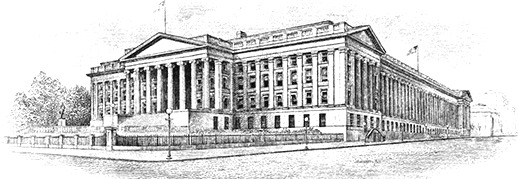
Washington DC: May 2026: Yesterday (21st May 2026), the US Department of the Treasury’s Office of Foreign Assets Control (OFAC) designated 09 individuals in Lebanon for obstructing the peace process in Lebanon and impeding the disarmament of Hezbollah. These Hezbollah-aligned officials include individuals embedded across Lebanon’s parliament, military, and security sectors, where they seek to preserve the Iran-backed terrorist group’s influence over key Lebanese state institutions. Hezbollah’s continued militant activity and coercive influence over the Lebanese state undermine the Lebanese government’s ability to assert its authority over state institutions and disarm the terrorist group.
“Hezbollah is a terrorist organization and must be fully disarmed”, said Secretary of the Treasury Scott Bessent. “Treasury will continue to take action against officials who have infiltrated the Lebanese government and are enabling Hezbollah to wage its senseless campaign of violence against the Lebanese people and obstruct lasting peace”.
Today’s action is being taken pursuant to the counterterrorism authority, Executive Order (E.O.) 13224, as amended. The US Department of State designated Hezbollah as a Specially Designated Global Terrorist (SDGT) pursuant to E.O. 13224 on October 31, 2001, and as a Foreign Terrorist Organization pursuant to section 219 of the Immigration and Nationality Act on October 8, 1997.
HEZBOLLAH POLITICAL REPRESENTATIVES
Hezbollah relies on a network of political representatives, including members of parliament, to advance the group’s interests and defy the government’s legitimate calls for Hezbollah to disarm and respect the sovereignty of the state. These actors, who are either senior Hezbollah officials or closely coordinate with them, advance Hezbollah’s agenda at the expense of the rightful government and the Lebanese people of all regions and faiths.
Mohamed Abdel-Mottaleb Fanich (Fanich) leads Hezbollah’s executive council and is responsible for reorganizing the terrorist group’s administrative and institutional structure in furtherance of Hezbollah’s mission of maintaining an armed presence in Lebanon. Fanich has been a member of Hezbollah since the terrorist organization was first established and has held multiple leadership positions within the group. He was elected to Lebanon’s parliament as part of Hezbollah’s Loyalty to the Resistance Bloc in 1992 and later appointed as Minister of Youth and Sports. Hassan Nizammeddine Fadlallah (Fadlallah) has represented Hezbollah as one of the group’s elected members of the Lebanese parliament since 2005. He also helped found the US-designated Al Nour Radio and was a senior director for the US-designated Al Manar TV.
Long-time Hezbollah official Ibrahim al-Moussawi (al-Moussawi) is currently the head of Hezbollah’s Media Committee and one of Hezbollah’s elected representatives in parliament. Similarly, Hussein Al-Hajj Hassan (Hassan) has been a Hezbollah member since 1982 and represented Hezbollah as a member of the Lebanese parliament since 1996. In his role as a public representative of Hezbollah, Hassan has been a key figure opposing the disarmament of the terrorist group.
Fanich, Fadlallah, al-Moussawi, and Hassan are being designated pursuant to E.O. 13224, as amended, for being owned, controlled, or directed by, or having acted or purported to act on behalf of, directly or indirectly, Hezbollah.
HEZBOLLAH’S SECURITY AND POLITICAL PARTNERSHIPS
Mohammad Reza Sheibani is the Iranian Ambassador designate to Lebanon, whom Lebanon’s Foreign Ministry declared persona non grata after it withdrew its approval of his candidature and ordered him to leave Beirut. Iran’s violation of diplomatic norms, as well as the practices routinely used by the ambassador in communication between the two states, was cited as the reason for Sheibani’s expulsion. The Lebanese government demanded that security forces take resolute measures to stop the activities of Iran’s Islamic Revolutionary Guard Corps, which has supported Hezbollah’s military operations.
Ahmad Asaad Baalbaki and Ali Ahmad Safawi are both security officials of the Amal Movement (Amal), a political ally and security partner of Hezbollah. Baalbaki is the Amal Security Director and coordinated public displays of force with Hezbollah leadership to intimidate Hezbollah’s political opponents in Lebanon. Safawi is the commander of the Lebanese Amal militia in southern Lebanon. Acting as Baalbaki’s subordinate, Safawi coordinated with and took direction from Hezbollah on attacks against Israel as well as leading Amal militia forces in joint Hezbollah-Amal military operations against Israel.
Hezbollah has also received illicit support from within Lebanon’s legitimate security organizations, the Lebanese Armed Forces (LAF) and General Directorate for General Security (DGS). DGS National Security Department Chief Brigadier General Khattar Nasser Eldin (Nasser Eldin) and LAF Intelligence Directorate Dahiyah Branch Chief Colonel Samir Hamadi (Hamadi) have shared important intelligence with Hezbollah during the ongoing conflict over the past year.
Sheibani, Baalbaki, Safawi, Nasser Eldin, and Hamadi are being designated pursuant to E.O. 13224, as amended, for having materially assisted, sponsored, or provided financial, material, or technological support for, or goods or services to or in support of, Hezbollah.
SANCTIONS IMPLICATIONS
As a result of today’s action, all property and interests in property of the designated or blocked persons described above that are in the United States or in the possession or control of US persons are blocked and must be reported to OFAC. In addition, any entities that are owned, directly or indirectly, individually or in the aggregate, 50 percent or more by one or more blocked persons are also blocked. Unless authorised by OFAC, or exempt, OFAC’s regulations generally prohibit all transactions by US persons or within (or transiting) the United States that involve any property or interests in property of blocked persons.
Violations of US sanctions may result in the imposition of civil or criminal penalties on US and foreign persons. OFAC may impose civil penalties for sanctions violations on a strict liability basis.
In addition, financial institutions and other persons may risk exposure to sanctions for engaging in certain transactions or activities involving designated or otherwise blocked persons. The prohibitions include the making of any contribution or provision of funds, goods, or services by, to, or for the benefit of any designated or blocked person, or the receipt of any contribution or provision of funds, goods, or services from any such person. Non-US persons are also prohibited from causing or conspiring to cause US persons to wittingly or unwittingly violate US sanctions, as well as engaging in conduct that evades US sanctions.
Team Maverick.


Thiruvanchoor Radhakrishnan Elected Kerala Assembly Speaker in Historic Three-Cornered Contest
Thiruvananthapuram, May 2026: In a rare blend of parliamentary tradition and political sig…

Thiruvanchoor Radhakrishnan Elected Kerala Assembly Speaker in Historic Three-Cornered Contest
Thiruvananthapuram, May 2026: In a rare blend of parliamentary tradition and political significance, senior …