New Zealand Budget 2026.

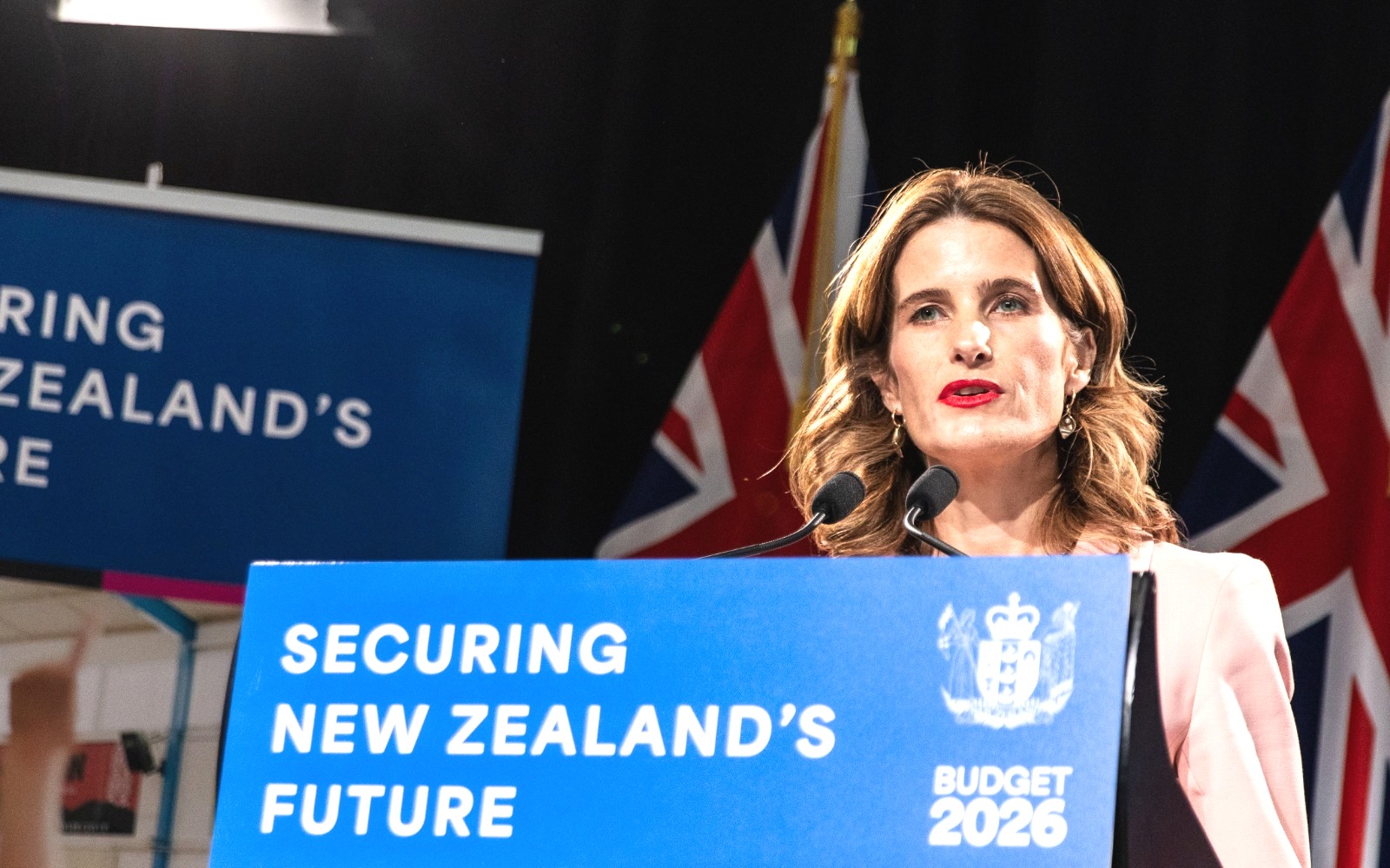
Wellington; May 2026: New Zealand’s Finance Minister Nicola Willis has presented the nation’s fiscal budget for FY: 2026-2027 today (Thursday – 28th May 2026). During the course of the budget presentation FM Willis used her election-year Budget to preach prudence and discipline, with the books now forecast to be back in black (NZ Government is now making more money – earnings have surpassed expenditures) since the last year’s budget presentation.
As heavily foreshadowed, the Budget contained no “sugar hits (exaggerated assurances)” for voters, with a focus instead on core health and infrastructure spending, as well as a near half billion-dollar rainy day fund tagged to the fuel crisis.
Willis has used her last Budget of the term to preach discipline as she eyes a surplus on the horizon. Today (Thursday)’s presentation was a back-to-basics Budget, with very little in terms of headline-grabbing, vote winning plans. Willis pushed back against the idea of election-year “band-aids and sugar hits” in favour of getting the books in order, adding it would have been easier for her to just try to bribe voters.
The New Zealand’s Treasury expects the government’s operating balance to get back into surplus in 2028-29, a year earlier than in December. If it happens, that would be first government surplus in a decade. Treasury put this down to an increase in tax revenue, and a smaller budget than forecast. Willis says it’s disciplined economic management, with $3.8 billion of new spending offset by $1.7 billion in savings.
But with the Iran war looming large, there’s plenty of unknowns of the next year. Accordingly, the Finance Minister has flagged a mild warning stating numbers can always change.
Budgett Expenditure:
- Social Security And Welfare – $ 51.47 Billion;
- Health – $ 33.77 Billion;
- No Classification – $ 28.80 Billion;
- Education – $ 23.28 Billion;
- Other Economics – $ 14.54 Billion;
- Law & Order – $ 07.97 Billion;
- Core Government Service – $ 07.76 Billion;
- Transport & Communication – $ 06. 21 Billion;
- Defence – $ 04.29 Billion;
- Housing And Community – $ 02.98;
- Heritage, Culture And Recreation – $ 01.48 Billion;
- Environment & Protection – $ 02.50 Billion;
- Primary Services – $ 01.34 Billion;
- Other – $ 00.40 Billion;
- Fuel & Energy – $ 00.33 Billion.
HEALTH –
Health is the big winner, with $5.8 billion of new spending. That includes a $5.5 billion increase to frontline services over four years. In addition to the already-announced $15.5 million for paediatric palliative care, there is also $34 million for three-day postnatal stays, and $33 million to extend the eligibility for bowel screening to 56 years of age, from 58. However, there is no major increase in funding for primary care, which the sector has been calling for.
There’s another $680 million in capital spending for health infrastructure, including a new 158-bed ward at Whangarei Hospital, work at Tauranga, Hawke’s Bay, and Palmerston North, and the buying land for the new Drury hospital.
Another $930 million will go towards new clinical equipment, tech upgrades, and facility improvements nationwide.
PUBLIC TRANSPORT –
Transport Minister Chris Bishop has announced $ 01.77 billion will spent on extending the four-lane Waikato Expressway (SH1) 16 kilometres from Cambridge to Piarere Road. “This project has been talked about for years. Now we’re getting on with it”, Bishop said. The government is also putting $ 01.075 billion into KiwiRail’s network from 2027-2030 and $ 107 million into rail upgrades in cities.
MINISTERIAL CUTS –
As earlier signalled, most government ministries and departments will have to trim their budgets by 02% in 2026, followed by two rounds of 05% cuts in the following years, for a total reduction in funding of about 12% from where they are now. While the Budget lays out exactly how much money that is for each agencies and confirms which are included, it’ll be up to agencies themselves to find where to cut.
Most agencies have delivered baseline savings of 02% from 2026-27 through reducing back-office staff and contractors and consultants, and scaling of lower-value programmes, the documents say.
Oranga Tamariki (ministry for children), law and order, health, education and defence and intelligence agencies are exempted. Foreign Affairs has escaped this year’s cut, but is still officially on the list for two bigger cuts to come, which is of a point of contention between the Finance Minister and Foreign Affairs Minister Winston Peters.
EDUCATION –
The budget proposed a tight year for education; The Budget increases school operations grants and early childhood funding, but freezes most tertiary subsidies. Operation grants will increase 02% next year while early childhood subsidies rise 1.5% from July this year (2026), which is 06 months earlier than normal.
In tertiary education the Budget provides a two percent increase to subsidies only for tertiary foundation courses but also has $ 284 million to subsidise more student places this year and next.
The government is introducing new school curriculums and a new secondary school qualification and the Budget allocates about $ 240 million for that work, including teacher training and resources. It also provides $69-million over four years to double the number of secondary school students attending Trades Academies to 20,000 by 2030.
The Budget shows that axing the fees-free scheme would save $ 01 billion over a period of 04 years.
DEFENCE –
This year’s Budget includes an extra $ 2.3 billion in capital spending and $ 1.2 billion operating funding for the Defence Force spread across staffing, frigates, facilities, aircraft and other resilience measures in the Pacific.
HOUSING –
An ‘Incentives for Growth Fund’ of $400 million over four years has been announced for councils that build more homes. Put broadly, councils that consent more homes will be given money out of the fund to pay for infrastructures such as roads and pipes for new suburbs.
BANKING SECTOR –
The government expects to collect just over $ 200 million over a period of 04 years from banks, insurers and other finance industry companies from a new levy intended to cover the costs of services provided by the Reserve Bank.
EMERGENCY ACCOUNT –
$ 450 million has been set aside as a ‘rainy day fund’ for fuel-related issues that might crop up. That’s in addition to the already-announced temporary increase to mileage rates for care and support workers and $ 150 million for strategic reserves. FENZ, Corrections, Police, Customs, and Education get additional funding to keep frontline operations going in the face of sustained fuel price increases.
SUPER GOLD CARD –
The Super Gold card will soon be able to be used as an official form of ID. The government has thrown $ 43 million into allowing pensioners upgrade their cards to a new version, which be able to be used instead of drivers’ licences or passport.
Team Maverick.




Trump Vows Continued Military Pressure on Iran, Expresses Doubts Over Diplomacy
Washington, Aug 2026: US President Donald Trump has vowed to maintain military pressure on…

Trump Vows Continued Military Pressure on Iran, Expresses Doubts Over Diplomacy
Washington, Aug 2026: US President Donald Trump has vowed to maintain military pressure on …