US Reimposes Naval Blockade on Iran as Conflict Widens Across Gulf

Washington, July 2026 : The United States has reinstated a naval blockade targeting Iranian ports following a fresh wave of military strikes against Iran, significantly escalating tensions across West Asia. The renewed confrontation has expanded beyond Iranian territory, with Tehran launching retaliatory missile and drone attacks on US military installations in Bahrain, Kuwait and Jordan, raising fears of a broader regional conflict.
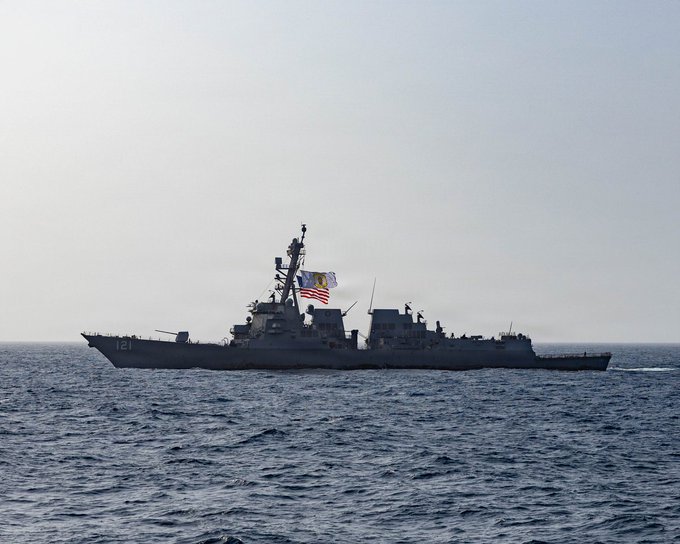
According to the US Central Command (CENTCOM), the naval blockade came into effect at 4 p.m. Eastern Time on Tuesday, targeting vessels travelling to and from Iranian ports and coastal facilities. The operation is aimed at restricting Iran’s maritime activities and limiting its ability to launch attacks on commercial shipping passing through the Strait of Hormuz, one of the world’s most strategically important energy corridors.
In a statement, CENTCOM said US forces remain “vigilant, lethal and ready” as military operations continue across the region. The command stressed that the blockade is intended to safeguard international shipping while countering Iranian military capabilities along the Gulf coastline.
Earlier in the day, CENTCOM confirmed another round of American airstrikes against Iranian military targets, beginning at 3 p.m. Eastern Time. The latest operation followed a five-hour campaign conducted on July 13, during which US forces targeted military infrastructure across several key Iranian coastal locations, including Bushehr, Chah Bahar, Jask, Konarak, Abu Musa and Bandar Abbas.
American aircraft employed precision-guided munitions to destroy coastal defence installations, missile launch sites, drone deployment areas and naval assets believed to be supporting Iranian military operations. Reports also indicated that Bampur military base in Iran’s Sistan and Baluchestan province was struck, with soldiers’ accommodation facilities among the targets.
Iran responded swiftly by launching “Operation Nasr 2,” targeting American military assets across the Gulf. Missile and drone attacks were reported against US facilities in Bahrain and Kuwait, while Iranian drones also targeted Jordan’s Al-Azraq Air Base.
Air raid sirens sounded across Bahrain as defence systems intercepted incoming projectiles. Kuwait’s air defence units also engaged multiple missiles and drones. According to reports, four Kuwaiti naval personnel were injured after one of the country’s naval vessels was hit during the attacks.
Iran claimed that its drones successfully targeted hangars housing F-18 fighter aircraft and other military equipment at Jordan’s Al-Azraq base. The attacks marked the eighth phase of Iran’s ongoing “Saeqeh” military campaign and demonstrated Tehran’s willingness to expand the conflict beyond its borders.
The renewed hostilities have effectively collapsed the Islamabad Memorandum of Understanding, signed only last month to temporarily suspend military actions and create space for diplomatic negotiations.
Iranian Deputy Foreign Minister Kazem Gharibabadi declared that Washington’s latest actions had “completely dismantled” the agreement, stating that Tehran no longer considered itself bound by its commitments under the understanding.
Iran’s ambassador to the United Nations also accused the United States of committing war crimes, alleging that attacks on civilian infrastructure violated international law and endangered innocent lives.
Meanwhile, US President Donald Trump signalled that Washington could intensify military operations if Iran refuses to return to negotiations. Although he withdrew an earlier proposal to impose a 20 per cent levy on cargo transiting the Strait of Hormuz, Trump warned that future strikes could target critical civilian infrastructure.
“Next week comes the power plants, next week comes the bridges,” Trump said, indicating that additional military action could focus on facilities vital to Iran’s economy and public services.
The rapidly escalating conflict has already begun affecting global energy markets. Concerns over the security of oil shipments through the Strait of Hormuz pushed both Brent crude and West Texas Intermediate (WTI) crude prices to their highest levels in more than a month.
Maritime security has also deteriorated sharply. A Norwegian oil tanker reportedly sustained damage off the coast of Oman, while two crew members were killed in separate attacks involving commercial vessels operating in the region. The International Maritime Organization confirmed the incidents, highlighting the growing risks facing international shipping as military activity intensifies.
The Strait of Hormuz handles nearly one-fifth of the world’s seaborne oil trade, making any disruption to shipping through the narrow waterway a major concern for global energy markets and international commerce.
With reciprocal military strikes now extending across multiple Gulf nations and both Washington and Tehran signalling readiness for further escalation, the confrontation has entered one of its most dangerous phases in recent years. Diplomatic efforts appear to have stalled, while military deployments continue to increase, raising fears that the conflict could widen further and draw additional regional actors into the crisis.
(The content of this article is sourced from a news agency and has not been edited by the Mavericknews30 team.)






Argentina vs England World Cup Semifinal Declared Highest-Risk Match as Security Tightens in Atlanta
July 16: The FIFA World Cup 2026 has entered its most dramatic stage, but ahead of the blo…

Argentina vs England World Cup Semifinal Declared Highest-Risk Match as Security Tightens in Atlanta
July 16: The FIFA World Cup 2026 has entered its most dramatic stage, but …