Election Transparency: Participation and Importance of Political Parties

Maharashtra Election 2024;
The priority of the Election Commission is to conduct the electoral process in a transparent, smooth, and proper manner. In this regard, the election machinery is taking necessary precautions at various stages. Political parties play a crucial role in the voting process, as their presence enhances the transparency of the elections. Therefore, candidates and representatives from political parties are engaged in the voting process at various stages.
Voter List Revision
The process of brief revision of voter lists has been successfully carried out across the state. In this process, representatives of political parties monitor the voter lists of the respective polling stations, which includes the registration of new voters as well as checking the names that have been removed. Political party representatives actively participate to assist booth-level officers. The district election officer documents their actions and provides necessary information to the political parties.
Meetings with local representatives of recognized political parties at the national and state levels are held through the Chief Election Officer’s office. Notifications of these meetings are sent to the official email IDs of the political parties. Representatives of political parties attend these meetings to raise questions and concerns. The Chief Election Officer’s office addresses these queries. Additionally, if necessary, guidance is sought from the Election Commission of India.
EVM Process
Political parties’ timely involvement in the process concerning voting machines (EVMs) is required, as per the clear instructions of the Election Commission. Local representatives of political parties are invited during the opening and closing of the storage facility for the voting machines. The EVMs are opened and sealed in their presence, and video recording is done by the district election officer at this time.
Before the code of conduct is announced, as part of the election preparation, after EVMs are made available at the district level, the number of control units, VVPATs, and ballot units is determined to ensure that sufficient machines are available for the elections.
‘First Level Check’ means inspecting each machine to see whether it is operational, checking for any malfunctions, and verifying whether all buttons are functioning properly. This inspection is conducted by engineers from Bharat Electronics Limited, a central government organization. During this inspection, local representatives of political parties at the district level are invited. After completing the inspection process in their presence, representatives of political parties participate in the mock poll process. They check that pressing the button of one symbol does not produce a print slip of another symbol. Once local political representatives confirm this, the machine is prepared for the actual voting process. After the mock poll, all machines are sealed and stored in the warehouse in the presence of political parties.
In Maharashtra, the ‘First Level Check’ process has been implemented since August 1, and the machines have been sealed. The process is completed in the presence of political party representatives after discussions with them at each district location. Video recordings of this process are kept for records. Political parties in Maharashtra have participated in the ‘FSC’ process through their local representatives.
Machines labeled with ‘FSC OK’ stickers have had 5 percent of the total number of polling machines in the warehouse used for training and awareness. The awareness campaign took place from September 9 to October 9. Subsequently, these machines are used to demonstrate the voting process during the training of election officials. These machines will not be used for the actual elections.
After that, during the commissioning process, the symbol loading procedure for the machines is carried out. The schedule for this has been set from November 10, and the commissioning will be completed in the next 4 to 5 days. Local representatives of political parties are invited to be present during the entire process of commissioning. The voter slips created by the VVPAT during the mock poll are collected and processed. All machines ready for voting are securely stored in the warehouse in the presence of local political party representatives.
The list of election officials is randomized in the presence of observers from the Election Commission from outside the state. This way, which staff member will go to which polling station for election work is only known when the teams depart for the polling stations. Similarly, the control unit, VVPAT, and ballot units are also randomized, and the allocation of which machines will go with which staff members at which polling stations is done via computer. This process is conducted in front of local representatives of political parties, and the record of this is preserved with the signatures of the representatives. A list of which machine with which number will go to which polling station is provided to the candidates.
When the polling teams leave for the polling stations with the EVM sets, the warehouse is opened in front of the local representatives of political parties, and the three machines are handed over to the polling officials’ team according to the randomization. Before the actual voting begins, a mock poll is conducted in front of the candidate or their polling representative at the polling station. Once the polling representatives are assured that the machines are functioning properly, the actual voting commences. Throughout the voting process, all activities of the polling officials take place in front of the representatives of the candidates, excluding the confidentiality aspect of the voting.
After voting is completed, the details of all three machines are verified in front of the polling representatives, and the machines are sealed. During the transportation of the voting machines, candidates and their representatives can personally check the sealing of the vehicles. Video recording is also done during the sealing or opening process.
Local representatives of candidates are present during the opening and closing of the machines at the time of voting. They can sign the slips that are affixed to the voting machines regarding their presence.
Meetings are regularly held with candidates and representatives of political parties at the level of the Chief Election Officer’s office and the District Collector or District Election Officer. In these meetings, information regarding the election process is provided, and queries are addressed.
Our Maharashtra state has a tradition of peaceful elections and voting processes. Precautions are taken at every stage regarding the participation of all political parties, candidates, and relevant components. Given the glorious tradition of elections in Maharashtra, it is expected and assured that the current assembly election process will also be conducted peacefully.

Houthis Claim Drone Shootdown as Red Sea Tensions Continue to Escalate
Sanaa, July 2026 : Yemen’s Houthi movement on Sunday claimed it had shot down a Saud…
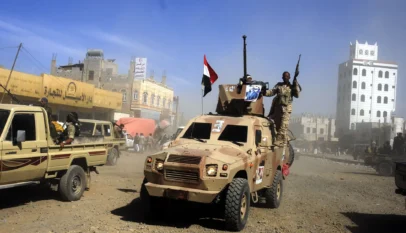
Houthis Claim Drone Shootdown as Red Sea Tensions Continue to Escalate
Sanaa, July 2026 : Yemen’s Houthi movement on Sunday claimed it had shot down …