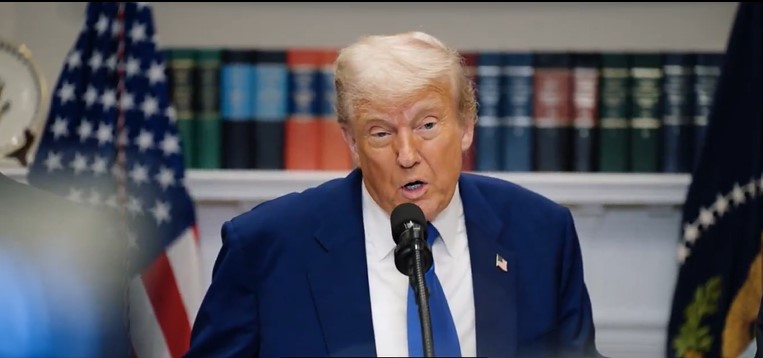
Donald Trump’s pursuit of stretching supremacy, tribulations to other nations.

In April 2025, US President Donald Trump issued an Executive Order that many international onlookers viewed as a startling provocation: he directed the National Oceanic and Atmospheric Administration (NOAA) to expedite its process for issuing commercial deep sea mining permits in areas beyond U.S. Jurisdiction. This was hardly Trump’s first time making brazen claims with respect to lands beyond U.S. borders.
The president’s unilateral declaration of U.S. authority over the mineral-rich stretches of the international seabed comes in the wake of inflammatory statements about annexing or controlling foreign territory—from Canada to Greenland to the Panama Canal. Although Trump’s offshore minerals order makes no direct territorial claims. But while asserting U.S. authority to regulate commercial seabed mining on the high seas, Trump seeks to bypass an international regulatory regime many decades in the making. In so doing, he threatens to destabilize international oceans governance. History suggests the move may prove counterproductive, undermining concrete American interests in the name of rushing into a speculative new extractive frontier.
Scientists first discovered deep sea deposits of manganese, copper, cobalt, and nickel in the form of potato-sized nodules in the 1870s. Yet, for nearly a century, the mining industry took little notice. Seabed nodules were located at profound depth and pressure; extracting them was therefore a complex and capital-intensive process. Interest in commercial recovery began only in the 1960s, when Space Age technologies and Cold War resource anxieties made deep sea nodule harvesting seem both possible and worth the effort.
After World War II, a wave of decolonisation across Africa, Asia, and the Pacific impeded the Western powers’ access to resources once under colonial control. Mining boosters argued that the deep sea could provide a crucial alternative to terrestrial mineral markets controlled by potentially unfriendly postcolonial governments. With mining now technically feasible, the U.S. and other industrialised nations rushed to explore these vast, untapped mineral reserves.
The desire of industrialised nations to take advantage of this new mineral frontier prompted questions about whether countries could help themselves to these resources on a first-come, first-served basis, or whether ownership rights belonged to the international community writ large. Scientists, conservation organizations, and a growing cohort of national governments responded by calling for a moratorium on deep sea mining, in light of significant risks posed to marine ecosystems and insufficient knowledge of how mining might impact deep sea environments.
This controversy has delayed the finalisation of regulations that would permit commercial mining to move forward. These delays at the ISA, in turn, have frustrated corporate actors, like The Metals Company (TMC), which are keen to commence commercial-scale operations in international waters.
American efforts to unilaterally assert regulatory authority over areas of seabed claimed by the international community are not new. But Trump’s executive order is particularly inflammatory as he doubles down on a U.S. position that many across the political spectrum view as outdated, despite growing international alarm over the potential adverse impacts of mining. Unlike in 1980, when the Deep Seabed Hard Mineral Resources Act (DSHMRA) was first promulgated, there is now a treaty regime in force with respect to the international seabed that enjoys nearly universal acceptance. The International Seabed Authority (ISA) is working to finalise a regulatory regime that will govern if and how such mining should go forward.
The most charitable interpretation of Trump’s order would be to view it as a helpful prod to ISA negotiators to come quickly to an agreement and to get an international regulatory regime off the ground.
Team Maverick.






Parliament Paralysed for Second Day as Opposition Protests Over NEET Leak, Student Crackdown
New Delhi, July 2026 : Parliament remained deadlocked for the second consecutive day of th…
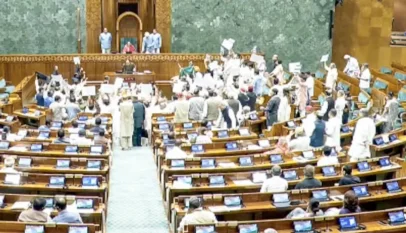
Parliament Paralysed for Second Day as Opposition Protests Over NEET Leak, Student Crackdown
New Delhi, July 2026 : Parliament remained deadlocked for the second consecutive day of …