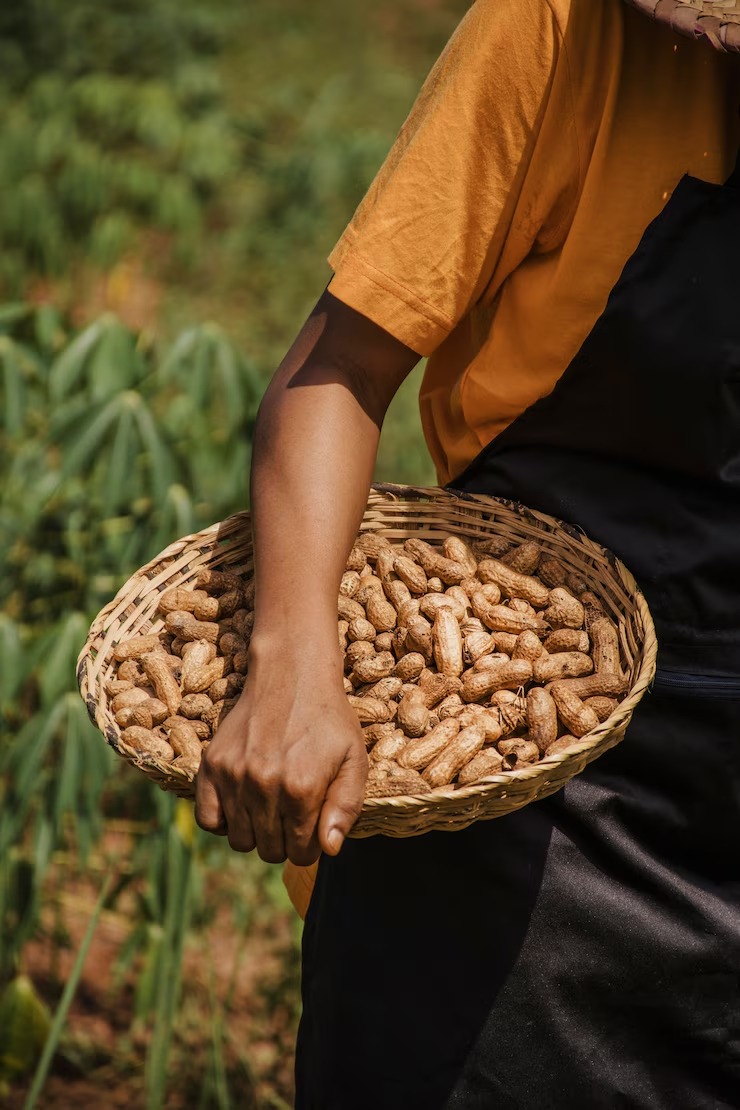
Jhansi set to emerge as major groundnut hub under Yogi govt’s UP AGREES initiative

Peanut cluster to boost farmers’ income, especially those from Bundelkhand and surrounding regions
Cluster-based farming opens up export opportunities and ensures better prices for farmers
Lucknow : Often called the “almonds of the poor” for their rich nutrition and versatility, peanuts hold vast market potential in Uttar Pradesh—both domestic and export. Recognising this, the Yogi government is actively promoting peanut cultivation, especially in Bundelkhand, where production has surged in recent years.
According to the Ministry of Agriculture and Farmers Welfare’s Directorate of Economics and Statistics, during 2013–2016, Uttar Pradesh accounted for just 2% of India’s total peanut cultivation area, contributing approximately 1 million tonnes to the national production of around 7.9 million tonnes. However, due to consistent efforts under the double-engine government, UP’s share in peanut cultivation has risen significantly—more than doubling to 4.7%. Most of this growth has occurred in Bundelkhand and adjoining districts.
In a strategic move under the UP AGREES project, supported by the World Bank, the state government is developing Jhansi as a dedicated peanut cluster. This initiative includes all seven districts of Bundelkhand: Jhansi, Jalaun, Lalitpur, Mahoba, Hamirpur, Banda, and Chitrakoot. The cluster-based model is expected to enhance exports and ensure better returns for farmers through improved pricing.
Nationally, Gujarat leads peanut production with a 47% share, followed by Rajasthan (16%) and Tamil Nadu (10%). In UP, Bundelkhand is the primary peanut-producing region, with Jhansi at the forefront. Other key districts include Banda, Hamirpur, Mahoba, Lalitpur, Mainpuri, Hardoi, Etawah, Farrukhabad, Kannauj, Aligarh, Kasganj, Auraiya, Kanpur Dehat, Badaun, Etah, Unnao, Lucknow, Kanpur Nagar, and Shravasti.
While UP has made significant progress, past figures indicate the potential for further growth. During 2013–2016, India’s average yield was 1,542 kg per hectare, while UP’s yield was only 809 kg per hectare—a shortfall of 733 kg. Tamil Nadu, by contrast, led with a productivity of 2,679 kg per hectare. This gap highlighted UP’s untapped potential. Through improved agricultural practices, adoption of high-yield varieties, and timely crop protection measures, UP has since raised its yield above the previous national average, currently reaching approximately 1,688 kg per hectare.
To ensure fair prices and incentivize farmers, the government is also procuring peanuts at the Minimum Support Price (MSP), currently set at Rs 6,783 per quintal. Procurement is facilitated by NAFED in districts like Mainpuri, Hardoi, and Etawah, and by NCCF in Farrukhabad, Kannauj, Aligarh, Kasganj, Auraiya, Kanpur Dehat, Badaun, Etah, Unnao, Lucknow, Kanpur Nagar, and Shravasti.
Peanuts are nutritionally dense, offering around 567 kcal per 100 grams. They contain 25–26 grams of high-quality protein, 49–50 grams of healthy unsaturated fats, and essential nutrients like carbohydrates (16–18 g), fiber (8–9 g), vitamin E, niacin (B3), folate (B9), magnesium, phosphorus, potassium, and zinc.
Given their nutritional value, economic potential, and adaptability, peanuts have become a key focus area in UP’s agricultural strategy, strengthening farmer incomes and positioning the state for greater self-reliance and export readiness.





Shivakumar Says Congress United, Assures Women Will Get Cabinet Berth
Bengaluru, Aug 2026 : Karnataka Chief Minister D.K. Shivakumar on Monday sought to dismiss…
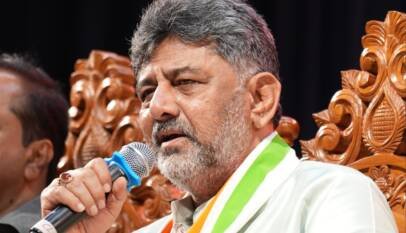
Shivakumar Says Congress United, Assures Women Will Get Cabinet Berth
Bengaluru, Aug 2026 : Karnataka Chief Minister D.K. Shivakumar on Monday sought to dismiss …