Good journalism, bad journalism – Malaysian fugitive Jho Low and 1MDB scandal; ex – Sino Pacific Chair Simon Liang’s legal troubles.

At its best, investigative journalism breaks news that even law enforcement agencies are not able to tackle, solving longstanding mysteries and exposing wrongdoing.
And we start with more details on the whereabouts and new identity of a corrupt international fugitive who plundered Malaysia and stole billions of dollars…
The fugitive Jho Low is still at large –
International News Correspondents, have strived in exposing how billions of dollars were systematically stolen from the Malaysia’s sovereign wealth fund 1MDB, with the connivance of the country’s then Prime Minister Najib Razak. Mr Najib was convicted of embezzlement in 2020, and his wife Rosmah Mansor was found guilty for her role in the money laundering and misappropriation of funds in 2022.
In 2024, two Geneva-based gentlemen were convicted by a Swiss federal court of their role in the plunder, which the federal prosecutor described as, “the fraud of the century”. Tarek Obaid and Patrick Mahony were ordered to repay US$2 billion to the Malaysian state, in along with the interest.
Former Malaysian Prime Minister and convicted criminal Najib Razak is also caught up in alleged corruption linked to a 2002 submarine deal whereby a French company sold two Scorpène-class diesel-electric attack submarines and one Agosta-class vessel to the Royal Malaysian Navy in a deal worth US$1.2 billion, with some kickbacks allegedly flowing back to parties involved with the buyers.
Mr Najib was forced to deny his involvement following a recent Bloomberg report, which cited French prosecutors’ claims about bribes tied to the purchase.

Just this May, the former Goldman Sachs banker Tim Leissner was sentenced to two years in prison in the USA for his role in the 1MDB scandal after he pleaded guilty to helping divert billions in Malaysian funds raised in a bond issue to bank accounts controlled by co-conspirators and pocketing US$60 million himself.
The judge who sentenced him said that the 1MDB case was an example of, “brazen corruption at the highest level of government in multiple countries”. Mr Leissner’s then employer, Goldman Sachs, had to pay over US$5 billion in fines and reparations for its role in facilitating the bond issues, where many of the funds raised were immediately stolen. But one character remained on the run, totally unpunished for the scheme he is believed to have masterminded, his whereabouts unknown since he fled Malaysia in 2015.
This is the Malaysian at the heart of the scandal – pudgy faced playboy, casino addict and Paris Hilton fan Jho Low, famed for his yacht, his parties and his art collection, all bought with stolen funds. He had even launched a campaign to block Mr Wright and Mr Hope’s book from distribution in multiple countries, undertaken by London-based law firm Schillings, which seems a suitable name for lawyers undertaking such work. This was despite the fact that since October 2016, Jho Low has been subject to a red notice issued by Interpol, requiring states to cooperate in extraditing him to Malaysia to face charges there.
Last year, the government of Cyprus finally revoked Jho Low’s passport, which he acquired in 2015 through the so-called “golden passport program”, with the support of a Cypriot archbishop, to whom he had thoughtfully made a six-figure charitable donation, with stolen funds. His exact whereabouts were unknown, until last week, although there are alleged rumours; Jho Low is hiding in Shanghai’s Green Hills luxury district using a fake Australian passport.
But intelligence agencies have never given up on finding Jho Low and bringing him to justice. Respective agencies investigating world leaders who copy Mr Najib and embezzle cash – shady characters like deposed Bangladeshi Prime Minister Sheikh Hasina and her US$2 billion offshore stash, and Iranian supreme leader Ayatollah Ali Khamenei, who owns a surprisingly large secret personal wealth.
Last week, the intelligence agency delivered the results of their hunt for Jho Low to the world and updated their findings on 1MDB.
Jho Low is actually fake Aussie Constantinos Achilles Veis? –
They found Jho Low has been using a fake Australian passport bearing the name of “Constantinos Achilles Veis” and the birthdate of January 10, 1980, to live in China. Investigators have traced him in a wealthy neighbourhood in Shanghai called Green Hills where he is living in a mansion, driving in (unnamed) luxury cars to travel 15 minutes to his office at the Shanghai Financial Centre.
Surprise! It wasn’t as if the Chinese Government didn’t know exactly who their fraudulent Aussie resident was. To utter dismay, it was found that Jho Low is working as a strategist for the Chinese Government to help sanctioned Chinese companies overcome restrictions around the world. Although a fugitive, sources say that Jho Low has always maintained his innocence, despite the Interpol red notice. He insists he broke no laws and is a victim of political persecution, but he has resolutely resisted all efforts to get him to return to Malaysia to stand trial, and many of his associates have been convicted.
The “belt and road” angle to 1MDB –
What also emerged from the last investigation is how Jho Low and Prime Minister Najib Razak enlisted the support of the Chinese Government both to bail them and the plundered 1MDB fund out when news of the malfeasance was being exposed and the noose was starting to tighten on them in 2016.
It is worthwhile to quote, the risks of corruption, opaque payments and overbilling may be relevant to many countries that are receiving Chinese investment under the “belt and road” initiative:
In an effort to cover 1MDB’s gaping financial holes and secure political protection, Low turned to China. In 2016, he helped broker a secret arrangement with Beijing: Malaysia would award inflated infrastructure contracts to Chinese state firms – and in return, China would quietly help bail out 1MDB’s debts.
Within months, the Malaysian Government signed US$34 billion of rail and pipeline deals with China, including the East Coast Rail Link and multiple pipeline projects. Evidence later showed that these projects were wildly overpriced – for example, the rail link was budgeted at US$16 billion when Malaysian consultants said it should cost only US$7.25 billion.
Investigators believe the excess billions were a slush fund: Chinese banks would finance the projects at the inflated prices, the contractors (Chinese state companies) would get paid, and a chunk of that money would be diverted to settle 1MDB’s obligations and perhaps line conspirators’ pockets. In effect, Low was trying to launder the 1MDB problem through China’s ‘belt and road initiative’.
“According to Malaysia’s finance ministry, at least US$2–3 billion from a China EXIM Bank loan for a pipeline project was disbursed despite only 13 per cent of the work being completed – raising suspicions that the bulk of those funds (around US$2 billion) went elsewhere, possibly to 1MDB’s creditors or hidden accounts….”
It is reported that US$7.65 billion dollars were likely stolen from 1MDB, and they reckon that Jho Low personally stole about US$2.5 billion himself, funnelling cash through networks of obscure offshore companies and tax-haven bank accounts. The investigators calculate that the overpriced belt and road initiative contracts that Najib Razak signed in order to cover up the 1MDB fraud led to Malaysia suffering another US$6 billion in losses on top of the funds stolen from 1MDB.
As a result of these Chinese state funds being used to cover up the earlier theft of 1MDB funds, Malaysian authorities now believe that the total cost of the 1MDB scandal is much worse than the previous estimate of US$4.5 billion in losses. Intelligence agency reckons it could be as high as US$18 billion. 1MDB is important because it highlights a number of weaknesses in global governance, which are highly relevant to other countries and other situations, including the “dark fleet” of Russian and Iranian oil smuggling tankers.
Firstly, it shows how hard it is to stop corruption when it goes to the very top of a country, whether Malaysia in 1MDB, or Mozambique in the Tuna Bond Scandal or Brazil in the Lava Jato (“car wash”) fraud investigation.
Secondly, it shows how that once money is stolen from a government and syphoned through ill-policed offshore tax havens like the British Virgin Islands and various other money laundering centres, it is hard to recover. Malaysia has been burdened with billions in unnecessary debt, which taxpayers and the treasury have to repay for years to come.
So has Mozambique, so was Ukraine under its ousted and unlamented President Viktor Yanukovych. It is likely that future investigations in Hungary and Serbia will find Presidents Orban and Vucic have also been up to their eyeballs in self-enrichments this last decade. Readers can draw their own conclusions about other countries similarly being plundered in plain sight.
Finally, Jho Low’s continued evasion of justice shows the limits of global law enforcement when a powerful state finds an individual accused of crimes elsewhere to be useful, and shelters them. In this respect Jho Low is very much like Austrian criminal Jan Marsalek, who seems to have masterminded the theft of US$4 billion from German payments company Wirecard before flying to Russia to escape prosecution.
Malaysia’s attempts to secure Low’s extradition have so far been fruitless, and Germany’s efforts to bring Marsalek to justice have so far also drawn a blank. The investigation of Jho Low is investigative journalism at its finest. Kudos to all involved.
Simon Liang’s back… whitewashing his past –
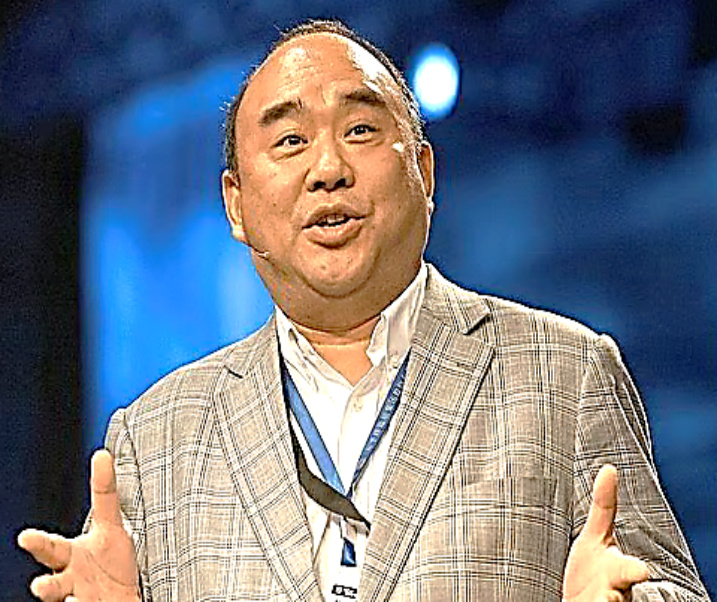
Simon Liang must have glowed with pleasure when he reinvented the global OSV game. It is, “nine years after the fall of his shipbuilding empire, Simon Liang has returned with SPEC — a lean offshore venture that has landed 20 OSV orders in 18 months by prioritising speed, focus and clean technology over scale”.
Not coincidentally, SPEC 3 is the name of the company that defaulted on the EXIM Bank mortgage, leading to the arrest of Spec Nichole by its Chinese Government-owned creditor. But Xu Yihe makes no reference to this surprising and rather embarrassing detention.
We understand the arrest has left seafarers stranded on the vessel, as SPEC’s lawyers battle to prevent any crew moves, despite the clear obligation to repatriate those who wish to leave under the Maritime Labour Convention.
Mistakes were made, just a few
The piece goes on to mention that, “[a]t the age of 62, the former ‘ship king’ has orchestrated one of the industry’s most improbable comebacks.”
“I made mistakes,” it also quoted Mr Liang as saying. “I saw markets but ignored the mechanics.”
We’ve all made mistakes, but few of us have been accused of over US$150 million in tax evasion and been detained for financial crimes in China.
Mr Liang was arrested at the airport in Myanmar in 2019 and extradited to China, where sources told us he was found guilty of certain financial crimes, and was unable to leave the country as a result. He didn’t just see markets; he saw the inside of a Chinese detention cell.
Simon Liang’s back… with his kids on the ownership documents and his wife in Mauritius
Once you understand this context, the article’s comment below suddenly makes sense:
“Unlike his former empire, where he stood as chairman and the public face, Liang’s name does not appear on SPEC’s ownership documents. All equity is held by his children, while he refers to himself modestly as a ‘chief advisor'”. Those charged or convicted of financial crimes in China are typically not allowed to become company directors there again, which might perhaps be pertinent to readers, rather than suggesting he holds the title of chief adviser out of modesty.
The company is held in the name of his children as a necessity, rather than a choice, it seems. Other SPEC entities appear to be owned by other family members in a sprawling cross-border network of related entities stretching from the British Virgin Islands to the Indian Ocean, Singapore and China.
Both Liang and his wife, French citizen Ann Chen Xiaoxi, do act as directors of the private Singapore company called Family Liang Holding in Singapore, sources close to the case with EXIM Bank have confirmed. Ms Chen is also understood to have purchased property in the offshore tax haven of Mauritius, where she is director of a private company whose ownership is not open to public examination.
Simon Liang’s back… will EXIM Bank or his creditors move on his newbuilds? –
Having explained in public how his assets are held by nominees, there may be a risk that Mr Liang’s creditors in the two pieces of litigation against SPEC move against his new buildings if they prevail at law. “Liang estimates that only two of SPEC’s 20 vessels currently under construction will be owned outright by the company. The remainder are being built for partners, with SPEC playing a central, orchestrating role”. With one ship arrested and two lawsuits outstanding against SPEC entities or Mr Liang personally, this could be a case of buyer or charterer beware.
Team Maverick
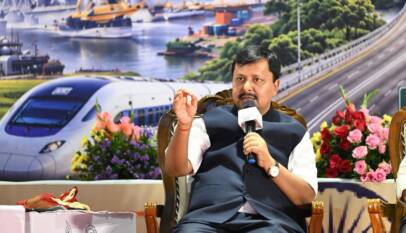


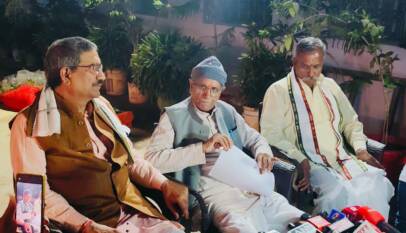
BJP Workers Are Full-Time Politicians, Rahul Gandhi Is Part-Time: Nitin Nabin in Telangana
Hyderabad, June 2026 : Bharatiya Janata Party (BJP) national president Nitin Nabin on Mond…
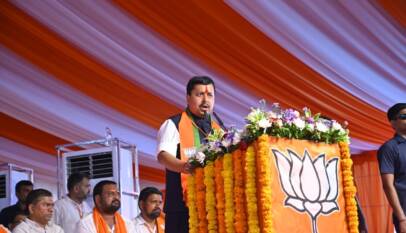
BJP Workers Are Full-Time Politicians, Rahul Gandhi Is Part-Time: Nitin Nabin in Telangana
Hyderabad, June 2026 : Bharatiya Janata Party (BJP) national president Nitin Nabin on Monday …