Balen Shah Defeats Former PM Oli in Jhapa-5, RSP Emerges Dominant Force in Nepal Polls

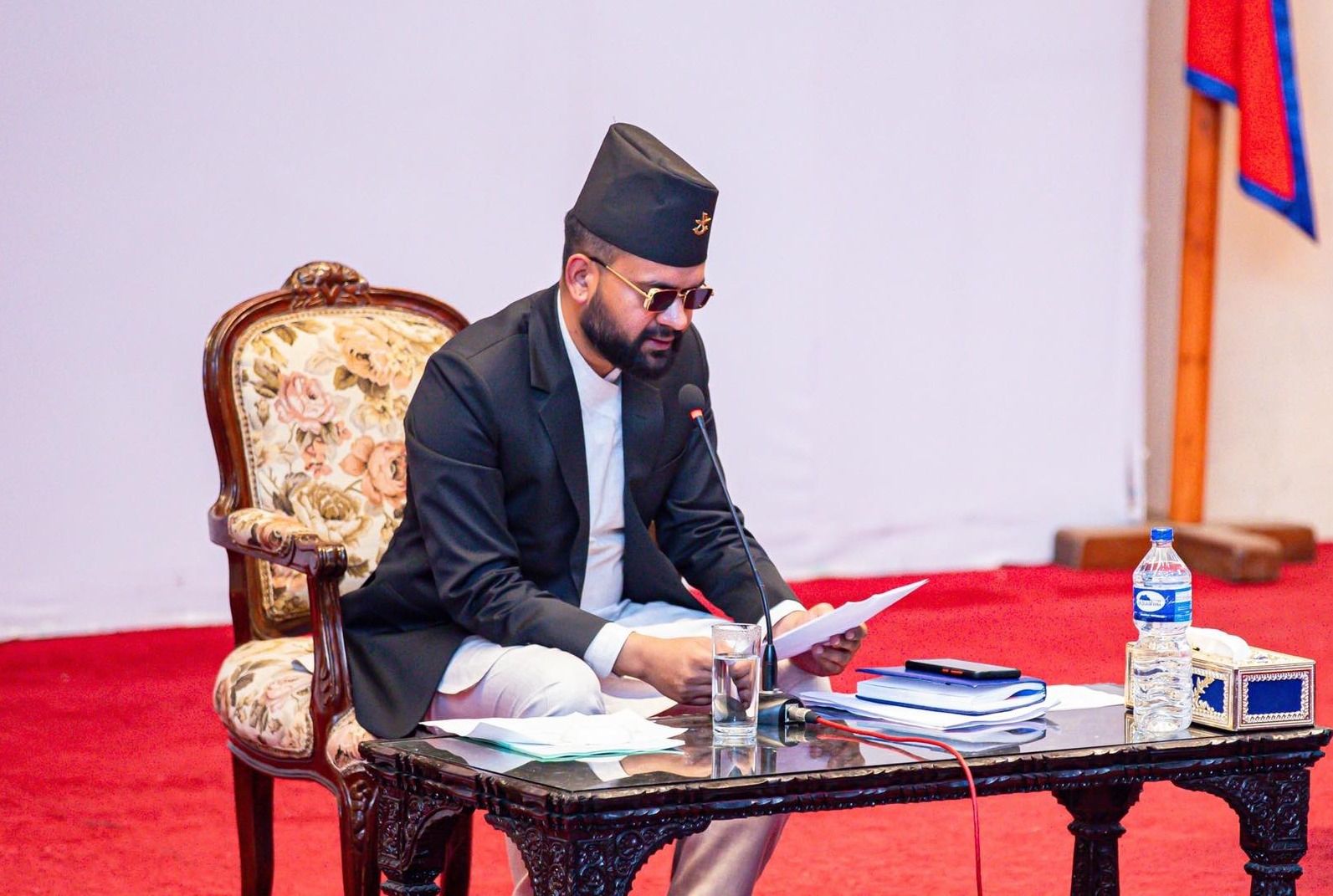
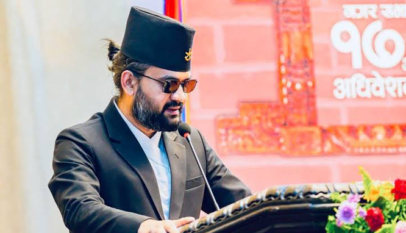
Kathmandu, March 2026 : Rapper-turned-politician Balen Shah has secured a decisive victory in the parliamentary elections from the Jhapa-5 constituency in eastern Nepal, defeating former Prime Minister K P Sharma Oli by a massive margin in what was widely seen as a key battle that could determine the country’s next prime minister.
Shah, who contested the election as the prime ministerial candidate of the Rastriya Swatantra Party (RSP), polled 68,348 votes, while Oli managed only 18,734 votes. The result marked a crushing defeat for the veteran leader and signalled a dramatic shift in Nepal’s political landscape.
According to election officials, the number of votes secured by Shah is the highest ever recorded by a candidate in Nepal’s parliamentary elections since the country adopted a multi-party democratic system following the 1991 polls.
The defeat was particularly significant because Jhapa has long been considered a political stronghold of Oli and his party, the Communist Party of Nepal (Unified Marxist–Leninist) (CPN-UML). Oli has represented the region multiple times and has maintained a strong political presence there for decades.
However, this is not the first time the veteran politician has suffered defeat in Jhapa. In 2008, during the historic 2008 Nepal Constituent Assembly election, Oli was defeated by Maoist candidate Bishwadip Lingden when the Maoists swept to power with a massive electoral mandate.
When Shah announced his decision to contest from Jhapa-5 — a constituency widely regarded as Oli’s political bastion — many political observers had questioned the strategy. Analysts initially viewed the move as highly risky for the newcomer, given Oli’s strong organisational network and long-standing influence in the region.
However, the results have demonstrated that the RSP wave sweeping across the country has reshaped Nepal’s electoral map.
Preliminary results indicate that the Rastriya Swatantra Party has won 61 seats and is leading in another 61 constituencies out of the 165 seats contested under the First-Past-the-Post electoral system. The party is also performing strongly under the proportional representation system.
If the current trends continue, the party could secure a commanding majority in the 275-member House of Representatives, potentially enabling it to form a stable government without relying heavily on coalition partners.
Shah’s political rise has been remarkably swift. He entered politics only a few years ago, much like his party, but quickly gained popularity among voters who had grown increasingly frustrated with traditional political forces.
For decades, parties such as the Nepali Congress, the CPN-UML and the Communist Party of Nepal (Maoist Centre) have dominated Nepal’s political landscape. However, public dissatisfaction with their governance, combined with allegations of corruption and perceived underperformance, has led many voters to seek alternatives.
Shah first entered the political arena in 2022 when he contested the mayoral election of Kathmandu Metropolitan City as an independent candidate. His unexpected victory in that election attracted national attention and marked the beginning of a new political chapter in Nepal.
His success also inspired other emerging leaders, including former media personality Rabi Lamichhane, who later helped establish the Rastriya Swatantra Party in the same year.
Within a short period, the party emerged as a significant political force, becoming the fourth-largest party in Parliament during the 2022 general elections.
During his tenure as mayor, Shah maintained a bold and unconventional political style. He frequently used social media platforms to criticise established political leaders and challenge traditional governance practices. This approach resonated strongly with Nepal’s younger population, many of whom viewed him as a symbol of change and political reform.
Nepal’s political landscape underwent further upheaval in September last year when a major youth-led protest movement — widely referred to as the Gen-Z movement — erupted across the country. The protests eventually led to the fall of the government headed by Oli and the formation of an interim administration led by Prime Minister Sushila Karki, along with the dissolution of the House of Representatives.
In the months leading up to the fresh elections held on March 5, Shah and Lamichhane consolidated their political efforts under the banner of the RSP. The alliance proved to be a decisive move as the party went on to dominate the elections.
With the RSP poised to secure a powerful position in Parliament, Shah is widely expected to lead the next government. If the party achieves a supermajority, it would give him a strong mandate to implement his reform agenda while leaving traditional parties with limited capacity to mount a significant oppositio

Kedarnath Temple Opens Amid Devotion and Grandeur, Marking Start of Peak Pilgrimage Season
Kedarnath, April 2026 : The sacred portals of Kedarnath Temple were ceremoniously opened o…
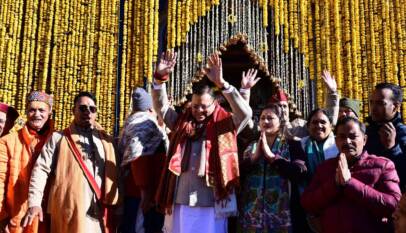
Kedarnath Temple Opens Amid Devotion and Grandeur, Marking Start of Peak Pilgrimage Season
Kedarnath, April 2026 : The sacred portals of Kedarnath Temple were ceremoniously opened on …