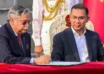
International Court of Justice has flagged that Climatic Changes accounts for the major ‘existential threat’.

ICJ Judge Yuji Iwasawa says greenhouse emissions are ‘unequivocally caused by human activities’ as he delivered his landmark opinion.
In a groundbreaking advisory opinion delivered at the Peace Palace in The Hague on Wednesday, the International Court of Justice (ICJ) said states must act urgently to address the “existential threat” of climate change by cooperating to cut emissions, following through on global climate agreements, and protecting vulnerable populations and ecosystems from harm.
The United Nations’ highest court has said that countries must meet their climate obligations – and that failing to do so could violate international law, potentially opening the door for affected nations to seek reparations in future legal cases.
Reading the opinion, ICJ President Yuji Iwasawa said that greenhouse gas emissions are “unequivocally caused by human activities” and have cross-border effects.
“Failure of a state to take appropriate action to protect the climate system … may constitute an internationally wrongful act”, Iwasawa said. He called the climate crisis “an existential problem of planetary proportions that imperils all forms of life and the very health of our planet”.
Notably, the court said a “clean, healthy and sustainable environment” is a human right. That paves the way for other legal actions, including states returning to the ICJ to hold each other to account as well as domestic lawsuits.
While the ICJ’s ruling is not binding, it said that countries themselves have an obligation to take binding measures to comply with climate treaties. But crucially, the ICJ said industrialised nations have a legal obligation to take the lead in combating climate change, due to their greater historical responsibility for emissions.
In the meantime, Countries that are top fossil fuel polluters say the court does not need to address the question as legal provisions under the United Nations Framework Convention on Climate Change (UNFCCC) are enough. But climate advocates argue that the ICJ should adopt a broader approach to the issue, including a reference to human rights law and the laws of the sea.
The ICJ is “the only international jurisdiction with a general competence over all areas of international law, which allows it to provide such an answer”, the island nation Vanuatu argued.
Team Maverick



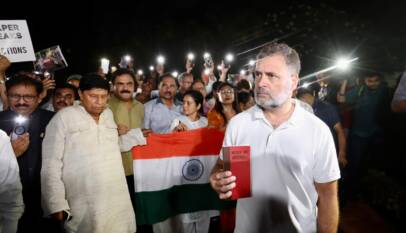



Mamata Banerjee to Join CJP Protest in Delhi; Appoints Saugata Roy as Trinamool’s Deputy Leader in Lok Sabha
Kolkata, July 2026 : Former West Bengal Chief Minister and Trinamool Congress (TMC) chief …

Mamata Banerjee to Join CJP Protest in Delhi; Appoints Saugata Roy as Trinamool’s Deputy Leader in Lok Sabha
Kolkata, July 2026 : Former West Bengal Chief Minister and Trinamool Congress (TMC) chief …