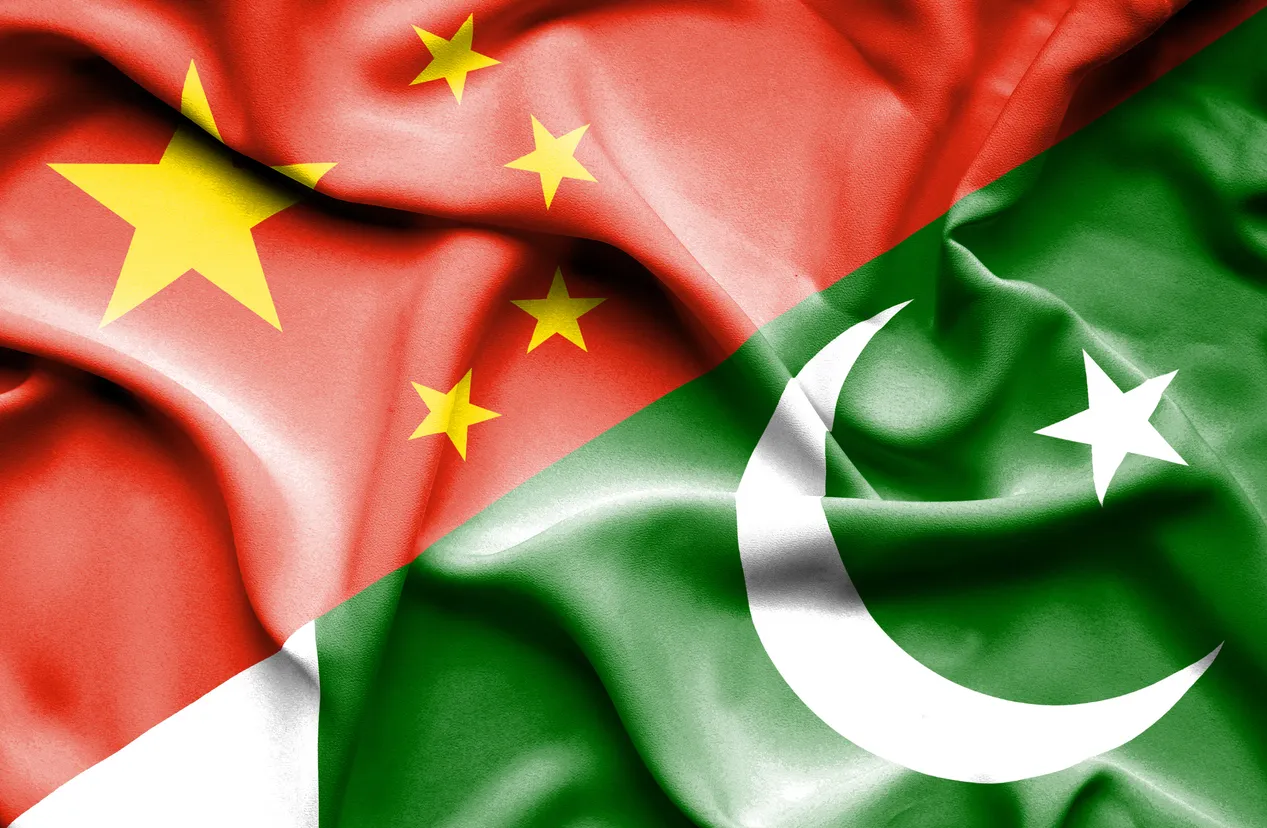
China’s avid investment in Pakistan is a major threat to India.

On Sunday, China has successfully deployed a new set of low Earth orbit (LEO) satellites as part of its internet constellation initiative. The satellite group, the fifth of its kind, was launched from the Taiyuan Satellite Launch Centre in Shanxi Province at 6:03 p.m. (Beijing Time).
Aboard a modified Long March-6 carrier rocket, the satellites were placed into their designated orbit shortly after liftoff. This latest launch further advances China’s plans for a space-based internet network aimed at enhancing global connectivity.
The mission marks the 585th launch in the Long March rocket series, highlighting China’s sustained progress in space technology and satellite deployment.
On the other side, Pakistan is speeding up to deploy a new remote sensing satellite in collaboration with China, heralding a major breakthrough in its space ambitions and tech partnership with the Chinese government. This marks one of Pakistan’s major attempts to enhance its space capabilities, specifically in Earth observation and disaster management, as per media reports and government announcements.
Pakistan’s Space and Upper Atmosphere Research Commission (SUPARCO) is the agency overseeing the development of the remote sensing satellite, named PRSS-02. The PRSS-01 satellite set the precedent for success, which now leads to the launch of this mission, as PRSS-01 came into formation through the help of China. PRSS-02 is expected to enhance Pakistan’s access to high resolution imagery, improving its capacity to manage natural resources, agriculture, and environmental changes.
Officials state that Pakistan will deploy the remote sensing satellite from China’s satellite launch facilities, harnessing China’s space launch framework. This decision not only marks China’s increasing impact as a global space launch provider, but also signifies the ongoing partnership between the two countries. The upcoming launch is being touted as another achievement in the strategic collaboration between Pakistan and China, particularly in high tech fields.
China’s assistance in this project signals a major step forward to help developing countries in extending their technological reach. As Pakistan gets ready to deploy the remote sensing satellite from China, the partnership accentuates a shared vision for peaceful use of space technology and underscores Pakistan’s aspirations to become more self sufficient in space based research and growth.
With preparatory arrangements drawing to a close, Pakistan’s deployment of the remote sensing satellite from China is expected to take place in the coming months. The launch has the possibility to be a milestone in the bilateral relationship, exhibiting how joint technology ventures can assist in fostering balanced regional development and promoting national growth.
Moreover, in a recent development, GuoDong Group, a prominent Chinese communications and technology firm, has shown keen interest in investing in Pakistan’s Information and Communication Technology (ICT) sector and new energy domains, including electric vehicle (EV) infrastructure and smart city solutions. The interest was expressed during a meeting between Federal IT Minister Shaza Fatima Khawaja and a GuoDong Group delegation led by the company’s Founder and Chairman, Lu Jie. The meeting was held on the sidelines of the Global Artificial Intelligence Conference in Shanghai.
According to the Ministry of IT and Telecommunication, the Chinese delegation conveyed plans to invest in Pakistan’s telecommunication infrastructure, particularly in constructing telecom towers, establishing data centres, and expanding cloud computing systems. In addition, Lu Jie expressed an interest in exploring Pakistan’s growing EV market, proposing investments in EV charging stations, smart city technologies, and advanced materials manufacturing.
Minister Shaza Fatima Khawaja welcomed the group’s proposals and extended an invitation to the officials for a visit to Pakistan to continue detailed discussions with local stakeholders. She assured them of the government’s full support and facilitation to ensure the successful execution of their investment plans.
The development aligns with Pakistan’s broader strategy to attract foreign direct investment in its digital and energy sectors. Recently, the country allocated 2,000MW of electricity for crypto mining and AI data centres and is aiming to make 30% of all new vehicle sales electric by 2030 under its National EV Policy 2025–2030.
Team Maverick






Maharashtra Shuts Schools Across Several Districts as Heavy Rain Alert Triggers Safety Measures
Mumbai, July 2026: Authorities across several districts in Maharashtra have declared a hol…

Maharashtra Shuts Schools Across Several Districts as Heavy Rain Alert Triggers Safety Measures
Mumbai, July 2026: Authorities across several districts in Maharashtra have declared a holiday for …