Beirut marks the 05th. Port Blast Anniversary.

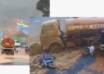
A gruesome disaster, that brought large parts of Lebanon’s capital to its knees on August 4, 2020, still could not identify the perpetual offenders. However, a new legislation has been introduced, wherein tighter regulations concerning the shipping, handling and storage of goods have been introduced to prevent such a tragedy from happening again.
The tragedy happened when 2,750 tons of ammonium nitrate exploded, killing more than 220 people and injuring thousands more. Ammonium nitrate is a commodity used in fertiliser and the port was a vital gateway for imported grains, food, cars and other goods into the region. Moreover, the economic impact of the Beirut Blast was far reaching with Lebanon losing a staggering $1000 Million revenues, with Shopping Vertical alone suffering the most (38%).
In the midst of the Socio-Economic turmoil, one such institution, stands tall as a testament of turn-arounds the country & its capital has witnessed, it is the Saint George Hospital. Located just 500 metres from the blast site, the 150 years old hospital, one of the country’s oldest and most prestigious medical institutions, suffered extensive damage in the August 4, 2020 explosion. Four members of the hospital’s nursing staff died, as well as 12 patients and a visitor. More than 100 doctors, nurses and administrative staff suffered injuries ranging from mild to critical, said hospital officials.
Restoration work had commenced immediately thereafter, with a Dh8.7 million ($2.36 million) donation from the Big Heart Foundation, a Sharjah-based humanitarian organisation. The crucial funding was made possible by the Salam Beirut campaign, which raised more than Dh30 million for recovery work following the explosion.
“We are back to normal and providing services just like before the blast, thanks to the loyalty of the staff and aid contribution”, said Chief executive Dr. Ziad Haydar. The hospital’s emergency and trauma unit fully reopened in May, 2025. The upgraded unit has state-of-the-art medical equipment, expanded capacity, enhanced trauma care facilities and a new Paediatrics section to serve 40,000 patients per year. The 380-bed hospital had not stopped operating since its inauguration in 1878, but the blast forced it to halt for a couple of weeks. The hospital has strong bond with the society. Faith and loyalty of many people during this hard time helped to rebuild the hospital. It is now operational with 270 beds.
Joseph Wehbe, Chief of Staff and Head of the Emergency and Trauma Centre narrated, “the determination and resilience of the medical and administrative teams helped to resume operations in a temporary emergency unit within just two weeks. There was no glass for windows, and we used white plastic to cover it. We resumed work in a difficult situation, but we have to serve our community”.
Dr Wehbe said the rehabilitation, restoration and expansion of the emergency and trauma unit marks a moment of great pride for everyone at the hospital. “We couldn’t open the trauma and emergency section without the help and the funds from the UAE. No words can show our gratitude to the UAE.
We are planning to be the most advanced, best trauma and emergency unit in Lebanon and the Middle East by June 2026”.
Team Maverick
End of an Era: Cristiano Ronaldo Bids Farewell to the FIFA World Cup After a Record-Breaking International Career
Dallas, July 2026 : One of football’s greatest chapters came to a close on Tuesday a…

End of an Era: Cristiano Ronaldo Bids Farewell to the FIFA World Cup After a Record-Breaking International Career
Dallas, July 2026 : One of football’s greatest chapters came to a close on …