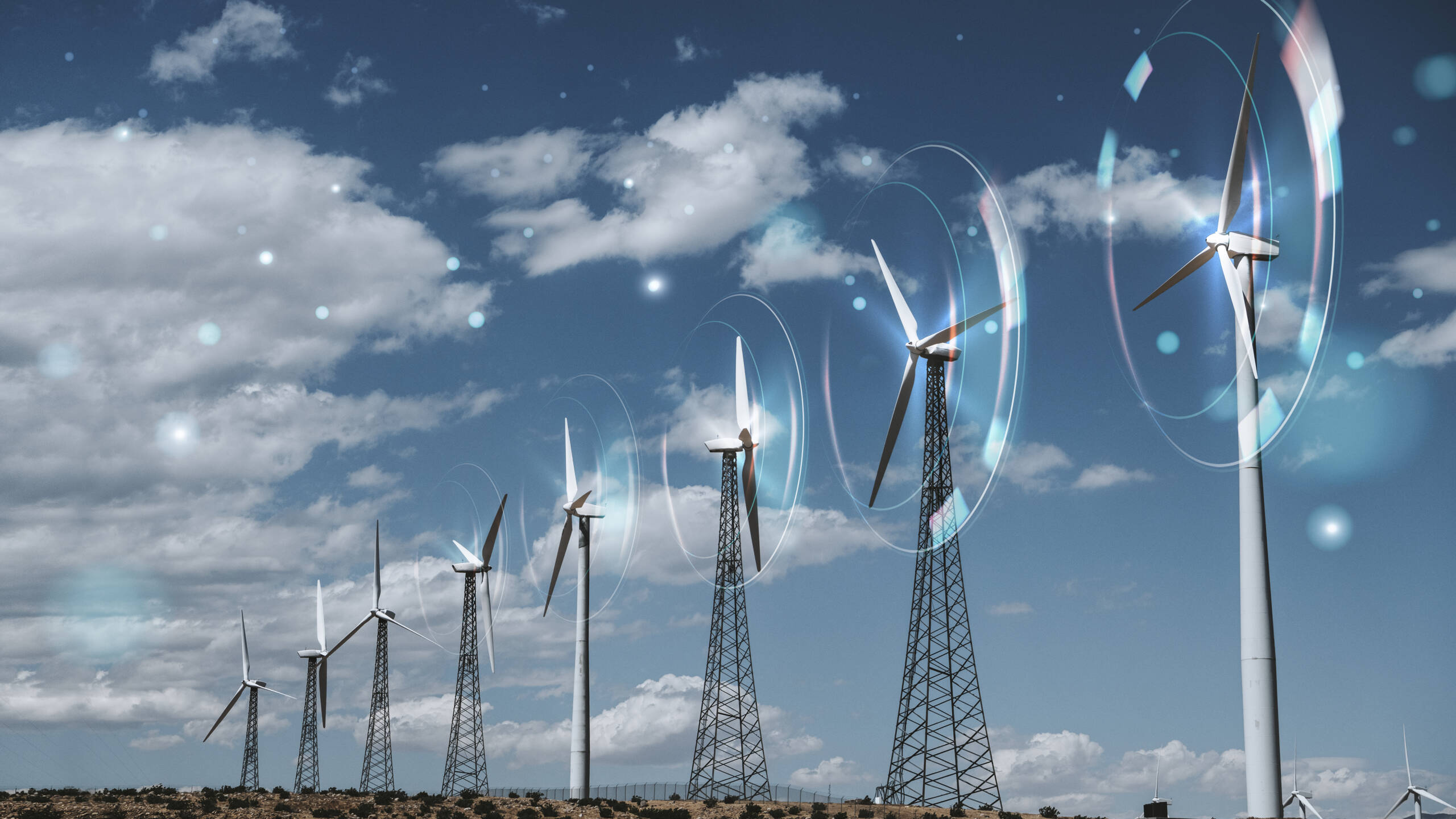
China a key to Global Energy transition, to Zero Carbon Energy outside US and Europe.

The tariff truce between China and the United States is set to end in August. The United States learned that it can’t impose its will on China. The rare earths threat by itself was enough to cause the US to reconsider. So, almost immediately after putting on the high tariffs, the US backed down. And both sides know that each has some tightened grips on the other. There will be, therefore, some kind of agreement, but it won’t stick in the details, and frictions will continue to wax and wane, with neither side definitively imposing its will on the other. The basic reason is that both sides have a mutual gain from continued trade. It is much anticipated that a measure of rationality will therefore prevail.
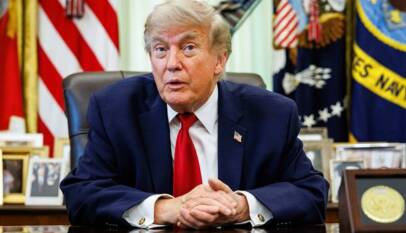
The biggest challenge, of course, is the behaviour of the US. The US started this trade war. This is not two sides fighting each other, but rather the US fighting China. We should remember that; the United States needs to show some prudence at this point. There is evidence of chastened view among many senior US officials. Trump himself is unpredictable. He has a very short attention span. Agreements with Trump don’t stick. So, a quiet period is overruled, and some limits to the competition is foreseen because each side can do damage to the other and both sides have a strong reason to achieve some cooperation.
From a long-term point of view, China certainly should not regard the US as a growth market for its exports. The US is going to restrict China’s exports to the US one way or another. The relationship will not be harmonious. The US will not be friendly to China, or trustworthy. China should just take care that it’s expanding its exports to other markets, and should not be overly focused on trying to break through to the US market, or even to Europe for that matter. The rapid growth of China’s exports will be with Africa, Southeast Asia, South Asia, west Asia, Central Asia, Latin America – not with the US and western Europe.
The most fundamental trend in the world economy is the rapid rise of the non-Western economies, led by China and including Russia, India, Southeast Asia and, in future decades, Africa. The US is flailing about trying to maintain its dominance in a world in which the emerging economies are rising rapidly. The US will not be able to prevent the emergence of multipolarity, but it will try. Trump will try one thing or another, but without success or coherence. Multipolarity has already arrived.
The broad pattern of economic convergence, in which the emerging economies narrow or close the income gap with the high-income countries of the West, which means that Western ascendancy is over. This is leading to deep frustration, not only in the US political class but in Europe as well.
China vastly outproduces the United States in advanced industrial goods, such as EVs, solar power, wind power, advanced nuclear power, batteries, low-cost 5G and many other key technologies. China incorporates AI into advanced manufacturing processes more than the US. Additionally, the most soughted developments in the Warfare machineries have placed the ball in the Chinese court.
Many European leaders feel that if they stick with the US against China and Russia, then maybe the Western supremacy will continue. This is delusional in certain aspects, but nonetheless creates a lot of noise, friction and risks of conflict. None of it is a coherent strategy, however.
The US has no strategy to stay ahead of China. In fact, the US can’t succeed in that. A lot of US sabre-rattling against China, Russia and the BRICS countries are heard, which are all dangerous. The heated rhetoric by itself can become a self-fulfilling prophecy of war. There are a lot of ignorant people in the US political leadership, and to everyone’s worry it is very much about their naivety and delusions.
This, is essentially the origin of the “trade war”. The US decided during 2010-2015 that China is now a threat to US primacy. The US has tried a lot of things to block China’s continued rise, including: a military build-up in East Asia; export restrictions on hi-tech goods, especially advanced chips; economic sanctions on key Chinese companies; investment restrictions by US companies, and ownership restrictions on Chinese companies in the US; high tariffs against China’s exports; and others. But none of this stops China’s rise. China’s development results from hard work, ingenuity, high rates of saving, high rates of investment, very effective long-term planning and a very skilled, very entrepreneurial generation of business leaders, especially young business leaders. Those fundamental strengths continue despite America’s anti-China policies.
Trump’s policies are accelerating the move of top scientists to China, but with no real strategy and no likelihood of success in holding back China’s rise. The rest of the world benefits from China’s economic success, including the US.
In the current geopolitical scenario, what has gained momentum is the “Deep State” theory; a complex vested interest group in industry, the military and other spheres, which promulgates to a military conflict with China.
The deep state means the permanent security system of the United States and its partners in Europe and in East Asia, including Japan, Korea and other places where the US has military bases and other security institutions. It includes the military, the CIA, the military contractors and the politicians who serve the military-industrial complex. Currently, America has around 750 overseas military bases and many of them are in East Asia. The US has many major military contractors with hundreds of billions of dollars of annual business with the US government. The US fights overt and covert wars pretty much non-stop, some of which are proxy wars (in which the US arms and funds Ukraine to fight Russia), and sometimes open conflicts with heavy US involvement, as in Iraq and Afghanistan. The US has the extensive global networks of the CIA and other intelligence and covert institutions. All of this constitutes the deep state. Presidents come and go but the underlying foreign policy is consistent and set largely out of view of the public, and without any reference to public opinion.
When Barrack Obama had stepped into the Presidential Shoes of George Bush Junior, Obama launched many wars, just as Bush had done. Obama’s team actively participated in the coup in Ukraine in 2014 that set the path for the Ukraine war. Obama went to war against Libya. Obama gave the CIA the order to overthrow the Syrian government. All of this was a continuation of the policies of the Bush period.
Joe Biden escalated the Ukraine war. He rejected all attempts of peace negotiations, including the Istanbul process that could have ended the Ukraine war in 2022. When it came to the Middle East, Biden was complicit in Israel’s ongoing genocide.
The deep state also determines the politics of US vassal states. Many observers consider Japan to be a US-occupied country, with Japan’s foreign policy basically subservient to the US. Where the US has military bases, the host countries tend to act like occupied countries, bending their own foreign policy to that of the US.
Since China is now drafting its economic policies for the next five years, China should envision the non-Western world for the strongest partnerships in trade, investment and diplomacy, at least for a while. The US led alliance (US, Canada, Britain, EU, Japan, Korea, Australia and New Zealand) is around 13% of the world population. China is another 17%. The remaining 70% of the world – in Asia, Africa and Latin America – would appreciate a good and strong economic and diplomatic relation with China. That 70% of the world population wants to modernise, and China provides the means for those countries to achieve rapid growth and modernisation. The recent success of Pakistan over India in a Post Pahalgaon break out has compelled others to shift their focus towards China.
China is key to the global energy transition to zero-carbon energy, especially in the markets outside the US and Europe. The emerging and developing economies of Asia, Africa and Latin America will be the markets for China’s rapid export growth in the years ahead. China will play a vital global role in these economies in building advanced green and digital economies, using Chinese cutting-edge technologies.
It has been demonstrated that the United States cannot compete with China for the global renewable energy market; the global digital connectivity market; in fast rail or low-carbon ocean shipping. Since China has already engaged in reshaping the economies of African countries, it would ne prudent for them to deal with regional groups, including ASEAN countries, the African Union, the Arab League and the Community of Latin America and Caribbean States (CELAC). China’s relations with these regional groups can be very strategic, as the regional groups can, and should, spur the interconnectivity of infrastructure among all the members of the group. For China, it will be easier to interact with regional plans rather than one country at a time.
Team Maverick





NCC Holds Cyclothon 2026 to Mark 79th Independence Anniversary
The National Cadet Corps (NCC) organised Cyclothon 2026 on August 02, 2026 in New Delhi to…

NCC Holds Cyclothon 2026 to Mark 79th Independence Anniversary
The National Cadet Corps (NCC) organised Cyclothon 2026 on August 02, 2026 in New …